
How to Start a T-Shirt Business (The Smart Way)
The t-shirt business has a reputation problem. Search “how to start a tshirt business,” and you’ll find endless step-by-step guides promising easy sales. Yet ask people who have actually tried it. The majority of them will tell you the same story: they designed a few shirts, listed them somewhere, waited, and nothing happened. That experience is so common it has become a cliché.
But here is what those people usually get wrong. They treated it like a product business when it is actually an audience business. The shirt is almost secondary. The real question is always: who are you selling to, and why would they care?
In this blog, we will learn how to start a tshirt business the smart way by choosing the right audience, understanding real costs, protecting your margins, and building a store you truly own.
TL;DR
- A t-shirt business is an audience-driven business, not just a design business. Start with a specific group of people before creating products.
- Startup costs typically range from $500 to $2,000 for testing and $2,000 to $10,000 for a more serious setup with inventory and marketing.
- A shirt that costs $12 to produce and sells for $28 creates a $16 gross margin, but marketplace fees can remove 20% to 37% of that margin.
- Marketplaces reduce long-term profit and control, especially as sales volume increases. The more you grow, the more you pay.
- Owning your own store keeps your revenue and your data, allowing direct email marketing, retargeting, and customer segmentation.
- Printing method affects margin and scalability, with DTG useful for testing and screen printing improving margins at volume.
- Email automation and segmentation turn one-time buyers into repeat customers, increasing lifetime value without increasing ad spend.
- A store you own becomes a sellable business asset, while a marketplace profile does not transfer the same long-term value.
What Is a T-Shirt Business Really Means
A t-shirt business is a commercial operation that designs, sources, and sells printed garments to a defined audience. It can be inventory-based, where you buy in bulk and ship yourself, or on-demand, where each shirt is produced only after a customer places an order. Most real businesses end up somewhere between the two.
The distinction matters because it shapes your startup cost, profit margin, production quality, and how fast you can react when a design takes off. On-demand sounds attractive because there is no upfront inventory cost. The per-unit cost is higher though, and quality control is harder when you never physically see the product before it ships to your customer.
Inventory-based models require more capital upfront but give you direct control over the product, faster shipping, and better margins at scale. Many successful t-shirt businesses start with small on-demand test runs, then shift to inventory once they know which designs sell.
Start With Who, Not What
Most people start a t-shirt business by designing a shirt they personally like, then looking for someone to sell it to. That is backwards.
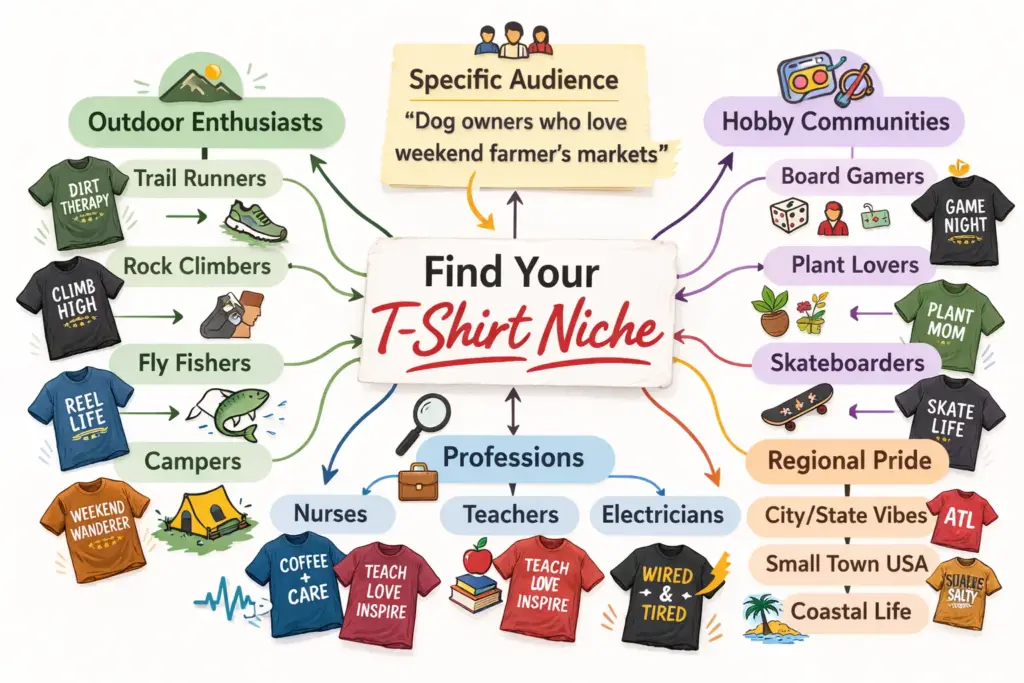
The businesses that build real revenue start with a specific group of people and design shirts for that group. Not “people who like dogs.” Something closer to “people who bring their dogs to the farmer’s market every Sunday and have opinions about which coffee roasters are worth the drive.” That level of specificity sounds excessive. It is what makes an audience targetable, relatable, and willing to pay full price.
Vague audiences require massive ad budgets to reach. Specific ones gather in forums, subreddits, Facebook groups, and local events. You can talk to them directly, show them a design, and get an honest reaction before spending a cent on printing.
Before picking a niche, spend time with these tools:
- Google Trends to check whether interest in your niche is growing, flat, or dying
- Reddit to find active communities and read what people actually say to each other
- Facebook Audience Insights to estimate how large an audience is before committing to it
- Ahrefs or SEMrush to see how competitive search terms are in your niche
You are looking for a group that is passionate, has its own language and inside jokes, and is not yet flooded with merchandise. Nurses, tradespeople, hobbyist communities, regional pride groups, dog breed owners, endurance athletes. These are all fertile ground. “Funny quotes” is not.
The Printing Decision
Choosing a printing method is a business decision that affects your margin, your quality, plus what kinds of designs you can produce.
| Method | Best For | Durability | Per-Unit Cost | Design Complexity |
| Screen Printing | Bulk orders (50+ units) | Very high | Low at volume | Limited colors |
| DTG (Direct to Garment) | Small runs, detailed designs | Medium | Higher | Excellent |
| DTF (Direct to Film) | Mixed fabrics, athletic wear | High | Moderate | Good |
| Heat Transfer | Early testing, very small runs | Medium-low | Moderate | Full color |
Screen printing is the industry workhorse. At 100 units or more, the per-unit cost drops dramatically and the print lasts a long time. The trade-off is a limited color range and a setup cost that makes it inefficient for small batches.
DTG works like an inkjet printer for fabric. You can print photographs, gradients, and complex artwork without setup costs. Print quality drops on anything other than 100% cotton though, and the ink can crack over time if the shirt is not properly cured or washed correctly.
DTF has gained serious traction over the past few years because it works on almost any fabric and produces vibrant, durable results at lower minimums than screen printing. If your designs go on both cotton and polyester, DTF is worth serious consideration.
For most people just starting out, DTG is the practical choice for testing. Once you know what sells, moving volume through screen printing is where the margin improves.
The Cost Breakdown Nobody Shows You Honestly
Starting a t-shirt business costs between $500 and $2,000 for a genuine test run, and $2,000 to $10,000 for a proper setup with inventory and marketing.
Here is where the money actually goes:
- Blank shirts: $3 to $8 per unit depending on brand and quality
- Printing: $2 to $6 per unit depending on method and volume
- Design (freelance or licensed): $50 to $300 one-time per design
- Domain and hosting: $50 to $200 per year
- Store setup: free to minimal cost if you build on WordPress, or $30 to $100 per month on hosted platforms
- Photography and mockups: $0 if you do it yourself, $100 to $300 if outsourced
- Initial marketing: $200 to $500 for early ad testing
The number that moves most is marketing. You can get a store running for under $200. Getting your first 50 sales without an existing audience costs real money, and most first-time sellers underestimate this.
The smarter approach is to validate before you spend on production. Post the design on social media. Share it in the relevant subreddit. Run a $40 ad test on Facebook or Instagram. Collect pre-orders before printing a single shirt. This is not just a cost-saving trick. It tells you whether a design has real demand, and that information is worth more than any margin calculation.
Where the Money Quietly Disappears
A shirt that costs $12 to produce and sells for $28 leaves a $16 gross margin. On the surface that looks healthy. Now put it on a marketplace and watch what happens.
Etsy, Amazon Handmade, and similar platforms stack multiple fees on every sale:
- Listing fee per product
- Transaction fee on the sale price
- Payment processing fee on top of that
- Additional charges for premium placement or fulfilled services in some categories
Combined, these typically run between 6.5% and 20%. In some cases they reach 37%.
At 20% you are handing $5.60 of your $16 margin to the platform on every single sale. At 500 sales a month that is $2,800 gone. Not to your printer. Not to your supplier. To a platform that also shows your customer a row of competing products on the same page.
The more you grow, the more you pay. Marketplaces can be useful for early exposure. Building your entire business on one is a structural mistake. You are renting, not building.
Why Owning Your Store Changes the Math
When you sell through your own store, you keep the full sale price minus a small payment processor fee per transaction with Stripe or PayPal. That is it. Compare that to Etsy, which takes 6.5% plus listing and payment fees, and Amazon, which takes up to 20% in fulfilment and hidden fees. The more you grow on those platforms, the more you hand over.
In your own store, every buyer becomes a contact in your database. You know what they bought, when, and what it cost to acquire them. That powers follow-up emails, retargeting, and cross-sell campaigns. It also makes your store a sellable business asset. An Etsy or Amazon seller account does not transfer the same way.
The Myths That Keep Sellers Renting
Most sellers sense this and stay on marketplaces anyway. A few beliefs keep them there.
| Myth | What Sellers Believe | The Reality |
|---|---|---|
| Traffic | Etsy and Amazon bring customers to you | Over 66% of marketplace searches still require sellers to market themselves, while paying platform fees on top of ad spend. The traffic is rented, not earned. |
| Effort | Marketplaces require less work | Competing means constant attention to listing optimization, pricing, and paid placement. The effort does not disappear. It just builds their platform instead of yours. |
| Trust | Buyers trust Amazon or Etsy more than an unknown store | Research shows consumers form stronger purchase connections through brand-owned channels than through faceless marketplace listings. |
| Speed | A marketplace delivers results faster | A marketplace might produce a first sale sooner. Companies investing in their own brand equity see compounding long-term returns compared to those chasing short-term volume on someone else’s platform. |
Strategic Leverage Comparison: Marketplace vs. Your Own Store
| Feature | Marketplaces | Your Own Store |
|---|---|---|
| Transaction Fees | High | None |
| Branding Control | Limited | Full |
| Customization | Minimal | Total |
| Customer Relationship Ownership | No | Yes |
| Customer Memory | Platform remembered first | Your brand remembered |
| Data Intelligence | Stays with the platform | Purchase history and segmentation owned by you |
| Retargeting Power | Restricted or unavailable | Full email, ad, and funnel retargeting |
| Marketing Flexibility | Restricted | Unlimited |
| Cross-Sell Control | Platform shows competitors beside your product | You decide what appears |
| SEO and Content Visibility | Controlled by platform | Owned by you |
| Algorithm Risk | Visibility can change overnight | Traffic diversified across SEO, email, and paid ads |
| Pricing Freedom | Competitive pressure from same-page sellers | Controlled positioning and premium pricing, applying pricing strategies possible |
| Margin Over Time | Platform earnings scale with your growth | Your profit scales with your growth |
| Brand Equity Growth | Platform equity grows | Your brand equity grows |
| Long-Term Asset Value | None | Compounding |
| Sellable Asset | Account access only | Transferable store, list, traffic, and systems |
Building Your Own Store
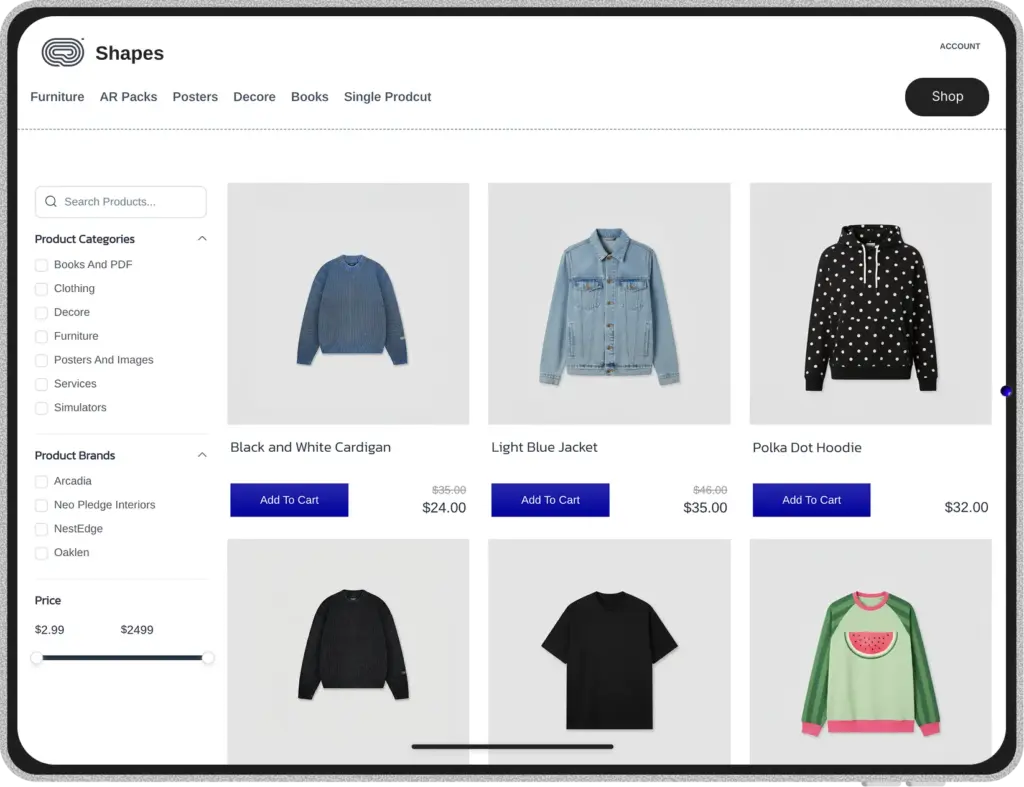
Owning your store only works if the platform underneath it actually handles what a physical product business needs. FluentCart is a WordPress-based ecommerce plugin built for stores that want full control without paying a percentage of every sale to a platform (e.g. Amazon, Etsy). You connect your own payment processor: Custom Payment Gateway, Stripe, PayPal, Razorpay, Mollie, Paystack, Mercado Pago, or others. Payment gateways usually charge a very small amount of fee, that’s all.
Note: FluentCart does not currently integrate with print-on-demand services like Printify or Printful. If your model depends entirely on a POD fulfillment partner pulling orders automatically, FluentCart is not the right fit for that workflow yet.
FluentCart is built for stores that manage their own inventory and fulfillment, whether that is a small batch of screen-printed tees you ship yourself or a setup where you hand off to a local printer.
What Essentials FluentCart Actually Gives You
- Product variations list one design across all sizes and colors on a single page, each with its own stock level so you never oversell a size.
- Order bumps surface a conditional offer at checkout, “add a second shirt for 20% off,” without the customer leaving the page. That single lever can move average order value from $28 to $35 on the same traffic.
- Coupon and discount management covers percentage or fixed discounts, email-restricted offers, and auto-apply coupons via shared URL.
- Checkout customization lets you build and rearrange the checkout page using Gutenberg, with control over individual fields, order notes, terms, coupon visibility, and receipt number formatting.
- Instant checkout skips the cart entirely. A direct link or button triggers a purchase popup on the product page itself, cutting friction for stores with a tight catalog or a standout hero product.
- Inventory management tracks stock, dead stocks, units on hold, and units delivered per variation, with manual adjustment when a new print run comes in.
- Shop design and customization uses Bricks, Gutenberg blocks for product grids, product description design, search, and pricing tables. A global theme color carries through every element, buttons are individually configurable, and products can be set to private and shared via direct link only, useful for early drops or wholesale pricing.
- Reporting and analytics covers revenue, orders, refunds, and UTM attribution. The pro version adds retention reports and cohort analysis.
- Branded invoices, packing slips, and email notifications go out automatically with every order.
- Checkout actions push completed order data into FluentCRM automatically, so your email sequences start without any manual import.
The store runs entirely on your WordPress site. Your customer data stays in your database, your domain builds the SEO authority, and nothing about your visibility depends on an algorithm you do not control.
Once In a Lifetime Offer
Turning One-Time Buyers Into Regulars (with FluentCRM)
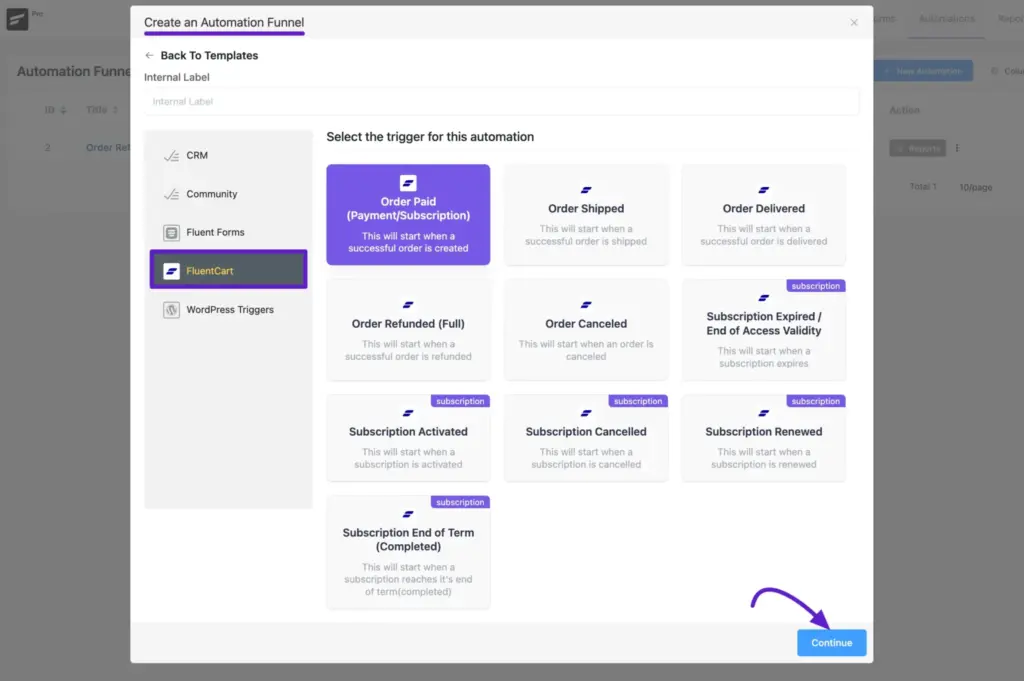
Most t-shirt sellers pour budget into finding new customers when selling to an existing one costs five to seven times less. FluentCart integrates with FluentCRM so purchase data flows automatically, letting you build sequences based on what a customer actually did in your store.
A thank-you on purchase, a review request after delivery, a recommendation two weeks later, a win-back if they go quiet. No manual work after the initial setup. You can filter contacts by lifetime value, order history, and purchase date, so every email goes to the right person at the right moment.
Handle Support Before It Costs You (with Fluent Support)
A sale is not finished when the order ships. Sizing questions, wrong colors, return policy-related questions, delayed deliveries; how you handle those moments decides whether a buyer returns or disappears quietly.
Most small stores run into the same problem: support lives in a separate inbox with no connection to order data, so every exchange starts with “can you send me your order number” and the thread gets long before anything is resolved.
When your helpdesk connects to your store, every ticket arrives with the full order history already attached. Customers can raise tickets directly from their account dashboard with the order already linked. Fluent Support integrates directly with FluentCart to make this work without any custom setup.
Turn Visitors Into Buyers (with WP Social Ninja)
Traffic without trust does not convert. Reviews are the evidence people need before buying from a store they just discovered and most sellers underinvest in collecting and displaying them. WP Social Ninja pulls in reviews from Google and Facebook and displays them on your store in customizable widgets.
Your Instagram or TikTok feed can embed directly so visitors see your designs in context. A WhatsApp or Messenger chat widget handles last-minute questions without the buyer ever leaving the page.
Clear Information Closes Sales (with Ninja Tables)
A customer unsure about sizing does not ask. They leave. Someone trying to figure out shipping times either emails you or abandons. These are information problems and clean tables solve most of them.
Ninja Tables has integration with FluentCart. It pulls your actual product catalog into a sortable, filterable table where customers can browse by category or brand, select variations, and add items to cart or buy in bulk without leaving the page.
Beyond the product table, a size guide, shipping timeline, or bulk pricing breakdown can be embedded anywhere on your store with a shortcode. All of it is mobile-responsive by default.
Legal Setup
An LLC is a legal structure that separates your personal finances from your business. If your business gets sued or runs up debt, your personal assets stay protected. For most small businesses, it is worth setting up early.
You do not need an LLC to test whether your first design sells. Before you hit meaningful revenue though, getting your structure right is worth the time. Beyond an LLC, you may need a resale certificate to buy blank shirts without paying sales tax on inventory you intend to resell, plus basic tax registration depending on where you operate.
The U.S. Small Business Administration has a clear, free guide on business structures and registration.
Wrapping Up
Once your store is running and your first designs have real buyers, the growth path becomes clearer.
Content and SEO take time but pay out consistently. A blog post answering a question your niche cares about, like “best shirts for trail runners” or “gift ideas for ER nurses,” can drive organic search traffic for years. That traffic hits your domain, not a marketplace’s. The authority builds over time.
Your email list is your most durable asset. Every buyer who checks out on your store is a potential future customer. A list of 2,000 past buyers who trust your brand is worth more in revenue than 20,000 social media followers you do not own and cannot directly contact.
The t-shirt business rewards patience and specificity. Pick an audience, stay focused on them, own your platform, and treat every sale as the start of a relationship rather than the end of one.
That is the actual playbook. Not glamorous. It works.
Once In a Lifetime Offer

Deputy Marketing Lead, published literary author, and musician. I thrive on marketing for tech companies while composing music, collecting books of lasting depth, exploring cinema with a discerning eye, and studying the arts and history.

Subscribe now
Related Articles and Topics
-

Bundle Marketing: An eCommerce Guide for Store Owners
Bundle marketing guide: types, pricing math, examples, and a FluentCart setup.
-
Wholesale Pricing: A FluentCart Guide for WordPress Store Owners
Learn how to set up wholesale pricing. Using FluentCart for this, you get five practical methods, from simple…
-

eCommerce Laws in 2026: The 8 Rules Regulators Are Fining Stores Over
The 8 ecommerce laws regulators fined stores over in 2025 and 2026.




Add your first comment to this post