
What Is Prospecting? How to Build a Sales Pipeline

Most businesses spend thousands on ads and content, then wonder why their pipeline feels thin. The real gap usually sits at the very beginning of the sales process, before the pitch, before the demo, before the follow-up email. It sits in prospecting.
In this blog, we will break down what prospecting actually means in sales and business, how it differs from lead generation, what methods work today, and how to measure whether your effort is paying off.
TL;DR
- Prospecting is the proactive search for potential customers who match your ideal buyer profile
- It is the first step of the sales cycle, distinct from lead generation
- Core methods include cold outreach, TL;DR selling, and referral-driven prospecting
- Top performers use structured qualification, not guesswork, to prioritize leads
- AI and CRM tools now speed up the process while keeping personalization intact
What Is Prospecting?
Prospecting is the deliberate process of identifying, researching, and initiating contact with potential customers who are likely to benefit from what you sell. It sits at the very front of the sales funnel, and no pipeline fills itself.
The word has roots in the mid-1800s Gold Rush, where miners physically sifted through soil looking for flecks of gold. As Wikipedia notes, prospecting was the first stage of geological analysis before any large-scale mining could begin. Sales borrowed the metaphor intentionally. You search, you qualify, you dig where the signal is strongest.
In a business context, prospecting means your sales team is not waiting for inbound interest. They are actively scanning lists, researching companies, sending targeted outreach, and qualifying contacts before investing real selling time. The goal is to arrive at a conversation already knowing the prospect has the fit, the budget, and the likely need.
What Is Sales Prospecting, Specifically?
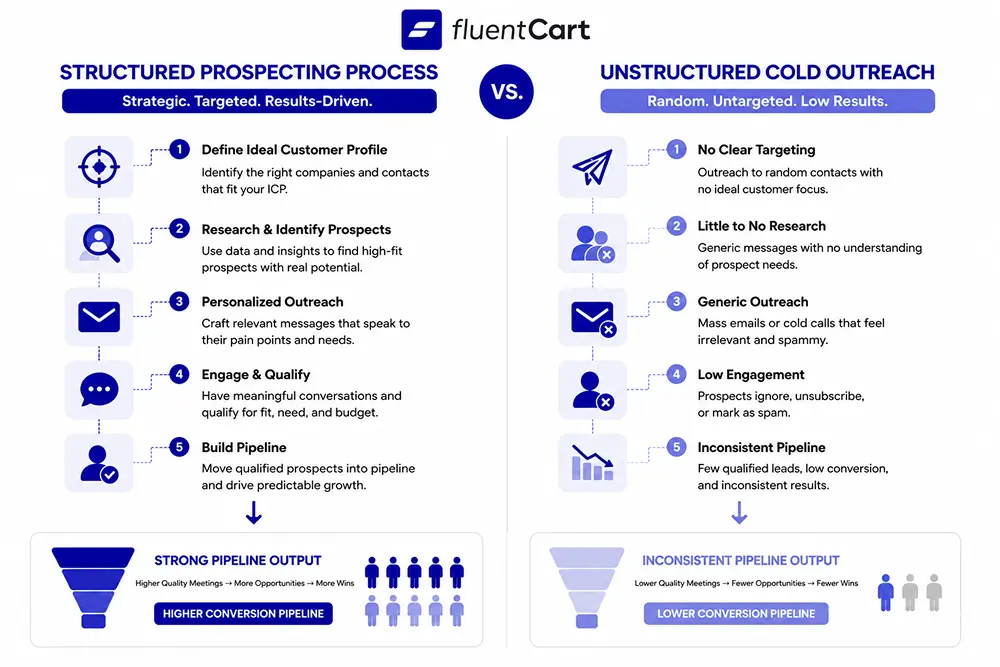
Sales prospecting is the structured version of that search. It layers research, qualification criteria, and outreach strategy on top of the basic idea of finding people to sell to.
A sales rep doing proper prospecting is not blasting cold emails at random. They are building an ideal customer profile, matching it against real data sources, filtering for intent signals, and then crafting personalized outreach. The output is a short list of contacts worth a genuine conversation, not a bloated database of names.
According to RAIN Group’s Top Performance in Sales Prospecting research, “top performers generate 2.7x better conversion rates than the average sales rep.” The difference is rarely talent. It is usually process, specifically how they prospect.
What Is Prospecting in Business More Broadly?
Outside of a pure sales context, prospecting in business refers to any systematic effort to identify new opportunities before committing resources.
That could be a founder identifying which retail buyers to approach, a consultant shortlisting potential clients, or a marketplace seller researching which product categories have underserved demand.
The core principle stays the same: define what a good opportunity looks like, then search deliberately rather than reactively.
Prospecting vs. Lead Generation: Not the Same Thing
This distinction trips up a lot of teams. A thread on r/socialmedia summarized it clearly: “Prospecting is the act of searching for new contacts aka prospects. Lead generation is the combination of the two.”
The marketing department runs lead generation. Sales runs prospecting. Both fill the top of the funnel, but through opposite motions.
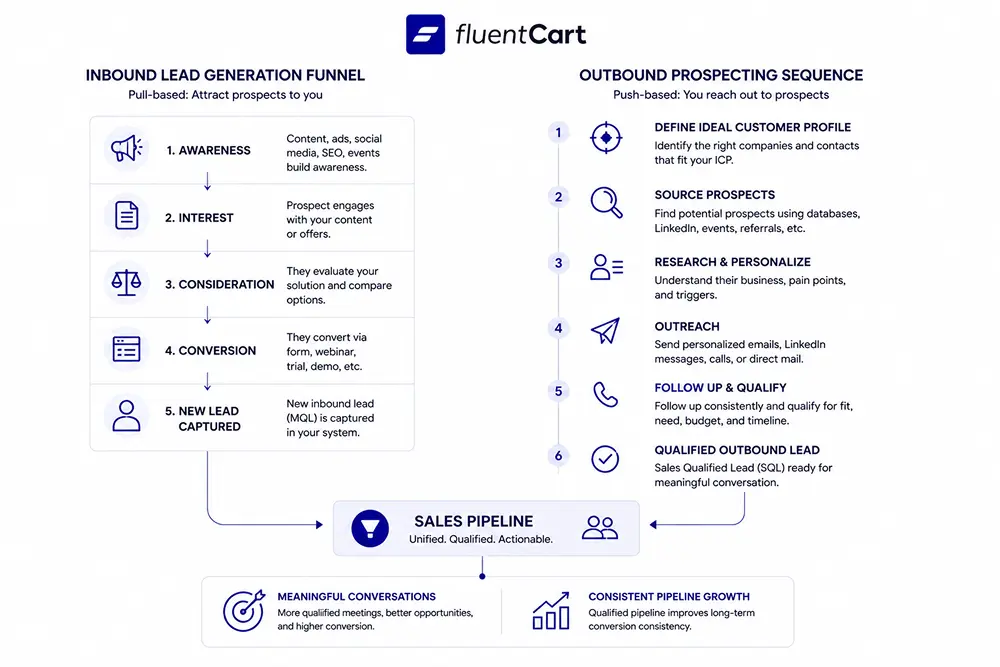
Lead generation is pull-based. You publish content, run ads, host webinars, and let interested people raise their hands by filling out a form or clicking a link.
Sales prospecting is push-based. A rep identifies a target, researches them, and initiates the first conversation without waiting for them to come forward.
Most effective teams combine both. Inbound marketing builds brand awareness at scale. Outbound prospecting captures the right accounts before a competitor does.
What Is Outbound Prospecting?
Outbound prospecting is what most people picture when they hear the word: cold emails, cold calls, LinkedIn messages, direct mail. The sales rep initiates everything.
Done poorly, it feels like spam. Done well, it feels like a well-timed, relevant introduction to something the prospect actually needed to hear about.
According to Sopro’s State of Prospecting 2025 report, “70% of B2B companies said prospecting is integral to their success,” and more than 70% say combining inbound efforts with proactive outreach produces better results than either approach alone.
The mechanics follow a repeatable sequence: define the profile, source contacts, research each account, personalize outreach, follow up with intent. Every step compounds on the last.
What Is B2B Prospecting?
B2B prospecting carries extra complexity. You are not selling to one person. You are navigating a buying committee, identifying the economic decision-maker, understanding company-level pain points, and timing your outreach around organizational signals like hiring pushes, funding rounds, or product launches.
The research phase matters more here. A rep selling SaaS to mid-market operations teams needs to know which companies just expanded their headcount or which are showing intent signals through job postings. That context shapes the pitch before a single word is typed.
According to RAIN Group’s benchmark report, “82% of buyers accept meetings with sellers who proactively reach out to them, and 71% want to hear from sellers early in the buying process when they are looking for new ideas.” Outbound is not dead. It just requires sharper targeting than it did a decade ago.
What Is B2B Sales Prospecting in Practice?
In practice, a B2B prospecting workflow follows these steps:
- Profile: Define the ideal company size, industry, geography, and buyer role
- Source: Pull contacts from LinkedIn Sales Navigator, your CRM, webinar signups, or event attendee lists
- Research: Check recent news, job postings, and LinkedIn activity for each account
- Outreach: Send a short, personalized message referencing one specific, relevant detail
- Follow-up: Build a cadence across email, phone, and social without spamming
- Qualify: Use discovery calls to confirm fit before investing serious pitch time
What Is Prospecting in Marketing?
In marketing, prospecting refers to customer acquisition campaigns aimed at audiences who have not interacted with your brand before.
Think paid social ads targeting lookalike audiences, programmatic display targeting new segments, or content seeded in communities where your ideal buyers spend time.
This overlaps with inbound lead generation but carries a more active flavor. You are reaching out to cold audiences rather than waiting for search traffic to land on your page.
Conversion rates are lower, but the volume ceiling is higher. For ecommerce and digital businesses especially, prospecting audiences in paid media can be a significant growth lever alongside organic channels.
What Is AI Sales Prospecting?
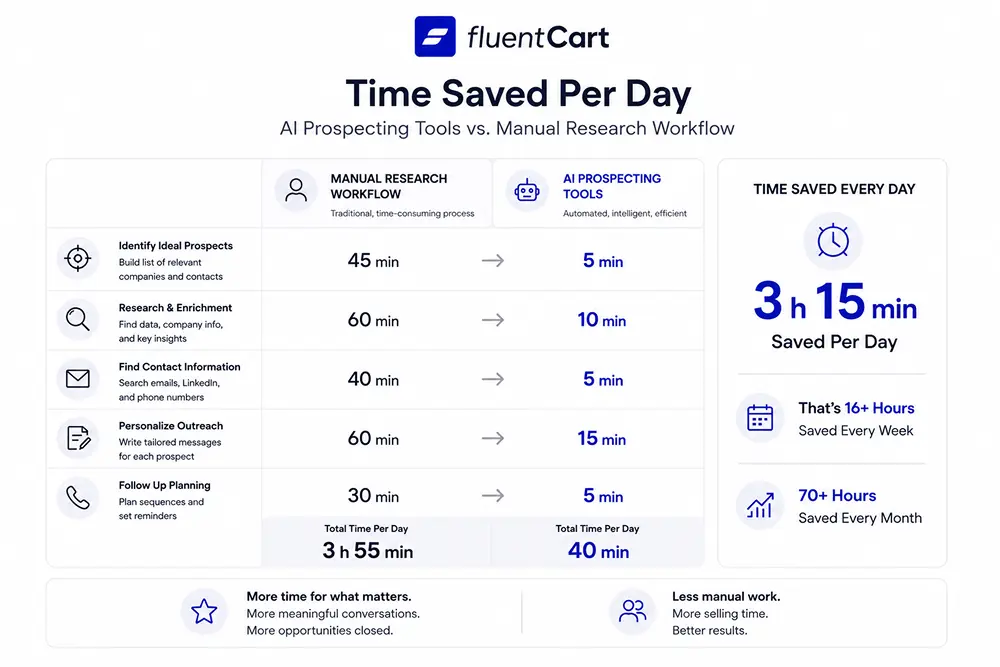
AI sales prospecting uses machine learning and data analysis to automate or improve parts of the prospecting process. That includes scoring leads by fit and intent, suggesting the best time to reach out, personalizing email copy based on a prospect’s profile, and surfacing accounts showing buying signals before a human rep would catch them.
According to HubSpot’s State of AI in Sales research, “on average, salespeople save two hours and 15 minutes a day using AI,” with 79% saying it allows them to spend more time actually selling.
The practical impact: reps stop spending their mornings building lists manually and start spending that time on actual conversations. AI handles the research and filtering; humans handle the relationship.
Lead, Suspect, Prospect, Opportunity: The Pipeline Vocabulary
People use these words interchangeably, which creates confusion inside teams. Here is how most structured sales organizations define them:
- Suspect: Someone who might need your product but has no awareness of you yet. You suspect they are a fit.
- Lead: A contact identified through prospecting or inbound who shows some signal of potential interest.
- Prospect: A lead that has been qualified. They fit your ideal customer profile, and you have confirmed enough about their situation to justify active outreach.
- Opportunity: A prospect who has entered an active deal stage, agreed to hear a pitch, and is working toward a purchase decision.
Moving someone from suspect to opportunity is the core of what prospecting accomplishes. Each stage requires different effort and different evidence.
How to Qualify a Prospect
Qualification is where most wasted prospecting time occurs. Reps contact everyone, then spend discovery calls finding out half the list was never a real fit.
A simple scoring model helps. Assign points across four dimensions: company fit, buying intent signals, confirmed budget range, and timing. Accounts scoring high on all four get immediate outreach. Lower-scoring contacts stay in a nurture sequence until their situation changes.
According to Salesforce’s State of Sales report, “high performers are 1.7x more likely than underperformers to use prospecting agents.” That gap comes almost entirely from better qualification and tooling upfront.
Measuring Whether Your Prospecting Works
Prospecting without measurement is just activity. The metrics that actually matter:
- Contact rate: What percentage of your list are you successfully reaching?
- Meeting-booked rate: Of everyone you contact, how many agree to a next step?
- Opportunity rate: Of meetings held, how many become active deals?
- Pipeline contribution: What share of total pipeline came from prospecting efforts?
According to RAIN Group’s benchmark research, “it takes a top-performing sales rep five touches, and an average rep eight touches, to generate a meeting or conversion.” Track these metrics consistently. Monthly reviews of which channels and messages are converting help you refine faster than quarterly retrospectives.
Wrapping Up
Prospecting is not optional for businesses that want predictable revenue growth. It ensures your pipeline has the right people in it, not just more people. Define who you want, research them specifically, reach out with relevance, and qualify before you invest real time.
For businesses building their ecommerce operations, knowing your ideal customer before they land on your store is what separates consistent growth from hoping the algorithm cooperates. Building a proper e-commerce management framework around customer acquisition, or tying your efforts to the right ecommerce KPIs, are both natural next steps.
FAQ
What does it mean when someone is prospecting?
It means they are actively searching for potential customers or buyers who match a defined profile and initiating contact with them. In a non-sales context, it can also mean searching for valuable resources or opportunities in a systematic way.
What is prospecting in business?
In business, prospecting is the process of identifying potential clients, partners, or customers before committing to a pitch or proposal. It is the research and outreach phase that precedes any formal sales conversation.
What are the 5 P’s of prospecting?
Different frameworks use different language, but commonly cited elements are: 1. Preparation (knowing your ICP), 2. Prioritization (ranking leads by fit), 3. Personalization (tailoring outreach), 4. Persistence (following up consistently), and 5. Performance tracking (measuring what converts).
Is prospecting the same as cold calling?
No. Cold calling is one outbound method within prospecting. Prospecting is the broader process that includes research, qualification, outreach across multiple channels, and follow-up. Cold calling is a tactic; prospecting is a strategy.
What is prospecting vs. judging in personality types (MBTI)?
In MBTI, Prospecting (P) describes a personality trait characterized by flexibility and preference for keeping options open rather than making firm decisions. It is unrelated to sales prospecting and refers to how a person approaches structure and planning in daily life.

Deputy Marketing Lead, published literary author, and musician. I thrive on marketing for tech companies while composing music, collecting books of lasting depth, exploring cinema with a discerning eye, and studying the arts and history.

Subscribe now
Related Articles and Topics
-

Bundle Marketing: An eCommerce Guide for Store Owners
Bundle marketing guide: types, pricing math, examples, and a FluentCart setup.
-

Membership Affiliate Programs: The Cost-effective, Integrated Setup
Run membership affiliate programs on WordPress with one integrated stack.
-

WordPress Coupons: How to Create and Manage Discounts
Set up a WordPress coupons plugin and manage discount codes in minutes.



Add your first comment to this post