
FluentCart: Year in Review 2025
As 2025 comes to an end, we have a lot to share and acknowledge. The biggest event by far is the launch of FluentCart.
Yes, it’s one of the biggest products we’ve tackled as a company. But I firmly believe it’s the biggest project we’ve undertaken as individuals and as a team too.
So to start off this Year in Review, I’d like to thank everyone that participated in FluentCarts journey up until now. Your contributions and dedication have shaped FluentCart into the product it is today.
FluentCart: the journey begins
FluentCart did not start as a side experiment. From day one, it was positioned internally as something that had to earn its place. WooCommerce exists. Easy Digital Downloads exists. SureCart exists. Competing in this space means you do not get points for enthusiasm. You only get points for execution.
That mindset shaped everything. Architecture decisions. Performance benchmarks. How early access was handled. Even how slow we were to celebrate publicly. We wanted FluentCart to survive real usage before it ever enjoyed praise.
When we opened early access, we expected curiosity. We did not expect the volume. Over 6000 people signed up for early access. More than 500 of them actively tested builds. Four companies did not just test, they partnered with us as development partners.
That detail matters. It means FluentCart was not just being clicked around, it was being wired into real businesses with real stakes.
This early access phase taught us two things very quickly. First, there is deep frustration with existing commerce stacks. Second, people are willing to tolerate rough edges if they believe the foundation is solid. That belief is fragile. You earn it with one release at a time.
3000+ Businesses now trust FluentCart
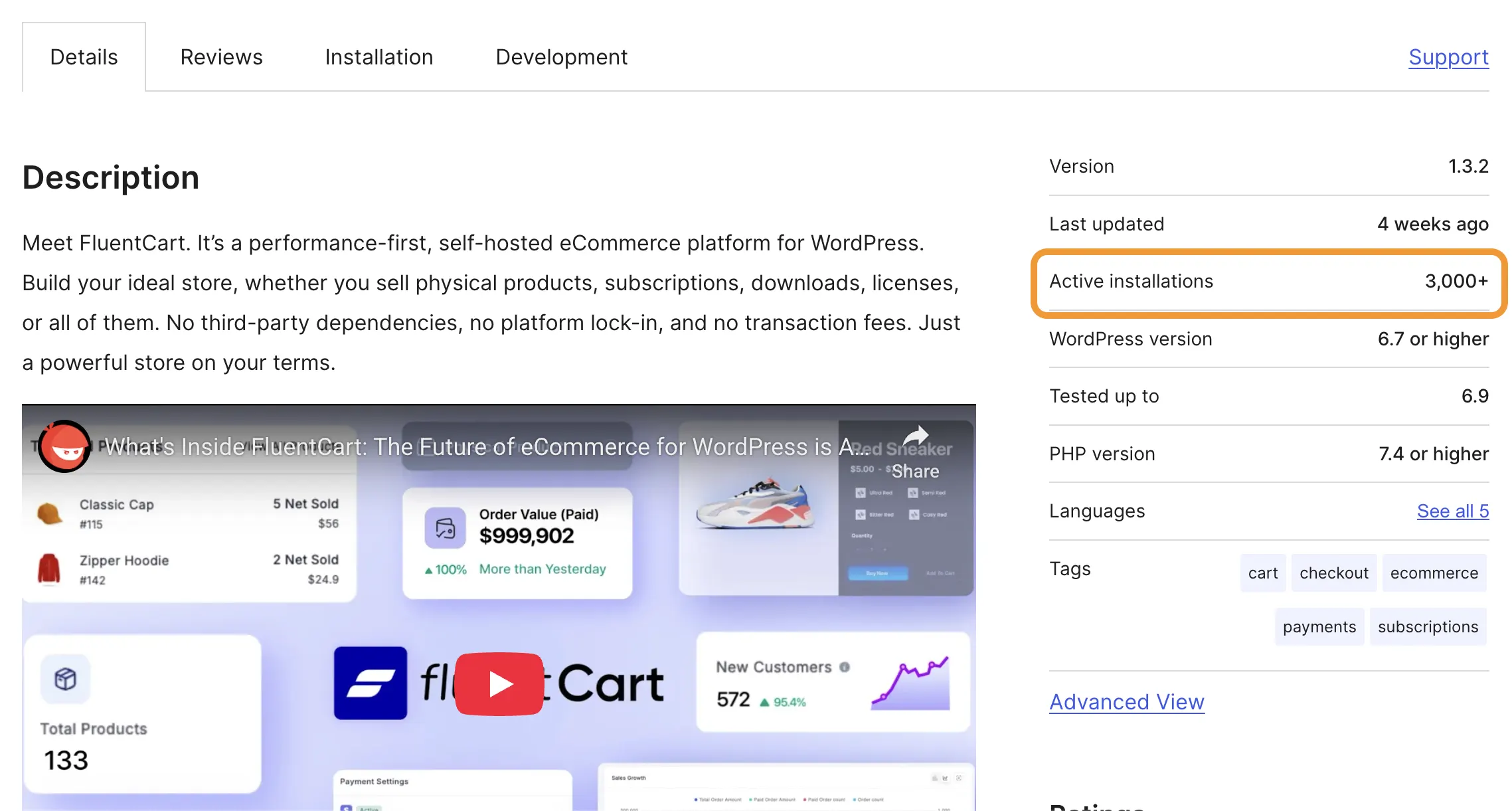
Within less than 60 days, FluentCart crossed 3000 active installs. That number is not vanity. It is pressure. Every active install represents someone trusting a new product with their revenue, customers, and operations.
What surprised us was not the growth itself. It was the diversity of use cases showing up so early. Memberships. Digital products. Hybrid pricing models. Subscription plus setup fees. Complex catalogs that were never FluentCart’s original target for launch version. This forced us to mature faster than planned.
We literally had to reevaluate the Roadmap multiple times to keep up with user requirements.
It also validated a core assumption we had early on. Speed is not just about page load time. Speed is about how quickly a system adapts when reality hits hard.
Stress testing as a proof of concept
One of the most defining internal projects this year was stress testing FluentCart against Easy Digital Downloads and WooCommerce. Not synthetic tests designed to make us look good. Real stress scenarios.
We tested large product catalogs to understand how catalog size (up to 100K products) impacts performance. Simulated simultaneous order processing at volumes up to 5000 concurrent orders. We monitored server resource usage while bulk-adding products, processing orders, and generating transactional data.
These tests were not glamorous. They were long, sometimes boring, sometimes alarming, sometimes downright time consuming.
They forced us to confront uncomfortable truths early. The testing team routinely challenged development decisions, database queries and data handling.
But these tests also confirmed something we were quietly confident about. FluentCart’s core engine remains stable under pressure in ways that legacy systems struggle with, especially when catalog size and order concurrency increase together.
This is where being late to the market becomes an advantage. We were not constrained by decisions made ten years ago. We could design for modern hosting environments, modern PHP performance expectations, and real-world concurrency patterns.
Migrating WPManageNinja from EDD3
If stress testing is theory, migration is the playoffs. This year we migrated millions of existing orders and thousands of customers from Easy Digital Downloads to FluentCart for WPManageNinja. This was not a demo migration. This was 9 years worth of historical business data that could not be corrupted, reordered, or compromised.
Migration work forces you to understand both systems deeply. You learn where assumptions live. Where data models disagree. Where edge cases hide. Completing that migration successfully did more for FluentCart’s internal confidence than any marketing milestone could.
It also shaped our migration tooling roadmap. You cannot migrate serious businesses without respecting their past. FluentCart does not exist in isolation. It enters ecosystems that already have history and precedence.
Collaborations and Partnerships
Development Partnerships
Collaboration has been one of the quiet forces shaping FluentCart’s early momentum. Not the loud, logo-heavy kind that exists only for screenshots, but the kind that happens when builders recognize shared values and decide to experiment together.
For a product this young, these relationships matter more than reach. They influence how FluentCart is understood, tested, challenged, and positioned inside the ecosystem.
From early on, we gravitated toward teams who build seriously and ship responsibly. Shaped Plugins, Lazy Coders, WPPool, WPDevelopers, NakedCat, and BitApps all fall into that category. These are not casual associations. These are conversations about architecture, distribution, audience expectations, and long-term sustainability.
What stood out in these interactions was how open they were. FluentCart was not treated as a finished product being politely promoted. It was treated as something evolving, something worth poking at. That kind of engagement sharpens a product faster than isolated development ever could. When peers challenge assumptions, you either defend them with confidence or change them with humility. Both outcomes are useful.
Learning and giving to the community
On the learning and accessibility side, we started something that feels especially meaningful. A promotional learning deal is currently in progress with CodeManBD, designed to make FluentCart accessible to students and freelancers who are still building their footing. Sharing learning licenses is not about short-term conversions. It is about exposure and literacy. If someone learns commerce fundamentals using FluentCart early in their career, that familiarity compounds over time. More importantly, it aligns with how we believe software ecosystems grow, through education first, monetization second.
Parallel to this, the agency partnership program has started to take shape. This is still early, deliberately so. Five agency deals are currently in discussion, each with different expectations and integration needs. Agencies are demanding by nature. They care about reliability, extensibility, and support clarity. Their feedback tends to be brutally practical. That is exactly why we want them involved at this stage, not after everything is locked in.
These partnerships are not being rushed. FluentCart needs to earn its place inside agency workflows, not be forced into them. The conversations happening now are shaping how that program will look when it becomes public.
Taken together, these collaborations reflect something we care deeply about. FluentCart is not trying to grow in isolation. It is growing through shared context, shared learning, and shared accountability. For a product just a couple of months old, that feels like the right kind of momentum.
6 major releases since launch
When we say features did not arrive quietly, we are not trying to sound poetic. We mean it very literally. Features landed because users needed them now, not later. Because edge cases surfaced in real stores, not staging environments.
This cadence was not accidental. From the first public build, we made a deliberate decision to reject the traditional WordPress release rhythm where you disappear for months and reappear with a “big update”. That model works when software is mature and predictable. FluentCart is neither. It is young, opinionated, and under constant real world stress. Shipping often was the only honest option.
Release notes, in this context, are not a marketing artifact. They are a public design journal. They show what we value, what we prioritize under pressure, and how quickly we are willing to change our minds.
Make sure to check out the latest release note, in case you missed it.
Shipping frequently forces humility. We ship knowing some decisions will be revised. You invite blunt feedback. You accept that speed invites scrutiny. That scrutiny is healthy. We welcomed it.
What follows is not a changelog recap. You already have that. This is an explanation of why these updates mattered and what they reveal about how FluentCart is being built.
Fixing fundamentals before chasing flash
If you scan through the updates from 1.2.4 to 1.3.2, a pattern emerges quickly. A large portion of work went into things that most users never tweet about. Currency formatting. Tax calculation correctness. Zero-decimal currencies for Stripe. VAT rendering on first load. Coupon priority logic. Inventory validation at scale.
These are not optional details in a commerce engine. They are table stakes. If they are wrong, nothing else matters.
Take currency handling as an example. We added support for new currencies like BYN, IRR, and MMK early, but that was only half the work. Formatting thousands separators correctly, showing or hiding decimals intelligently, fixing static currency symbols appearing where they should not, and handling zero-decimal currencies properly for Stripe all required careful iteration. These issues only show themselves when real stores start selling in real regions.
Tax handling followed a similar path. Multiple tax rates on checkout. Compound tax calculations. EU VAT home country overrides. Correct tax naming for regions like Australia. VAT visibility in receipts. These are details that break trust instantly if they are wrong. We chose to fix them as fast as humanly possible, even when they were not headline features.
This is not glamorous work, but it is foundational. FluentCart’s promise of being fast and reliable starts here, not in a fancy UI.
Checkout and block experience evolving in public
Another clear theme across these releases is how aggressively we iterated on checkout and block-based experiences.
The fully customizable checkout block itself only arrived in 1.3.2, but the groundwork was laid much earlier. Payment method re-rendering optimizations. Accessibility improvements on checkout. Gateway reorder support. Gateway logo and label customization. Button style support for ShopApp blocks. Product title link controls. Product price block support.
Each of these changes came from friction. Someone tried to build a page and felt constrained. Someone noticed a visual inconsistency. Maybe someone using the block editor at scale ran into performance or UX issues.
Instead of deferring these problems to some future “blocks overhaul”, we fixed them incrementally. This approach does two things. First, it keeps FluentCart usable at every stage of its evolution. Second, it allows us to learn what actually matters in block-based commerce, rather than guessing.
Accessibility deserves a specific mention here. Improvements were not bundled into a single announcement. They were added where they mattered, when they mattered. Checkout accessibility. Input behavior fixes. Text wrapping issues. These are signs of a product being used by real humans, not just demoed.
Hooks, filters, and developer trust
One of the earliest signals from advanced users was clear. FluentCart needed to be extensible quickly. Not eventually. Quickly.
That is why you see a steady stream of new hooks and filters across releases. Customization hooks in checkout and “Thank You” pages. Product variation customization hooks. New hooks for shop and single product pages. Context improvements in existing hooks. REST API documentation published publicly.
This is not about ticking a “developer friendly” checkbox. It is about trust. Developers build businesses on top of your assumptions. If they cannot intercept or extend behavior cleanly, they either hack around it or leave.
The REST API documentation release in 1.3.0 was a turning point. It signaled that FluentCart is not just a UI-driven plugin. It is a programmable commerce engine. That shift attracts a different caliber of user. It also increases scrutiny. We were ready for that.
Payment gateways and global readiness
Payment gateways are always a balancing act. Every gateway added increases surface area. Every omission blocks adoption in a region.
On top of PayPal and Stripe, we added Mollie, Paystack, and Authorize.net in rapid succession. These were not arbitrary choices.
They came directly from user demand in Europe, Africa, and North America. Alongside gateway additions, we improved gateway customization design, gateway reorder controls, and future-proofed addon gateway management.
Payment instructions on the Thank You page, fixing Stripe cancellation date handling, resolving payment method rendering issues, and addressing validation messaging were all part of making payments feel predictable and trustworthy.
Commerce software lives or dies on this layer. We were more than just aware of that!
Reporting that earns credibility
Early reporting systems often lie. Not intentionally, but because edge cases are ignored. Data accuracy issues, slow queries, misleading graphs, and broken comparisons quietly erode confidence.
We tackled reporting aggressively. Performance improvements. Data accuracy fixes. UTM reports. Report card design updates. Navigation fixes. Color consistency. Graph readability.
None of this exists to impress. It exists so that when a store owner checks their numbers, they trust what they see.
Shipping and fixing in real-time
Some of the most telling updates are the fixes that only appear when systems are stressed. Quantity limits breaking states at 10k. Simultaneous JS events failing when carts are empty. Inventory validation on default variations under load. Multisite edge cases. SQL security issues. Third-party security auditing through Patchstack.
These are not bugs you catch with casual testing. They surface when people push the system hard. When they import large catalogs or run promotions. Or, when they automate workflows.
Instead of treating these moments defensively, we treated them as gifts. They showed us where FluentCart was being taken seriously.
Improved Security with third-party audit
Security deserves more than a bullet point, but it also does not need theatrics. In 1.3.0, we completed a third-party paid security audit. We patched issues quietly and promptly. Fixed SQL group key vulnerabilities. And addressed IPN validation logic.
We did not wrap this in dramatic language. Security is not a marketing campaign. It’s an ongoing responsibility.
What this cadence really signals
Shipping releases frequently is exhausting. It forces coordination and demands discipline. It leaves less room for perfectionism.
But it also sends a clear signal. FluentCart is being built with users, not for hypothetical futures. Decisions are tested in public. Mistakes are corrected quickly. Improvements are not hoarded for dramatic reveals.
This approach will not appeal to everyone. Some prefer slower, quieter evolution. That is fine. FluentCart is intentionally transparent.
Looking back at these releases, what excites me most is not the number of features. It is the coherence. Even under speed, the product did not fracture. Checkout got better without breaking extensibility. Performance improved without sacrificing flexibility. Global readiness increased without bloating the core.
That balance is fragile. It requires restraint as much as ambition.
Two months in, FluentCart already behaves like a product that expects to be around for a long time. That expectation shapes how we ship. Fast, yes. But not carelessly. Publicly, yes. But not performatively.
If this is what the first stretch looks like, the next year is going to be very interesting.
FluentCart Community gained more hype than we imagined

At last count, FluentCart has around 800 community members. Out of them, roughly 60 are beta testers providing direct feedback. These are not passive users. These are people filing issues, suggesting improvements, and sometimes disagreeing with us openly.
That kind of community is demanding. It forces clarity. You cannot hide behind vague roadmaps when people are watching commits and changelogs. This dynamic has made FluentCart better, faster.
It has also reminded us that software is not just code. It is conversation, with the users, builders and owners.
Independent by design
One of the quieter but most important decisions this year was incorporating FluentCart as an independent LLC, separate from WPManageNinja. This was not done for optics. It was done for scale.
FluentCart is expected to grow beyond its origin. Structurally, legally, and operationally, it needs room to become something larger than its parent brand. Independence allows focus. It allows future partnerships. It allows the product to stand on its own reputation.
This decision also signals intent. FluentCart is not a side feature. It is a long-term bet.
External validation without chasing applause
AccelaraWP compared FluentCart’s SEO and product engine performance against WooCommerce. We did not commission this to collect quotes. We wanted to see how we actually stack up in scenarios that matter.
Early reviews followed a similar pattern. Fifteen five-star reviews. Consistent feedback around speed, reliability, and thoughtful defaults. Praise for frequent updates. Recognition of third-party security auditing.
These things matter, but they do not define success. They simply confirm that we are not lying to ourselves.
Showing up at WordCamps
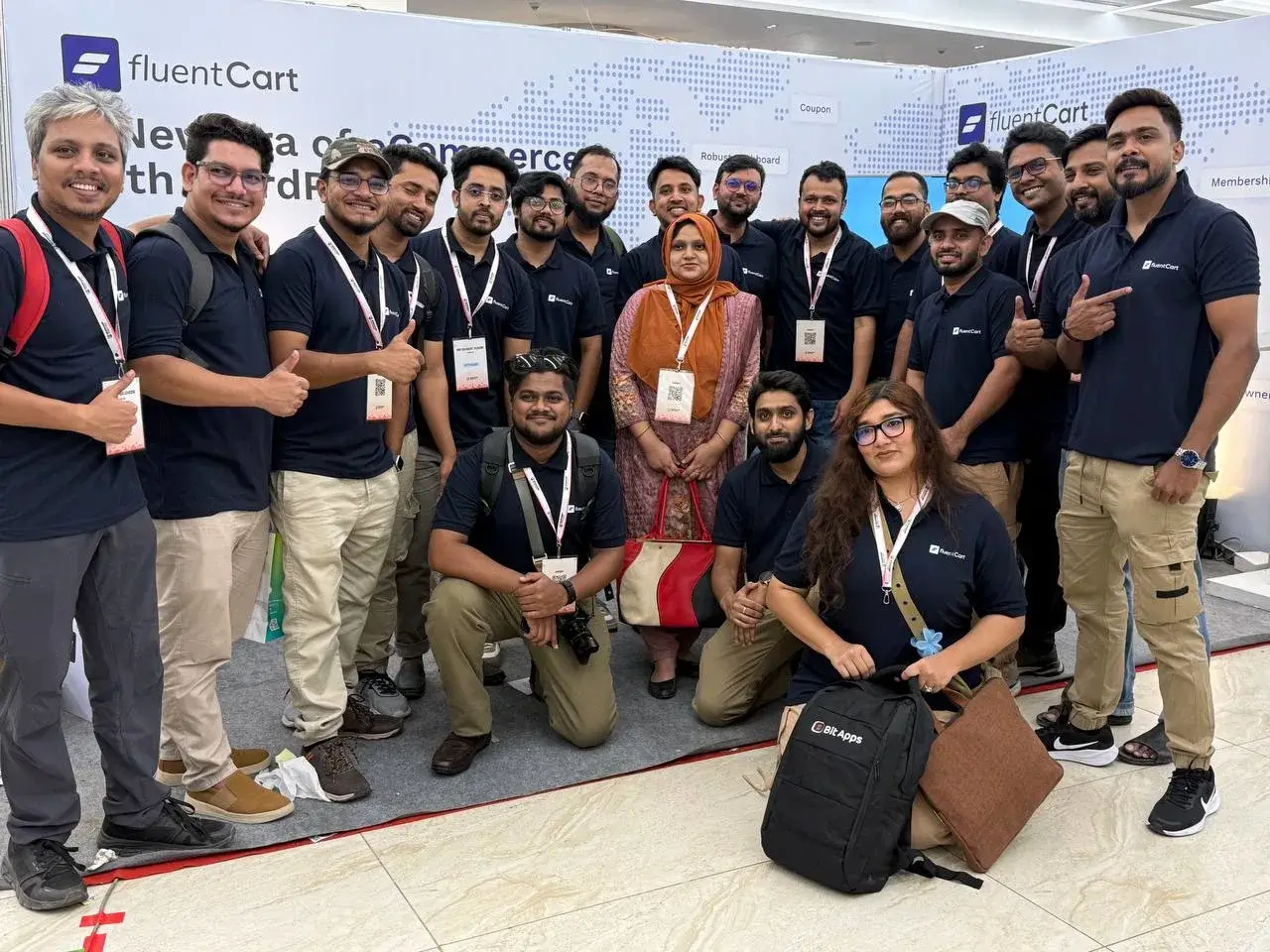
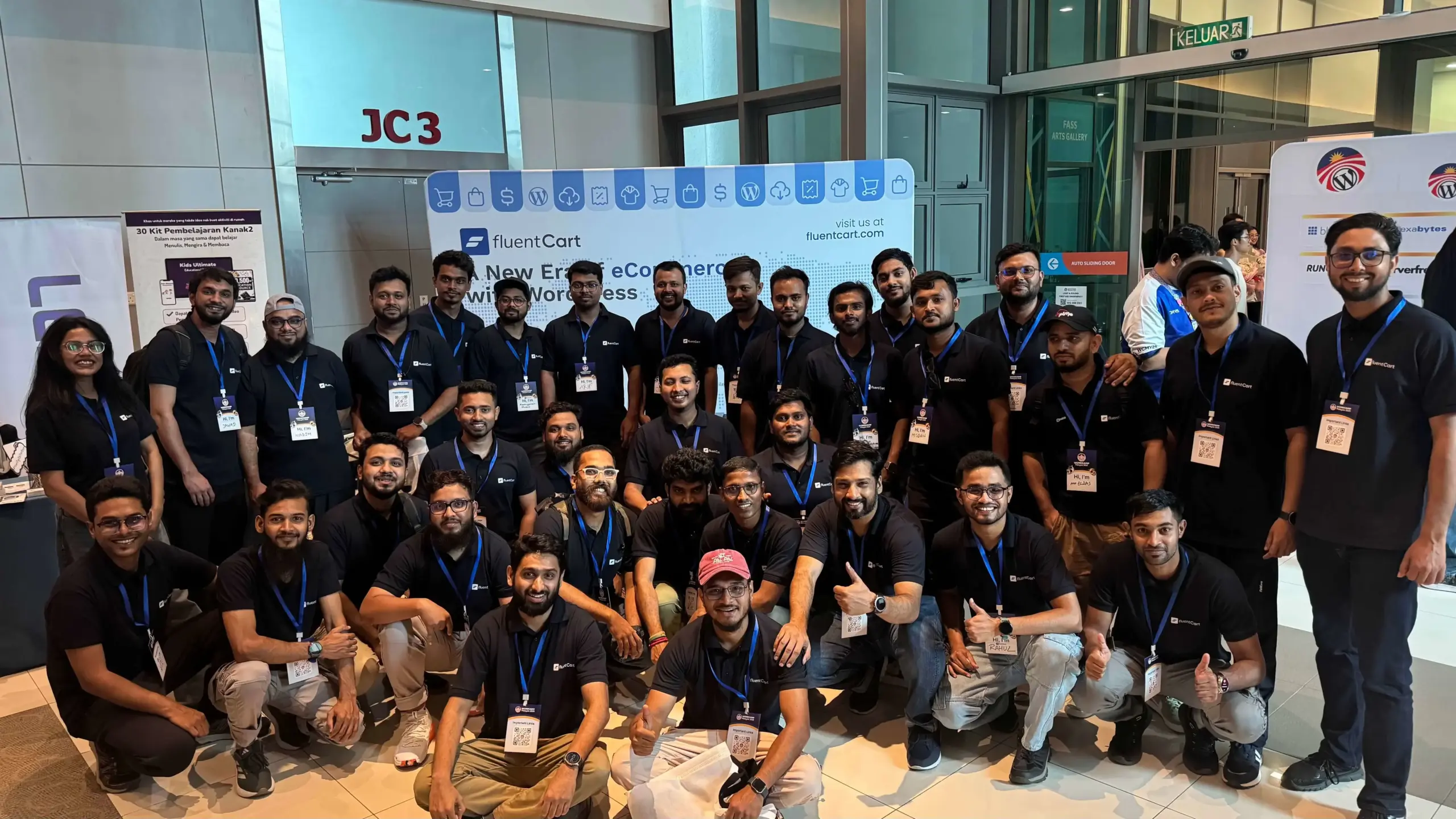
This year also took FluentCart offline. We sponsored WordCamps in Dhaka and Malaysia. These were not logo-only sponsorships. They were conversations. Demos. Hard questions. Honest reactions.
Meeting users face to face changes how you build. It reminds you that clarity beats cleverness. That documentation is as important as features. It also reminds you that WordPress remains a people-first ecosystem.
On the influence side, we ran the largest influencer campaign we have ever attempted. Over 20 influencers onboarded across a global, simultaneous YouTube campaign. Coordinating this was not easy. Managing it was harder. Learning from it was invaluable.
It taught us what resonates, what falls flat, and how technical products need to be explained differently depending on audience maturity.
Contributors and culture
One moment that deserves recognition is our Head of Design contributing to WordPress 6.9. This is not about bragging rights. It reflects the kind of team FluentCart is built by. People who contribute upstream. People who care about the platform, not just their product.
That mindset shows up everywhere. In UI decisions and accessibility considerations. In how much we care about not breaking things unnecessarily.
Wrapping Up
If this year taught us anything, it is that confidence should be earned daily. FluentCart is fast, but it is not finished. It is stable, but it is not immune to mistakes. It is promising, but it still has to prove itself over years, not weeks.
What gives me optimism is not the metrics. It is the pattern. We ship, we listen, we adjust. and test under pressure. We admit when something needs rethinking.
FluentCart exists because we believed commerce on WordPress could be simpler, faster, and more honest. Two months in, that belief feels less like an idea and more like a responsibility.
We are grateful, excited, and very aware that the real work is just beginning.



Leave a Reply