
What Is Liquidation? Process, Types & Who Gets Paid

Liquidation is one of those business terms that tends to arrive with urgency attached. A legal notice lands. A company announcement goes out. A supplier suddenly stops responding.
In this blog, we break down exactly what liquidation means, how the process works, and what it means for everyone involved; without the legal fog.
TL;DR
- Liquidation is the formal process of selling a company’s assets to repay its debts, then closing permanently.
- Three main types exist: Creditors’ Voluntary Liquidation (CVL), Members’ Voluntary Liquidation (MVL), and Compulsory Liquidation.
- A licensed insolvency practitioner, called a liquidator, manages everything from asset sale through to dissolution.
- Creditors are repaid in a strict legal order of priority. Shareholders are always last.
- Voluntary liquidation, when initiated early, gives directors control over the outcome.
- The company ceases to exist as a legal entity once dissolution is complete.
What Is Liquidation?
Liquidation is the legal process of bringing a company to a permanent end by converting its assets into cash, using those funds to repay creditors as far as possible, and then formally dissolving the business. Once complete, the company no longer exists.
Think of it as the final closing sale for an entire business. Everything of value is identified, sold, and the proceeds distributed in a legally defined order. Whatever the proceeds cannot cover is written off, subject to certain exceptions such as personal guarantees held by lenders.
Liquidation is most commonly triggered by insolvency. A company becomes insolvent when it can no longer pay its debts as they fall due, or when its total liabilities exceed its total assets. But insolvency is not the only trigger. A profitable, debt-free business can also voluntarily enter liquidation as a clean exit strategy when its owners decide the time is right to close.
The process is managed by a licensed insolvency practitioner, referred to as a liquidator. Once appointed, the liquidator takes full control. Directors step back. Their powers cease from that point. The liquidator’s legal duty runs to the creditors, not to the directors or shareholders.
The 3 Main Types of Liquidation
Not all liquidations represent the same situation. The type that applies depends on whether the company is insolvent and on who initiates the process.
1. Creditors’ Voluntary Liquidation (CVL)
A CVL is initiated by the company’s own directors when the business is insolvent and has no realistic path to recovery. To proceed, 75% of shareholders by value must pass a resolution to wind up, as confirmed by GOV.UK’s director guidance. CVL is by far the most common form of company insolvency. In 2024, CVLs made up 79% of all company insolvencies in England and Wales, according to the UK Insolvency Service. Choosing this route, rather than waiting for a court order, gives directors meaningful control over timing and the choice of liquidator.
2. Members’ Voluntary Liquidation (MVL)
An MVL is for solvent companies choosing to wind down. There are no unpaid debts. Directors sign a statutory declaration confirming the company can settle all its obligations within twelve months. Remaining assets are then distributed to shareholders. This route is commonly used when a business owner retires, when a group restructures internally, or when shareholders want to extract accumulated value in a tax-efficient way.
3. Compulsory Liquidation
This type is forced. A creditor who has not been paid presents a winding-up petition to court. If the court agrees, it issues a winding-up order and appoints an Official Receiver. Directors lose all control immediately. According to the UK Insolvency Service, “in 2024, compulsory liquidations increased by 14% year on year and reached their highest level since 2014.”
What Happens During Liquidation? (Step by Step)
Understanding the sequence removes a lot of the fear around the word. Here is what actually happens, in order.
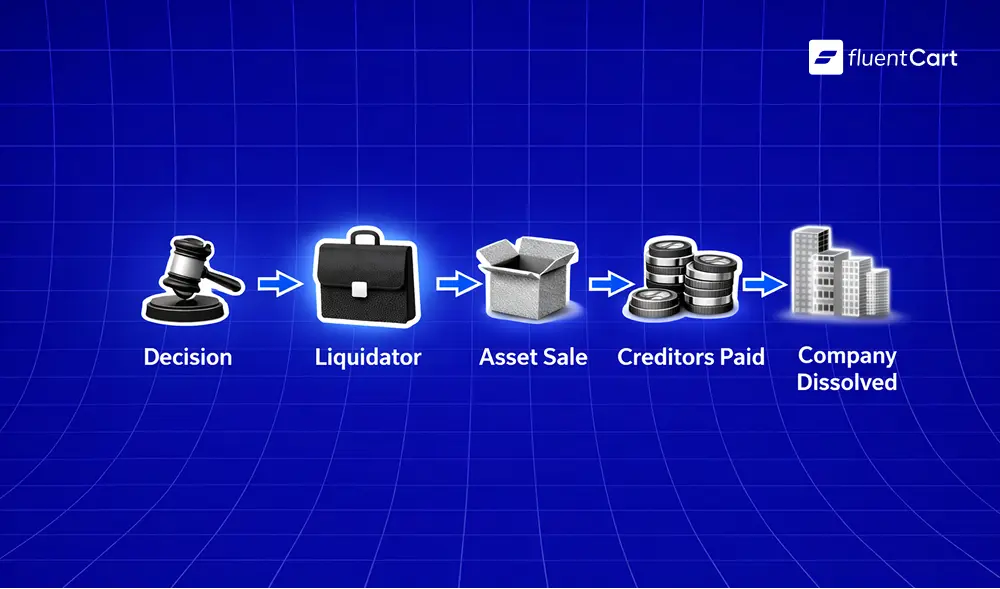
- Decision or Court Order: Either the directors and shareholders resolve to liquidate voluntarily, or a court issues a winding-up order following a creditor’s petition. This moment marks the formal legal start of the process.
- Liquidator Appointed: A licensed insolvency practitioner takes full control of the company. Their legal duty is to the creditors. They are required by law to be independent from the business.
- Public Notice Published: The liquidation is formally registered and publicly announced. In the UK, notices appear on the Insolvency Service register and in The Gazette. This step alerts both known and unknown creditors.
- Assets Identified and Valued: The liquidator takes stock of everything the company owns. Bank accounts, equipment, inventory, intellectual property, outstanding invoices, vehicles, and lease interests are all recorded and assessed.
- Assets Sold: Assets are sold, typically under time pressure, which often means below market value. For retail or eCommerce businesses, this stage commonly involves bulk inventory sales to clearance buyers at a significant discount to original cost.
- Creditors Submit Claims: Creditors formally register what they are owed. The liquidator reviews and verifies each claim, admitting or rejecting accordingly.
- Proceeds Distributed in Priority Order: Cash raised from the asset sales is distributed according to a strict legal hierarchy. This is the most consequential step for everyone owed money.
- Company Dissolved: The liquidator files final accounts with the relevant authority. The company is removed from the register and ceases to exist as a legal entity.
Who Gets Paid First? The Order of Priority
This is the question most people are actually searching for. Whether you are a creditor, a supplier, an employee, or a shareholder, the answer determines whether you see any money.
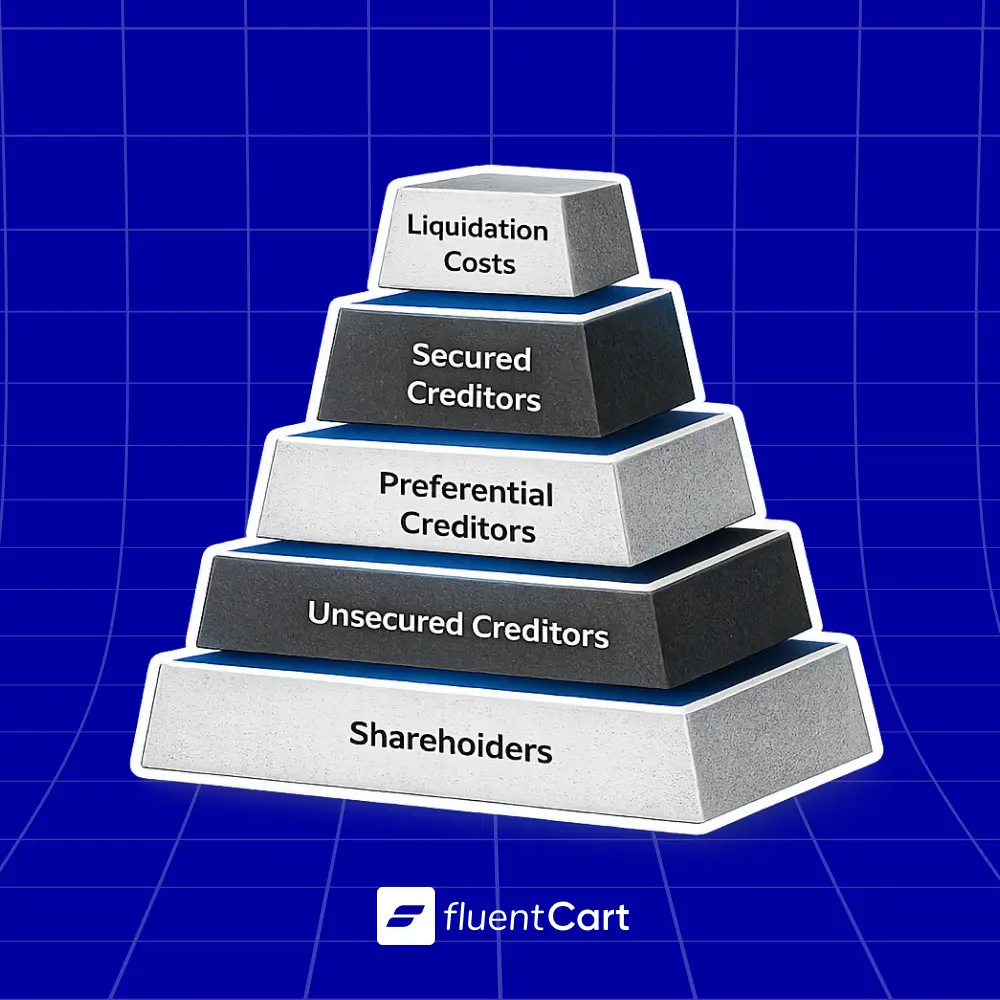
The law requires the liquidator to pay claims in this order:
- Liquidation costs and the liquidator’s fees: The process funds itself first. These costs come off the top before any creditor receives a penny.
- Secured creditors with fixed charges: Banks and lenders holding security over a specific named asset, such as a mortgage over commercial property or finance secured against equipment.
- Preferential creditors: Employees owed arrears of wages and holiday pay sit here, up to statutory caps. HMRC also holds preferential status for certain tax debts, following changes introduced in December 2020.
- Secured creditors with floating charges: Lenders secured against a general class of assets rather than a specific item, such as a charge over stock or trade receivables.
- Unsecured creditors: Suppliers, trade creditors, and customers owed refunds. They are paid equally and proportionally from whatever remains after the classes above have been settled.
- Shareholders: Last in line. In an insolvency liquidation, there is almost never anything left at this point. In an MVL, paying shareholders is the entire purpose of the exercise.
The hard reality for most unsecured creditors in an insolvency liquidation is pennies on the pound, or nothing at all. Assets rarely cover the full picture once secured and preferential creditors have taken their share.
Liquidation vs. Bankruptcy: Are They the Same Thing?
These two terms are often used interchangeably, but they describe different things.
Bankruptcy is a legal status. In the United States, it describes a formal court declaration that an individual or business cannot meet its financial obligations. In the UK, bankruptcy applies only to individuals. Companies in financial distress are described as insolvent, not bankrupt.
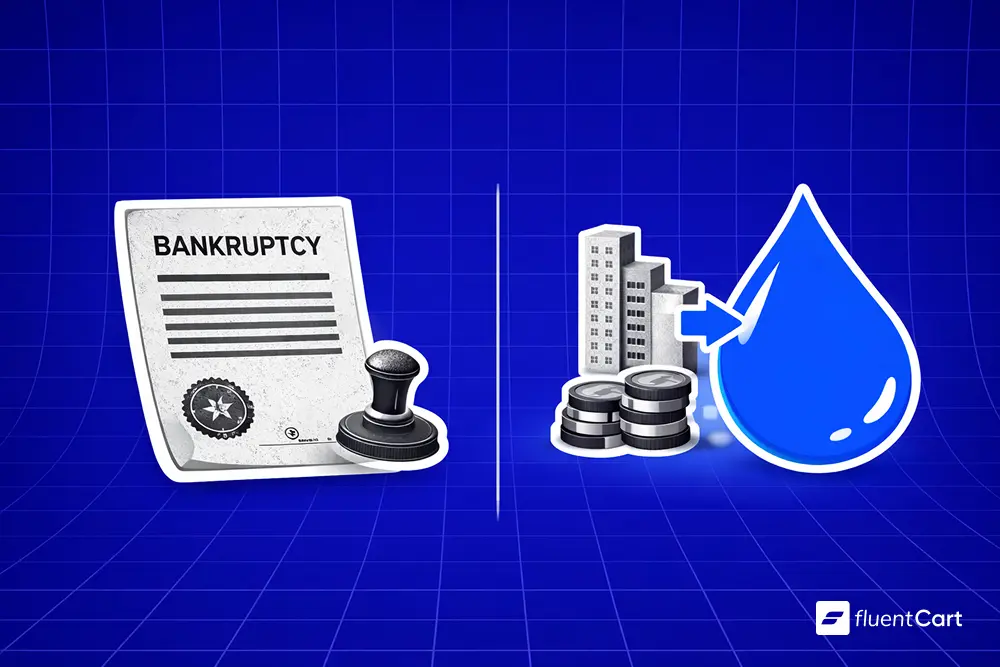
Liquidation is a process. It is the mechanism by which a company is wound down and its assets distributed. A company can enter liquidation as part of a bankruptcy filing. In the US, Chapter 7 bankruptcy is specifically a liquidation process. But liquidation can also happen without any bankruptcy filing at all. An MVL is liquidation without insolvency. A CVL is liquidation driven by insolvency but initiated by the directors themselves.
The simplest distinction: bankruptcy is a declaration of financial failure. Liquidation is what happens to the company’s assets as a result of that, or in the case of a voluntary solvent wind-down, as a matter of strategic choice.
Is Liquidation Always a Bad Thing?
Liquidation is not always bad. Not at all. That assumption is what costs directors time they do not have.
Compulsory liquidation, forced by a court after months of unpaid creditor demands, is a bad outcome for nearly everyone. Directors lose control. Investigations into conduct are more thorough. Creditors typically recover less because the process costs more and takes longer. “The 14% rise in compulsory liquidations in 2024, as recorded by the UK Insolvency Service”, reflects businesses that ran out of options before they ran out of time.
Voluntary liquidation is a different story. A CVL initiated early gives directors a degree of control and demonstrates legal responsibility toward creditors. An MVL is simply a tax-efficient, structured exit for a business that has run its course well.
For eCommerce and product businesses, liquidation also shows up in an operational context long before any insolvency is involved. Clearing deadstock, unwinding a product line, or closing a storefront all require accurate inventory records and clean order data. Businesses that maintain that financial clarity from the start make the asset identification and valuation stage substantially less complicated, whether that exercise ends up being led by a liquidator or handled voluntarily by the owners.
Liquidation done early and on your own terms is structured. It is not chaos. It is a legal process with a beginning, a middle, and a defined end.
Liquidation in Other Contexts
The word travels across industries and carries a different shade of meaning in each.
- Retail liquidation: This is when a business sells surplus, returned, or discontinued inventory in bulk, typically at steep discounts, to specialist buyers or clearance retailers. This happens entirely outside of any insolvency event. It is a standard stock-management tactic for overstocked businesses, and a separate economic activity from the legal process of winding up a company.
- Securities liquidation: In financial markets, liquidating a position means selling it for cash. A trader liquidates a stock by selling shares. A broker may forcibly liquidate a leveraged position if the account falls below the required margin threshold, a common occurrence during periods of high market volatility.
- Crypto liquidation: On crypto exchanges, liquidation refers to the automatic closing of a leveraged position when the collateral value drops below the exchange’s required threshold. It is automated, immediate, and requires no human approval to trigger.
Wrapping Up
Liquidation is a structured legal process, not a collapse. Whether it is voluntary or court-ordered, it follows a defined sequence: a liquidator is appointed, assets are identified and sold, creditors are paid in a strict order, and the company is formally dissolved.
The most important thing for any director or business owner to understand is this: acting early almost always produces better outcomes. A CVL initiated before creditors force the issue is not a sign of failure. It is the legally responsible choice. If you are concerned about your company’s financial position, a licensed insolvency practitioner is the right first call.
Once In a Lifetime Offer
Frequently Asked Questions
Can a director be held personally liable during liquidation?
Yes. If a liquidator finds evidence of wrongful trading under Section 214 of the Insolvency Act 1986, or fraudulent conduct, directors can face personal financial liability and disqualification from future directorships. Acting early and transparently is the strongest protection available.
How long does the liquidation process usually take?
A CVL typically runs 6 to 24 months from appointment to dissolution, depending on the complexity of assets and creditor claims. Compulsory liquidations tend to take longer, often 24 to 36 months or more, due to the involvement of the Official Receiver and mandatory conduct investigations.
What happens to employees when a company is liquidated?
Employees are made redundant. Arrears of wages and holiday pay are treated as preferential creditor claims under UK insolvency law, meaning they rank ahead of unsecured creditors. Statutory redundancy pay and notice pay can also be claimed through the government’s Redundancy Payments Service if the company cannot cover these amounts.
Can a liquidated company be restored or reopened?
In limited circumstances, yes. Under Section 1029 of the Companies Act 2006, a court can restore a dissolved company to the register, typically to resolve outstanding legal matters or recover overlooked assets. It is a technical restoration rather than a business revival, and it is uncommon in practice.

Deputy Marketing Lead, published literary author, and musician. I thrive on marketing for tech companies while composing music, collecting books of lasting depth, exploring cinema with a discerning eye, and studying the arts and history.

Subscribe now
Related Articles and Topics
-

eCommerce Laws in 2026: The 8 Rules Regulators Are Fining Stores Over
The 8 ecommerce laws regulators fined stores over in 2025 and 2026.
-

What Is a Payment Gateway? A Guide for WordPress Store Owners
Confused about payment gateways? Here’s what they actually do, which ones fit WordPress, and how to pick the…
-

GiveWP Alternatives: What Actually Replaces It
GiveWP’s future is shaky. Here’s what real GiveWP alternatives do better in donation-taking operations, and where they still…




Leave a Reply