
Best Products to Sell on World Cup 2026 + Build Your Store Fast
Every four years, a short window opens where fan emotion drives spending like almost nothing else in retail. The 2026 FIFA World Cup, hosted across the United States, Canada, and Mexico, is that window, and it is already open.
Sellers who understand what fans actually buy, and who have the right store infrastructure in place, will capture that demand. Those still figuring out their setup will watch the wave pass.
In this blog, we will cover the highest-converting product categories for World Cup 2026, what makes them work commercially, how to avoid the most common mistakes, and how to get a sports-themed ecommerce store live without the usual friction.
TL;DR
- Custom fan apparel, branded drinkware, watch party bundles, flags and scarves, and novelty accessories are the strongest sellers during World Cup season.
- Consumer purchases during the tournament are emotion-driven, which lowers price sensitivity and increases impulse buys.
- Avoid using FIFA-protected logos or official tournament branding without a license. Focus on team colors, country themes, and fan slogans instead.
- Bundling products into watch party kits increases your average order value significantly.
- FluentCart lets you build and launch a branded physical product store on WordPress, with built-in shipping rules, checkout optimization, and upsell features suited to seasonal campaigns.
What “Best Products to Sell on World Cup” Actually Means
Before jumping to a product list, it helps to understand the demand mechanics. World Cup purchases are not planned the way a laptop or a sofa is. Fans decide in the moment, fueled by a match result, a group chat, or a social media post showing someone’s decorated living room.
The commercial implication is important: impulse-driven markets reward in-stock, fast-shipping, visually compelling products priced in the affordable range.
According to ASI Central, “FOX Sports saw a 30% increase in average US viewership during the 2022 World Cup compared to 2018, and this year’s tournament is larger than ever. With 48 participating teams, 104 matches, and 16 host cities, 11 of them in the United States, the scale of audience exposure is unlike previous editions.”
For sellers, this means demand is not concentrated in one fan base. There are 48 national audiences to serve, and the products that cut across all of them are the ones that deliver the highest volume.
The Top Product Categories for World Cup 2026
Not every World Cup product category is worth your time. These are the ones with the strongest demand, margins, and sales potential in 2026.
1. Custom Fan Apparel
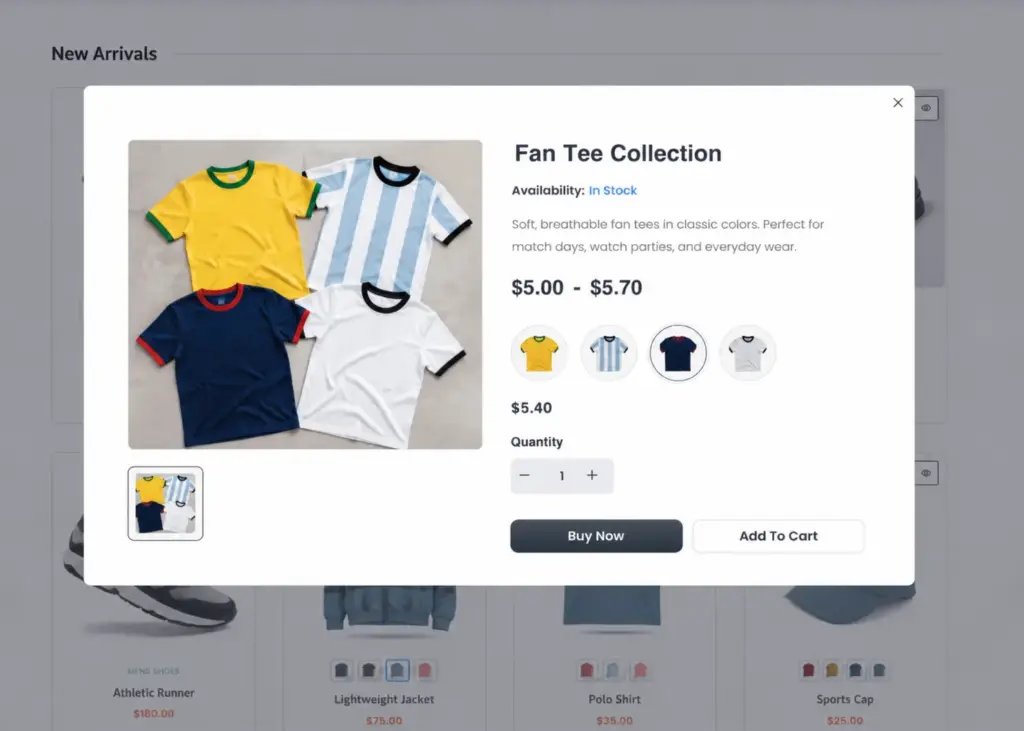
This is the single most visible World Cup product category, and the most competitive. The opportunity is not in replicating official jersey designs. That space is owned by Nike, Adidas, and licensed retailers. The real margin lives in unofficial fan apparel: custom tees with team color schemes, country-slogan prints, vintage-style soccer graphics, and oversized hoodies that serve as casual fan wear long after the tournament ends.
The key insight most sellers miss is longevity. A well-designed custom tee in Brazil’s yellow or Germany’s black and white does not stop being wearable on July 20th. It becomes casual wear. That post-tournament utility is part of the value proposition that justifies slightly higher price points.
Print-on-demand reduces inventory risk, but sellers who pre-stock popular designs around the largest diaspora fan bases (Mexico, Brazil, Colombia, Argentina, England, Germany) can offer faster delivery and hold better margins. Focus on the countries with the largest US-based supporter communities for domestic demand.
2. Branded Drinkware and Tumblers
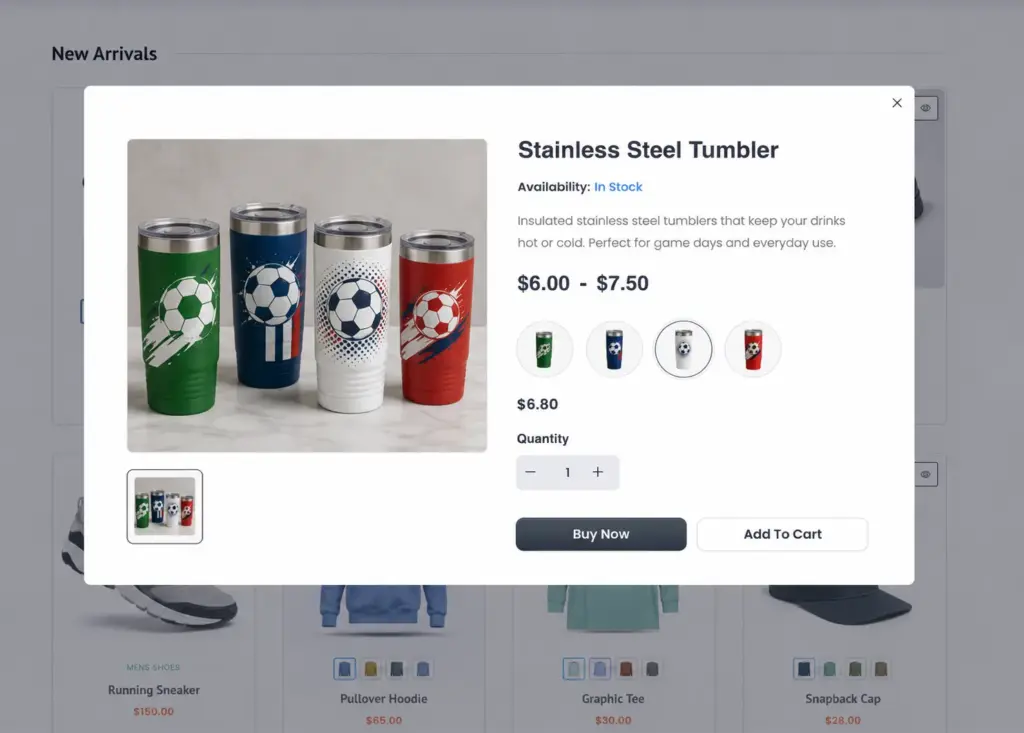
Drinkware consistently ranks as the top-performing World Cup category among e-commerce sellers, and the reason is simple: watching football and drinking go together everywhere, from living rooms to rooftop bars to outdoor public screenings.
Stainless steel insulated tumblers, beer mugs, and team-color plastic party cups all perform well. These items are easy to customize without complex mold development. Team color wraps, soccer ball motifs, host city references, and tournament date prints all work within print-on-demand or small-batch wholesale.
What makes drinkware uniquely strong from a business perspective is its shelf life. A fan who buys a tumbler in tournament colors will use it for months or years afterward. That extended visibility is a form of post-purchase marketing that few seasonal categories can offer.
3. Watch Party Kits and Party Bundles
Bundling is where smart sellers separate themselves from the pack. An estimated 100 million Americans are expected to watch World Cup matches from home, bars, and outdoor screenings. Nearly all of them will want some form of themed setup.
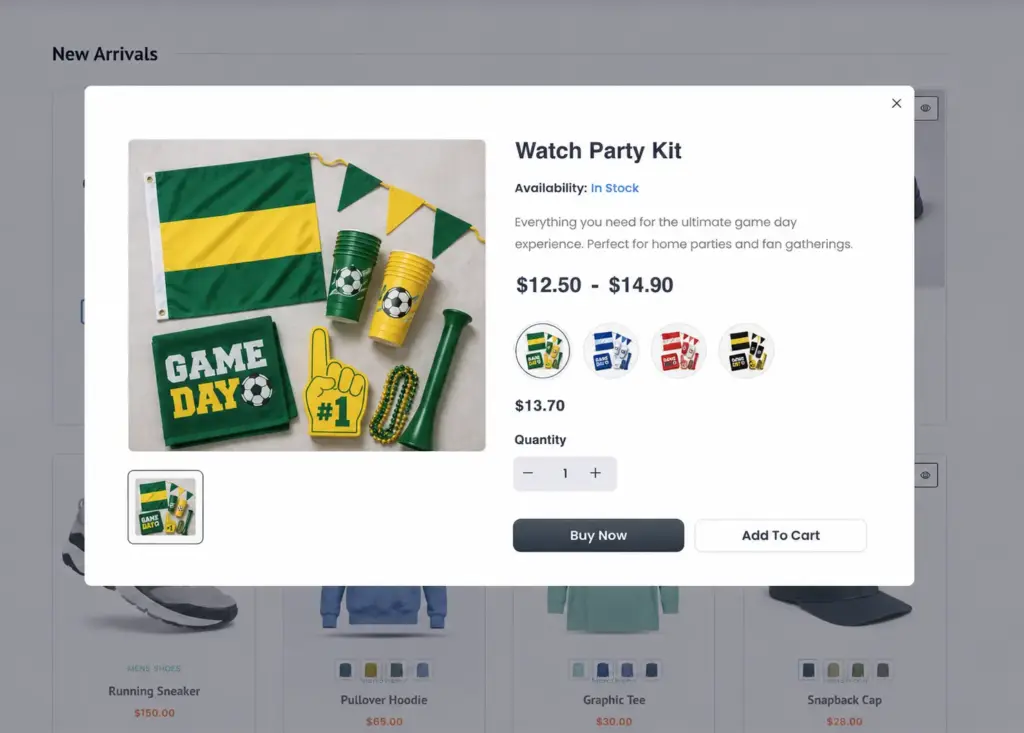
Individual items, a flag here, a cup there, generate modest orders. A curated “watch party kit” containing a team flag, themed cups, rally towels, and a banner in matching colors creates a purchase decision that feels complete. The buyer stops adding to cart individually and simply buys the bundle, which consistently raises average order value.
The fulfillment side is worth noting here. Bundled kits require coordinated SKU management, accurate stock levels across multiple product types, and a checkout that handles variable shipping rules cleanly. These are backend details that quietly determine whether your bundling strategy earns or frustrates.
4. Flags, Scarves, and Fan Accessories
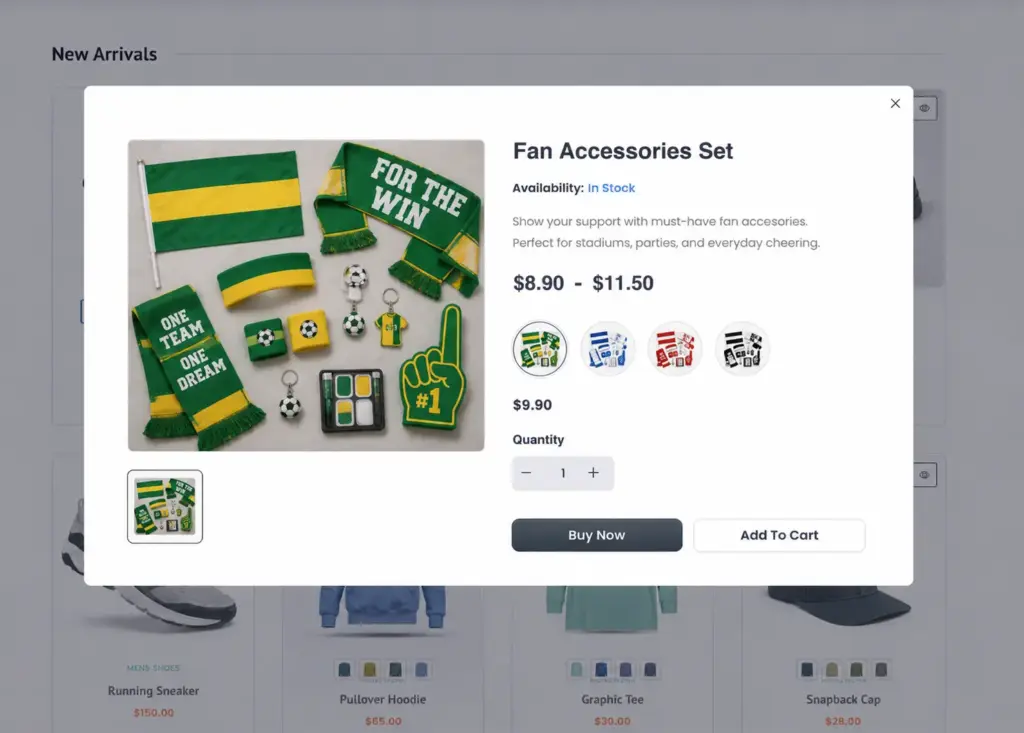
National flags and soccer scarves are among the first things fans buy when a tournament approaches. They are displayed in windows, worn around necks in stadiums, pinned to car antennas, and hung in bars. Demand is predictable, production is simple, and margins on volume sales are solid.
Scarves specifically carry cultural weight in football fan culture globally. A jacquard-knit scarf with a country’s colors and a generic supporter slogan is a collectible as much as it is a product. Lightweight, low shipping cost, purchased in pairs or groups, they are structurally excellent for ecommerce.
Accessories like wristbands, headbands, face paint kits, foam fingers, and keychains round out this category. These are low-unit-cost items that work as add-ons in a bundled checkout or as standalone impulse buys.
5. Novelty and Collectible Items
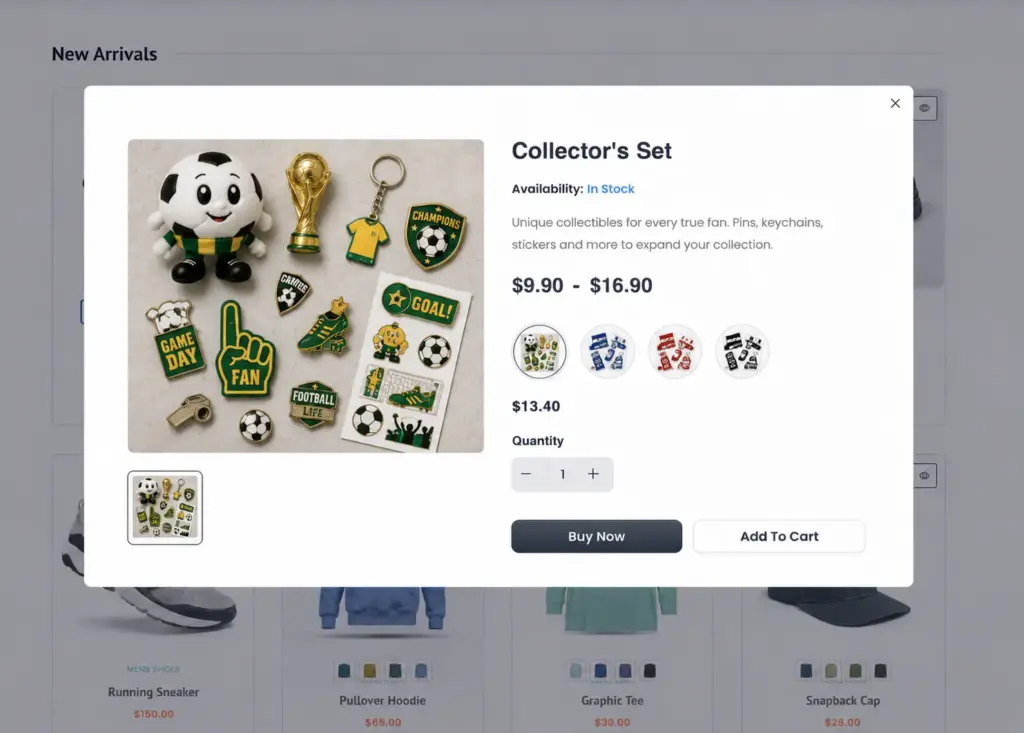
Pins, enamel badges, plushie mascots, collectible stickers, and limited-run keychains tap into a different buying motivation: the collector instinct. These products are particularly strong in niche fan communities, souvenir markets near host cities, and online stores with a focused sports collectibles angle.
The pricing ceiling on well-executed collectibles is meaningfully higher than other categories. A pin set or a limited-edition badge sold through a fan collector store can command four to five times the margin of a generic party accessory at similar production cost.
6. Pet Accessories
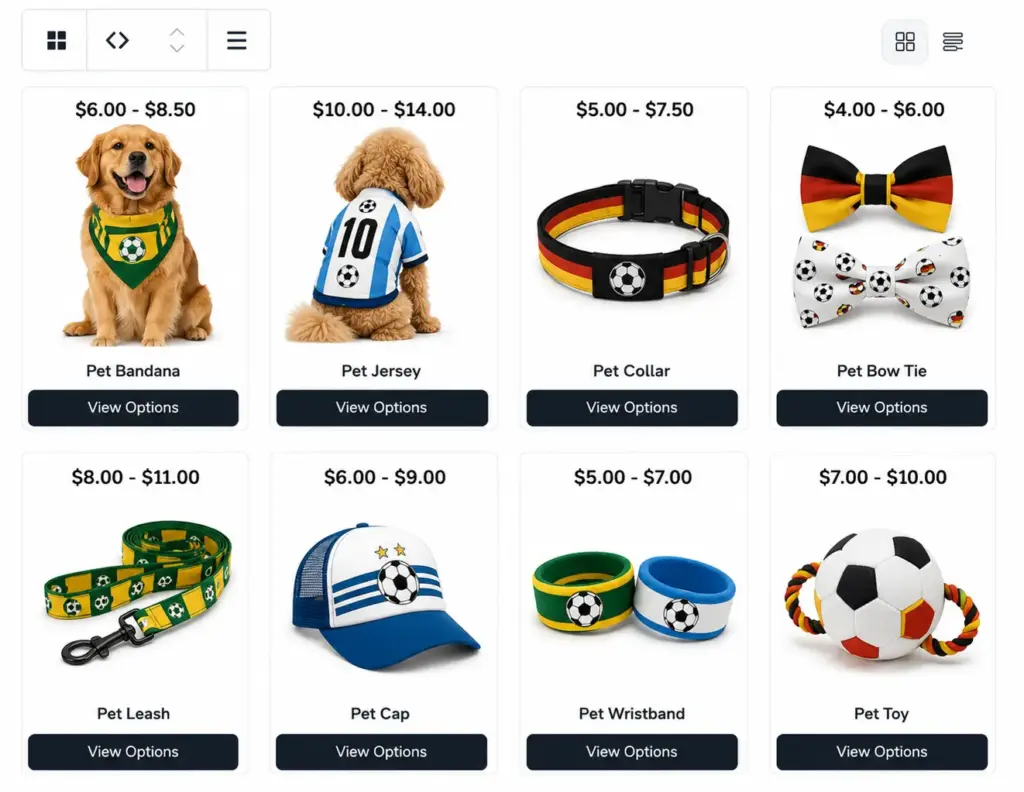
This one surprises sellers who have not tried it. Approximately 40% of US households own a dog, and pet owners love dressing their animals for events. Soccer-themed pet bandanas and mini jerseys generate strong social media traction, the kind of organic reach that reduces paid acquisition cost during a window when ad inventory is expensive.
Pet accessories are emotionally purchased, visually shareable, and low-cost to produce. That combination makes them a low-risk, high-upside addition to a World Cup product catalog.
The FIFA Licensing Reality (And How to Sell Safely)
This is the section most product guides skim past, and it matters a great deal. FIFA actively protects its trademarks. The official tournament logo, the “FIFA World Cup 2026” name, the official mascot, and FIFA-partner branding are all legally protected and cannot be used on products without an official license.
What Sellers Can Use Freely
The sellers can freely sell national team colors and color combinations, country names, national flag designs, generic soccer imagery (balls, goals, pitches), original fan slogans, host city names, and tournament year references.
What sellers cannot use
Any combination that incorporates FIFA’s protected marks, official tournament graphics, or licensed partner branding.
The practical takeaway is to design around national identity and fan culture rather than official tournament identity. A “Brazil Fan Kit, 2026 Edition” built in yellow and green is commercially strong and legally clean. A “FIFA World Cup 2026 Brazil Official Fan Kit” is a trademark problem.
Note: When in doubt on specific design elements, consult a trademark attorney before going to production.
The Mistake Most Sellers Make with Seasonal Products
Timing is the most common failure point, and it compounds in both directions.
Reacting too late means factory capacity is already constrained, prices are higher, and shipping windows are tight. Missing a production or freight deadline during a four-year event means missing the entire sales season.
But there is a second mistake that gets less attention: over-customizing. Complex multi-color designs, special-order materials, and intricate packaging add production time and increase error rates. For a tournament that runs roughly six weeks, every day of delay in production is a day lost in a fixed window.
The sellers who win consistently keep their SKU count focused, their designs bold but simple, their inventory pre-positioned in relevant markets, and their store checkout frictionless enough that an impulse buyer completes the purchase in under two minutes.
Building a World Cup Store That Actually Converts
Knowing what to sell is half the equation. The store infrastructure determines whether that knowledge translates into orders.
A World Cup fan store needs a few specific things that generic ecommerce templates often underdeliver on: fast product browsing by country or category, smooth checkout that handles bundles without confusion, built-in shipping rule logic for physical goods, and the ability to add upsells at checkout without rebuilding the cart experience.
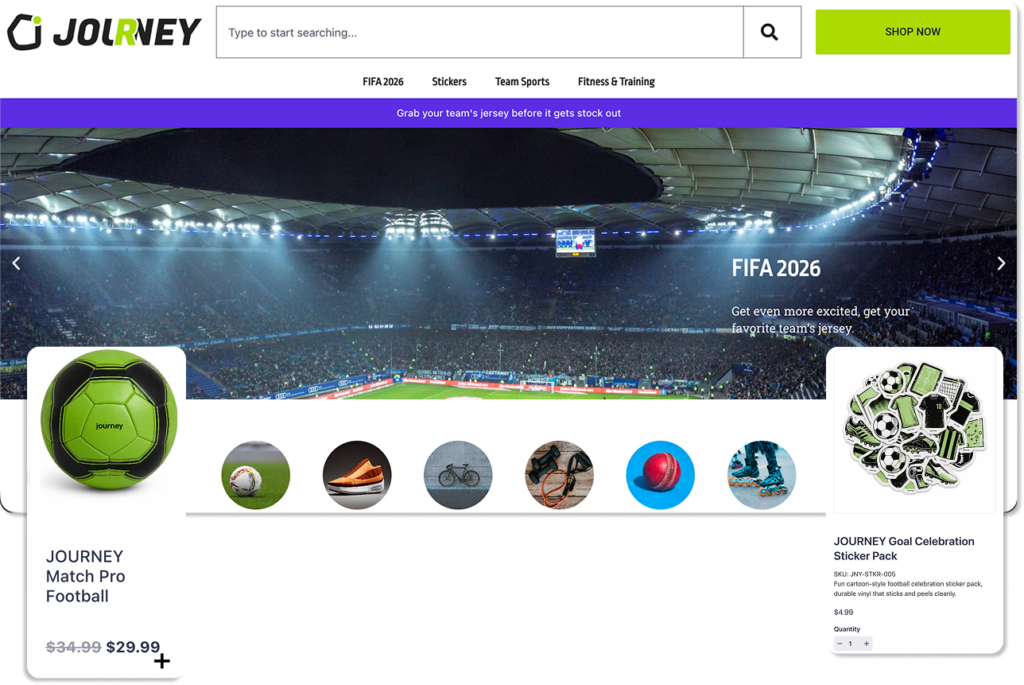
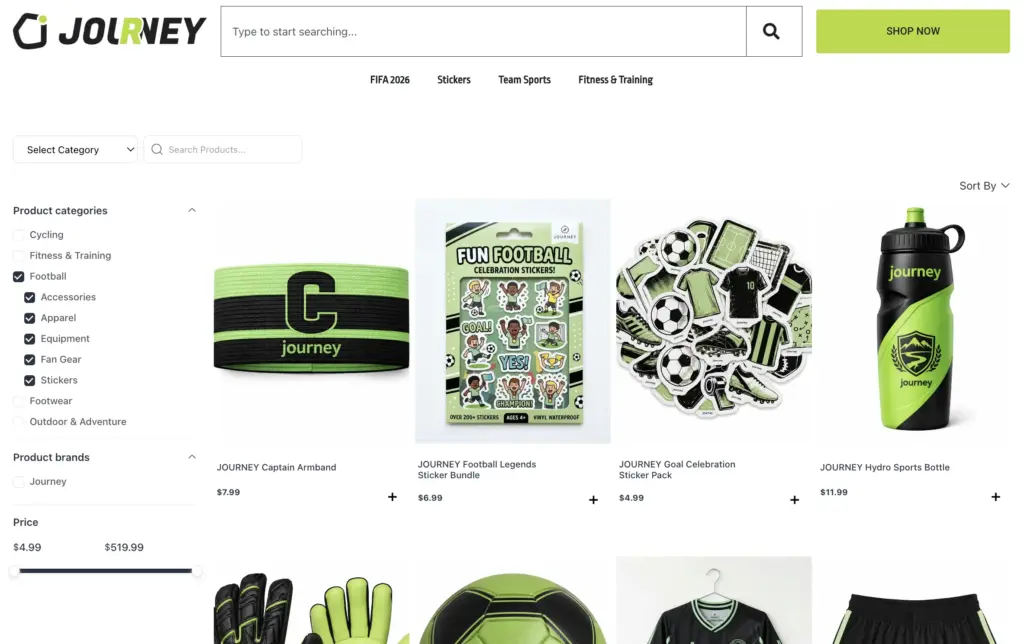
Here’s a demo sports store made with FluentCart:
Set Up Your Product Catalog Fast
FluentCart’s physical products features fit naturally here. It is a WordPress-native ecommerce plugin built for exactly this kind of focused, conversion-oriented selling. You can set up a sports-themed store, configure your product catalog by national team or product type, and manage shipping zones and rates without needing a third-party plugin stack.
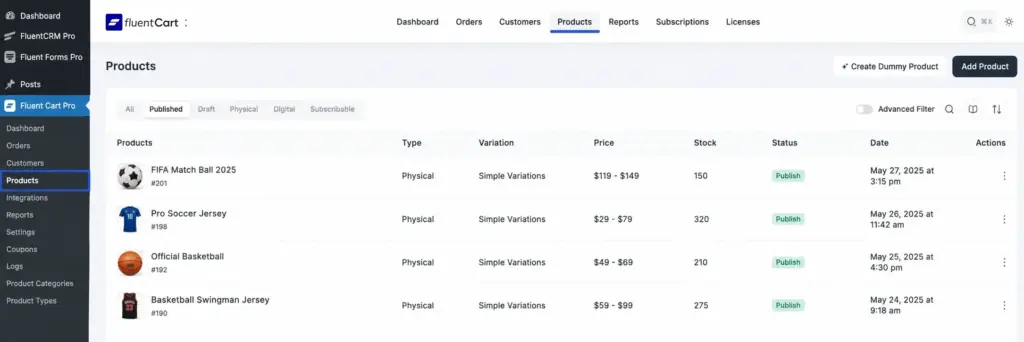
Design for Fan Identity, Not Just Aesthetics
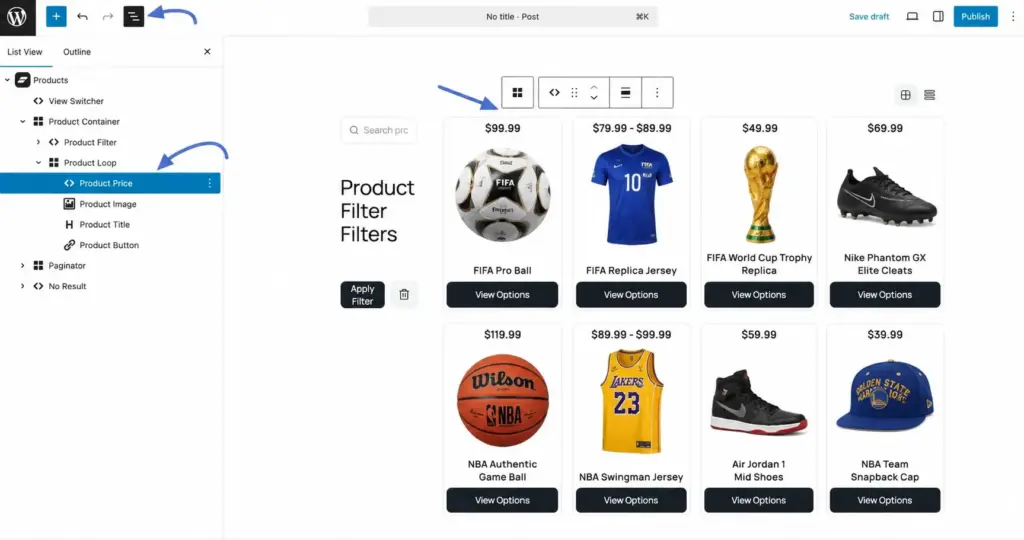
The store design tools let you match the visual identity of your products, whether that is a high-energy soccer fan aesthetic or a premium sports collectible look, without custom development work. The Elementor widget integration means you can build out landing pages for specific team stores or tournament bundle pages quickly.
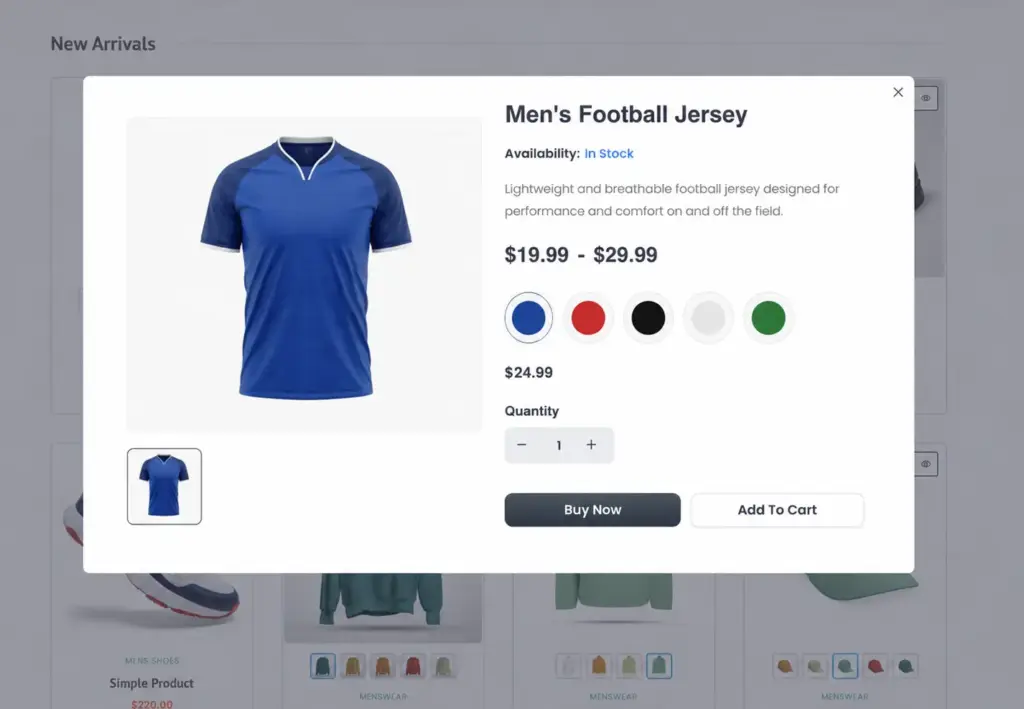
At checkout, FluentCart’s effortless checkout handles the “want to add a matching scarf?” moment that drives average order value on fan merchandise. For sellers running watch party kit bundles, that checkout structure is where the revenue difference shows up most clearly.
Handle Shipping and Tax Without the Manual Work
Shipping and taxes are particularly relevant for seasonal physical product sellers. Tournament demand is geographically concentrated around host cities: New York, Los Angeles, Miami, Dallas, Houston, Philadelphia, Seattle, San Francisco, Kansas City, Atlanta, and Boston.
Being able to set zone-specific shipping rates, display accurate delivery estimates at checkout, and handle tax compliance across US states without manual calculation reduces the operational load during a period when orders are moving fast.
Who Is Selling World Cup Products and How
The demand spans several distinct seller types, and the product strategy differs for each.
- Print-on-demand sellers: Building their catalog on fan apparel and phone cases benefits from zero inventory risk, but their competitive edge is design speed and catalog breadth. Covering all 48 participating nations with clean, original designs creates a long-tail catalog that captures niche searches competitors have not bothered with.
- Wholesale and dropship sellers: Moving higher volumes of flags, drinkware, and party supplies requires tight supplier coordination, confirmed production schedules, and a backend that can handle the order surge without fulfillment errors. Their margin lives in volume and operational efficiency.
- Collectibles and memorabilia sellers: Operating a fan merchandise store, sports pins, or limited-run products is playing a different game entirely. Their customers are not impulse buyers. They are intentional collectors who research, compare, and often buy based on perceived scarcity. The store experience and product presentation for this segment needs to signal quality and authenticity, not just availability.
All three seller types share one requirement:
- a store that loads fast,
- presents products clearly,
- and completes checkout without friction.
That is the baseline for converting World Cup traffic, which peaks hard and drops off just as quickly.
Key Takeaways
The best products to sell on World Cup 2026 are not necessarily the most complex or the most expensive. They are the ones that connect with fan emotion quickly, ship reliably within the tournament window, and deliver enough post-event utility to justify the purchase.
Custom fan apparel and branded drinkware lead on volume and margin. Watch party bundles lead on average order value. Flags, scarves, and accessories are the bread-and-butter of fan retail. Novelty and collectible items punch above their weight in niche markets.
Across all categories, the variables that separate profitable sellers from those who just break even are inventory timing, design decisions that avoid trademark problems, and a store checkout experience that converts impulse traffic before the buyer closes the tab.
The tournament window is short. The demand curve is predictable. The preparation is where the result is decided.
Final Thoughts
The 2026 World Cup is already underway. Sellers with inventory positioned, stores optimized, and product designs ready are capturing demand right now. For those still setting up, the window is tight but not closed.
If you are building or refreshing a sports merchandise store with FluentCart, it gives you the physical product selling tools, checkout flow, and shipping management to move quickly without sacrificing store quality.
FAQs
What to sell during the World Cup?
Fan apparel, branded drinkware, national flags and scarves, watch party decoration kits, and novelty accessories like pins and face paint are the strongest categories. Products that combine visual team identity with practical everyday use, a tumbler, a tee, a scarf, tend to have the best margin and post-tournament staying power.
Which product is best for selling during major sports events?
Drinkware and custom apparel consistently rank at the top for ecommerce sellers because they are practical, highly customizable with country themes, and purchased repeatedly across a fan group. Bundled watch party kits often generate the highest average order values.
What is the most profitable World Cup opportunity for independent sellers?
Sellers who move early on pre-positioned inventory, focus on the largest fan diaspora populations, and bundle products into complete kits rather than selling individual items tend to see the strongest margins. The profitability window is concentrated in the four to six weeks surrounding the tournament.
What is the best thing to sell at football games or fan events?
At physical events near stadiums or fan zones, the strongest sellers are lightweight, portable, and visually expressive: flags, scarves, face paint kits, foam fingers, inflatable cheering sticks, and novelty accessories. These items sell fast at high turnover with low per-unit cost.

Deputy Marketing Lead, published literary author, and musician. I thrive on marketing for tech companies while composing music, collecting books of lasting depth, exploring cinema with a discerning eye, and studying the arts and history.

Subscribe now
Related Articles and Topics
-
Wholesale Pricing: A FluentCart Guide for WordPress Store Owners
Learn how to set up wholesale pricing. Using FluentCart for this, you get five practical methods, from simple…
-

eCommerce Laws in 2026: The 8 Rules Regulators Are Fining Stores Over
The 8 ecommerce laws regulators fined stores over in 2025 and 2026.
-
Digital Product Ideas for Passive Income: The Complete Roundup
Real digital product ideas, real numbers, and the honest truth about what passive income actually costs and what…




Leave a Reply