
The Best Business in the World You Need To Know
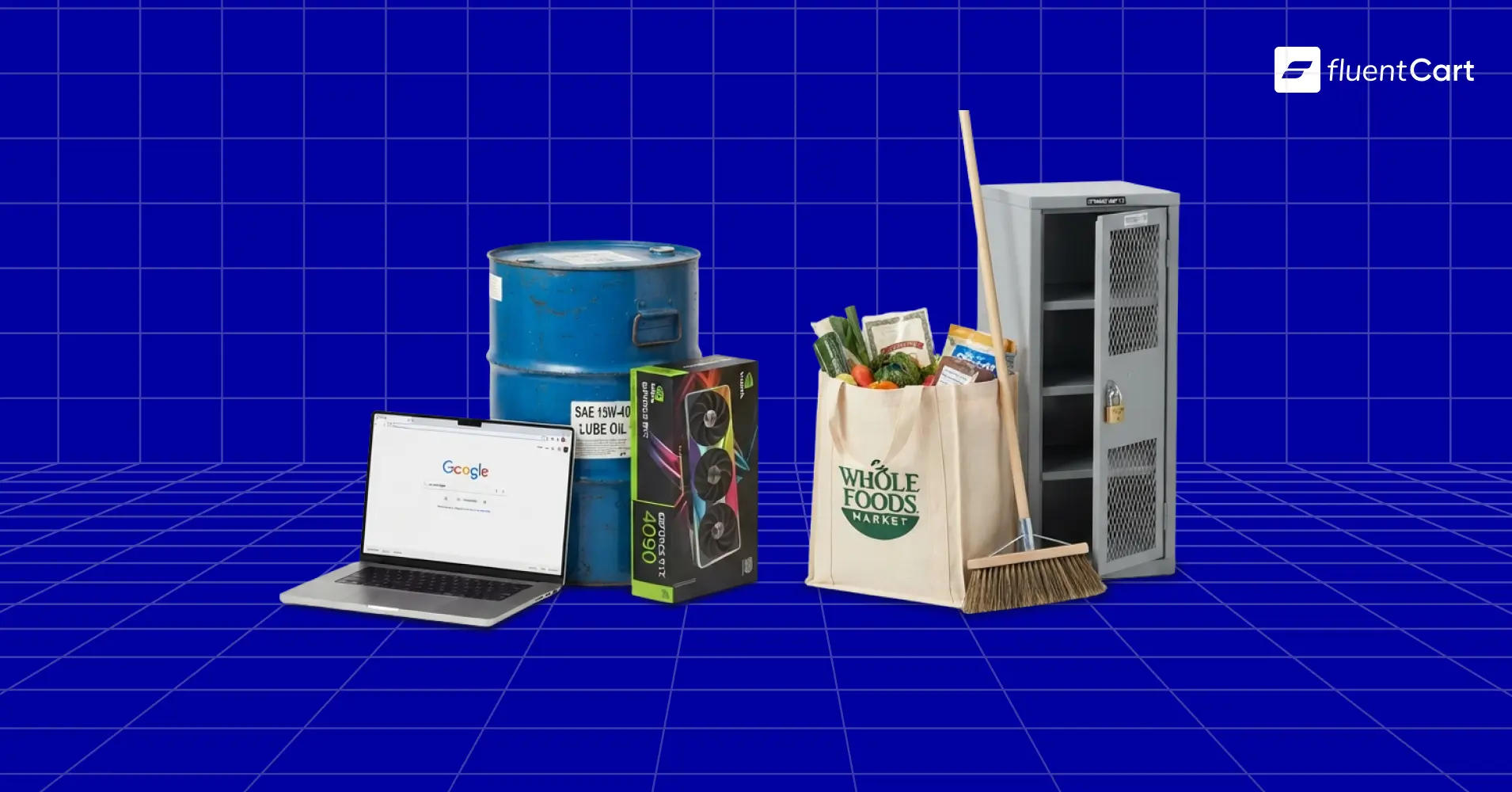
You landed on this page. That means you’re wandering. Wandering about the biggest business in the world, wondering about the best business in the world that you could actually start. Real talk, I was wandering about the exact same thing. So I went and deep-dived into it, and I want to walk you through what I found. This is a rabbit hole. It’s an ant colony of a topic once you start pulling threads. But trust me, it’s worth exploring.
Here’s the first thing I ran into. Everyone assumes “best business in the world” means a logo you’d recognize. Apple. Amazon. Something with a market cap the size of a small country. But why would the biggest business on Earth have anything to do with the one you could actually build? James Sinclair, a UK entrepreneur who owns ten day nurseries among other ventures, once stood in front of eight sealed envelopes on camera.
Each one held a business he considers genuinely excellent to start, build, or buy. Not one of them was a household name. Storage. Waste collection. Essential home repairs. He ranked them out loud, second-guessed himself twice, and landed on a conclusion most people never reach.
Let’s go down this rabbit hole together.
TL;DR
- “Best business in the world” quietly means two different things, and most people never separate them
- The corporate giants win on scale, but almost nobody can replicate what made them win, and I’ll show you exactly why in a table below
- A Reddit thread full of real business owners answered this question better than most published lists
- Four traits separate a good business from a great one: stickiness, predictable cash flow, a moat, and low staffing cost
- The categories that keep winning are Essential Services, Professional Services, Storage & Space Rental, Daily-Need Retail, and Waste & Facilities
- None of them are exciting. That’s exactly why they work
- Before picking one, you need to run yourself through a quick self-check, which I’ve included below
- Whatever you land on, selling it online runs on the same principles once you get there
The Best Business in the World
Let’s be fair to the giants first, because the numbers are wild. As of mid-2026, technology companies hold six of the world’s ten most profitable spots, led by Alphabet, Microsoft, Apple, and NVIDIA, with Saudi Aramco sitting as the highest-earning non-tech company on that same list, according to Visual Capitalist’s most recent ranking. That’s real. Nobody’s arguing otherwise.
Here’s what doesn’t usually make it into the table. It’s not just that these companies make a lot of money. It’s what’s actually sitting underneath that number, decades of infrastructure, timing, and access that took a long time to stack up. And the list isn’t limited to the five logos everyone already knows. Some of the biggest players on Earth barely register as household names, and a few of them started exactly where you’re standing right now.
Real talk, before you scroll. Look at the fourteen names below and guess, actually guess, which ones you could realistically go start this weekend. I’m dead serious. Take five seconds. I’ll wait.
List of Biggest Businesses
| Company | Scale (mid-2026) | What it’s built on |
|---|---|---|
| BlackRock | $14 trillion in assets under management, more than the GDP of every country except the US and China | Manages money for pension funds, governments, and everyday investors, holding stakes in almost every major public company on Earth |
| Vanguard | Roughly $12 trillion in assets under management | Low-cost index investing, technically owned by its own funds instead of outside shareholders |
| NVIDIA | About $4.83 trillion market cap, the world’s most valuable company | The chip architecture the entire AI industry currently runs on top of |
| Alphabet (Google) | About $4.36 trillion market cap | Two and a half decades of search data and a network effect that gets stronger with every user |
| Apple | About $4.33 trillion market cap | A hardware, software, and retail ecosystem across a billion-plus devices, two decades in the making |
| Microsoft | About $2.86 trillion market cap | Forty years as the default choice inside enterprise IT departments |
| Norway’s Government Pension Fund Global | Over $2 trillion in assets | Built entirely from oil and gas revenue, now holds a stake in roughly 1.5% of every public company on Earth |
| Saudi Aramco | About $1.682 trillion market cap | Nationalized oil reserves owned by the Saudi government, the largest and lowest-cost in the world |
| Costco | $249.6 billion in annual revenue | Started as one warehouse in Seattle, 1983 |
| Cargill | $154 billion in annual revenue | 160 years controlling grain, meat, and commodity supply chains most of the food industry runs through |
| Waste Management | About $89.5 billion market cap | Started as a single garbage truck route, 1968 |
| Public Storage | About $56.87 billion market cap | Started as one self-storage lot, 1972 |
| ADT | About $5.11 billion market cap | Started with 50 homes wired to one telegraph call-box, 1874 |
| H&R Block | About $4.99 billion market cap | Started as one small tax office in Kansas City, 1955 |
So, how many did you guess? Hold that number. I’m not telling you yet. Five of these fourteen didn’t start as giants, they started exactly like the categories you’re about to read below, and by the end of this article you’ll know exactly which ones, and why it matters more than the other nine combined.
The Fantasy, the Reality Check, and Best Business In The World
You didn’t come here for an oil company’s profit margin. Somewhere in the back of your head, you’re chasing the next Facebook. The idea that turns a laptop and a late night into something worth more than most countries. That instinct is a good one. It’s just missing a detail nobody puts in the highlight reel.
In 1995, Jeff Bezos asked his parents for money to get Amazon off the ground. They handed him $245,573 from their own savings, real seed money, while Bezos himself warned them there was a 70% chance they’d never see it again. Amazon wasn’t built from nothing. It was built from a laptop, grit, and a quarter-million-dollar head start most people will never have access to. That’s not a knock on Bezos. It’s just the part of the story that gets cut for time.
What is the Next Big Idea
Most people chasing “the next big idea” are actually chasing someone else’s highlight reel, minus the invisible parts. The seed money. The timing. The decade of compounding luck stacked underneath the grit. Set that dream down for a second. Not kill it. Just set it down.
Because once you strip the fantasy out, what’s actually out there splits into two very different games. One’s a scoreboard of massive companies, Aramco, Apple, Alphabet, pick your fighter. The other is quieter and way less glamorous, essential services, storage, professional services, daily-need retail. Neither game is wrong. They’re just answering two different questions, and almost nobody separates them before picking a direction.
Here’s what’s actually going on. “Best” without a metric doesn’t mean anything on its own. The Best at making money? Best to start with $500 and a laptop, no parents required? Best at surviving a recession without laying anyone off? Pick one, and the entire ranking flips underneath you. I’m going to give you the metric that actually matters if you’re a person deciding where to put your time. Not the one that flatters a headline.
Reddit Community Figured Out Years Before I Did
There’s a Reddit thread in r/Entrepreneur with hundreds of replies wrestling with almost this exact question, and honestly, it holds up better than most published business content on the topic. Not because of trend predictions. Because of the numbers real operators dropped into the comments without thinking twice.
One landscaper described running a business projected at $500,000 to $600,000 in revenue with a 15% net margin. A construction business owner laid out margins as low as 0.5% net on large projects, but 60% on smaller in-house jobs, and explained exactly why the gap exists. A funeral director broke down real costs, real embalming fees, real casket markups, and the uncomfortable truth that demand for the service never disappears.
The top comment, still sitting near the top years later, put it bluntly: “if you wanna actually make money, start a service business and do it better than the competition.” Hundreds of people upvoted that over every trend-chasing answer in the thread, ahead of crypto, EVs, and Web3.
Most people don’t figure this out until they’ve already burned a year chasing an idea that looked exciting on a pitch deck. This crowd skipped straight to the boring truth.
The Four Things That Separate a Good Business From a Great One
Here’s the framework serious business buyers actually use before they write a check. Four traits, and a business earns real staying power when it hits most of them.
Stickiness. Once a customer starts using you, do they leave? A daycare parent rarely switches mid-year. A diner picks somewhere new on a whim. That gap changes everything about how a business behaves day to day.
Predictable cash flow. Can you forecast next month’s revenue within a reasonable margin, or does every month start from zero? Banks care about this more than almost anything else. So should you.
A moat. Regulation, licensing, planning permission, capital requirements. Anything that stops a stranger with money from copying you next Tuesday.
Staffing cost as a share of revenue. The quiet killer of businesses that look profitable on paper. Some businesses that appear healthy are actually bleeding 55 to 60% of turnover on wages alone, and nobody notices until cash gets tight.
Ask Yourself These Before Starting a Business
Here’s what most “best business” content skips completely. It hands you a list and walks away. It never asks what you’re actually bringing to the table. So before you scroll to the categories below, sit with these for real.
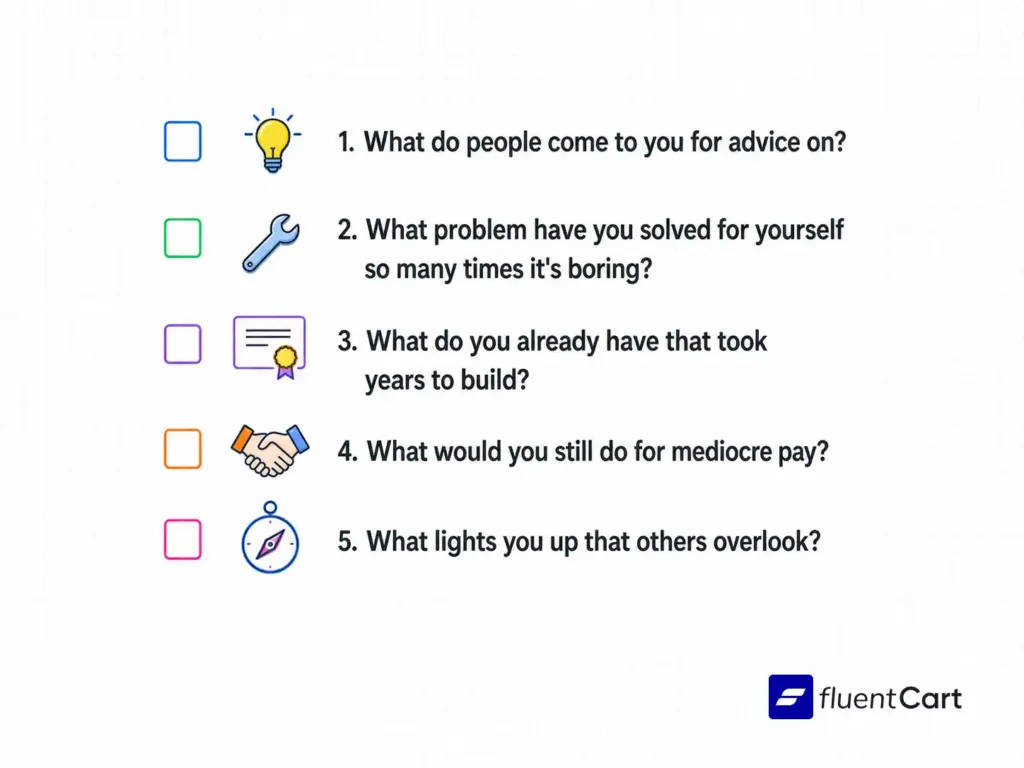
- What do people already come to you for advice on, for free?
- What’s a problem you’ve solved for yourself so many times it’s boring to you, but strangers still pay someone else to fix?
- What do you already have, a certification, a network, a location, years in an industry, that took time to build and can’t be downloaded overnight?
- What do you have that some kid with an AI subscription couldn’t clone by next weekend?
- What would you still do even if the pay were mediocre for the first year?
- Reading the five categories below, which one does your gut react to first?
Your answers here matter more than any ranking on this page. A category is just a shape. You’re the one who has to fill it.
The Categories That Actually Win
Remember that table of fourteen names a few sections back, and the number you were holding onto? Here it is. Strip away the noise and the same five categories keep showing up, whether the source is a Reddit thread, a UK entrepreneur ranking mystery envelopes on camera, or Google’s own AI Overview quietly recommending “high-margin, low-overhead models” to anyone who asks. And every single one of them already produced a giant that started exactly like you would.
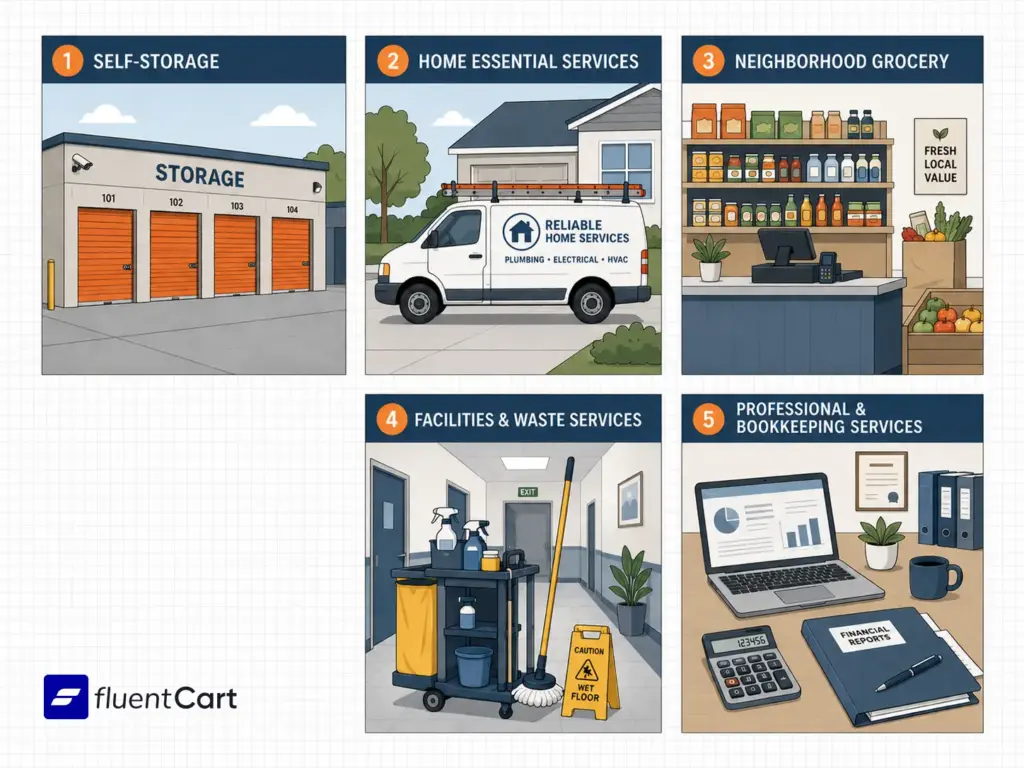
Essential Services.
Think HVAC, plumbing, internet and utility repair. Nobody delays fixing a broken water heater. Demand doesn’t dip in a recession, it barely notices one. ADT started with 50 homes wired to a single telegraph call-box in 1874. That’s category number one, answered.
Professional Services.
Accounting, bookkeeping, legal, consulting. Licensing and qualifications act as a natural moat, and clients rarely switch once trust is built. H&R Block started as one small tax office in Kansas City in 1955. That’s two.
Storage & Space Rental.
Once a unit is full, customers rarely leave. Planning permission keeps new competitors slow to arrive. Staffing costs are close to nothing. Public Storage started as one self-storage lot in 1972. Three.
Daily-Need Retail.
Groceries, clothing basics, household essentials. This is retail at its most boring, and boring on purpose. Demand renews itself every week without a marketing campaign. Costco started as one warehouse in Seattle in 1983. Four.
Waste & Facilities Management.
Commercial cleaning, waste collection, upkeep. Low glamour, low staffing relative to revenue, and licensing requirements that keep new entrants out longer than you’d expect. Waste Management started with a single garbage truck route in 1968. That’s all five.
So there’s your answer. If you guessed five out of fourteen, you were already thinking the right way before I told you a single thing. None of those five needed a $5 million loan from Blackstone or a quarter-million-dollar head start from mom and dad like Bezos got. They started boring, stayed boring, and let the category do the heavy lifting over decades.
None of these make for an exciting pitch deck. That’s exactly the point. Shopify’s own research found something telling here too: even a modest self-serve car wash, about as unglamorous as small business gets, averaged $40,000 a year for small operators in 2023, with the wider industry growing 5.7% year over year in 2025. Nobody’s making a movie about a car wash. Plenty of people are quietly getting rich off one.
So Which One Is Actually Yours?
Go back to your answers from a few sections up. If your gut pulled you toward Essential Services and you’ve spent five years fixing things for friends and neighbors for free, that’s not a coincidence. If Professional Services lit up because you’ve got a finance background nobody’s monetizing yet, same deal. The category matters less than the match, and remember, ADT and H&R Block didn’t have a match either when they started. They just had one location and a category with permanent demand.
If you want to go deeper into specific ideas against your own skills and budget, there’s a full breakdown of the ten most successful businesses to start worth reading next. Here’s the short version though. The best business model, for almost anyone starting from scratch, is one where the daily need is permanent and the switching cost is high. Everything else is detail you figure out later.
Taking a Daily-Need Business Online
Here’s where this stops being theoretical. A lot of the businesses in those five categories, groceries, essentials, curated daily-need retail, are increasingly sold online now, not just from behind a counter. That shift changes what actually protects your margin.
Every fee a payment processor takes, every plugin you’re renting on top of another plugin, every transaction cut a platform skims off the top, quietly erodes the exact contribution margin that made the business worth starting in the first place. If you’re running on WordPress, something like FluentCart just handles this for you, checkout, pricing, and margin tracking in one place, without a transaction fee stacked on top of your own.
Not every essential-services business needs to become an eCommerce operation overnight. But the ones that do tend to do better when they protect the same high profit margin products and low staffing overhead that made the offline version work in the first place. The infrastructure should disappear into the background, not compete with the business for attention.
What You Actually Came Here to Find
The best business in the world was never going to be a single company sitting at the top of a Forbes list. It’s a category, matched to a person who already has something real to bring to it. Permanent demand, high switching cost, a moat that keeps competitors slow, staffing costs that don’t eat the whole thing alive. Alphabet has three of those four traits. Your local plumber has all four and never makes the news for it.
That’s the whole rabbit hole. I told you it was worth going down. Now it’s your turn to figure out which tunnel is actually yours.

Hi, this is Abir, a Deputy Marketing Lead, passionate product designer, and WordPress core contributor. Creating interesting content and products that ensure a 360-degree customer experience is my daily job.

Subscribe now
Related Articles and Topics
-
Wholesale Pricing: A FluentCart Guide for WordPress Store Owners
Learn how to set up wholesale pricing. Using FluentCart for this, you get five practical methods, from simple…
-

eCommerce Laws in 2026: The 8 Rules Regulators Are Fining Stores Over
The 8 ecommerce laws regulators fined stores over in 2025 and 2026.
-
Digital Product Ideas for Passive Income: The Complete Roundup
Real digital product ideas, real numbers, and the honest truth about what passive income actually costs and what…




Leave a Reply