

Black Friday Marketing Strategies That Protect Profit
The best Black Friday marketing strategies in 2026 start before the weekend, protect your margin, and make buying easy. The deepest discount rarely decides who wins. Most of the work fits into the next few weeks, and most of it is small.
You are probably short on hours, short on staff, and tired of watching bigger stores shout “50% off” louder than you can. So we’ll sort out what earns your time and what is noise.
TL;DR
- Start now. Shoppers began in October, and Cyber Monday lands on November 30.
- Build a VIP list first, then send your offer to it before the public sale.
- Pick offers that raise order size (bundles, gifts, thresholds) before you cut prices.
- Run the margin math. At a 40% margin, 20% off means selling double the units to earn the same profit.
- Keep urgency real. Fake timers and fake “was” prices now draw fines.
- Fix checkout and page speed before you buy more traffic.
- Selling digital products? Skip the stock scare and use seats, deadlines and bonuses you can honor.
- Measure customer quality as well as Friday’s revenue.
Does the Biggest Discount Win?
Everyone knows the rule. Black Friday belongs to whoever cuts prices the deepest.
But does it?
In 2015, REI closed all 143 of its stores on Black Friday and gave its 12,000 employees a paid day off, per a 2015 trade report. No doorbusters. No sale. People still tell that story, and no discount was involved.
Black Friday marketing is the planning, offers and messaging a store uses to earn sales across the Thanksgiving weekend, from the first teaser to the last Cyber Monday reminder.
The margin math further down shows why a 20% sale costs more than it looks, so keep reading.
Black Friday Marketing Strategies to Start Now
Black Friday lands on November 27 this year, and Cyber Monday follows on November 30. That gives us about three and a half weeks, and shoppers are already moving. Adobe forecasts US online sales of $12.9 billion on Black Friday, up 9.2%, and it put October alone at $95.8 billion, up 8%.
Let’s say you run a small business and you are the whole marketing team. The calendar can go like this.
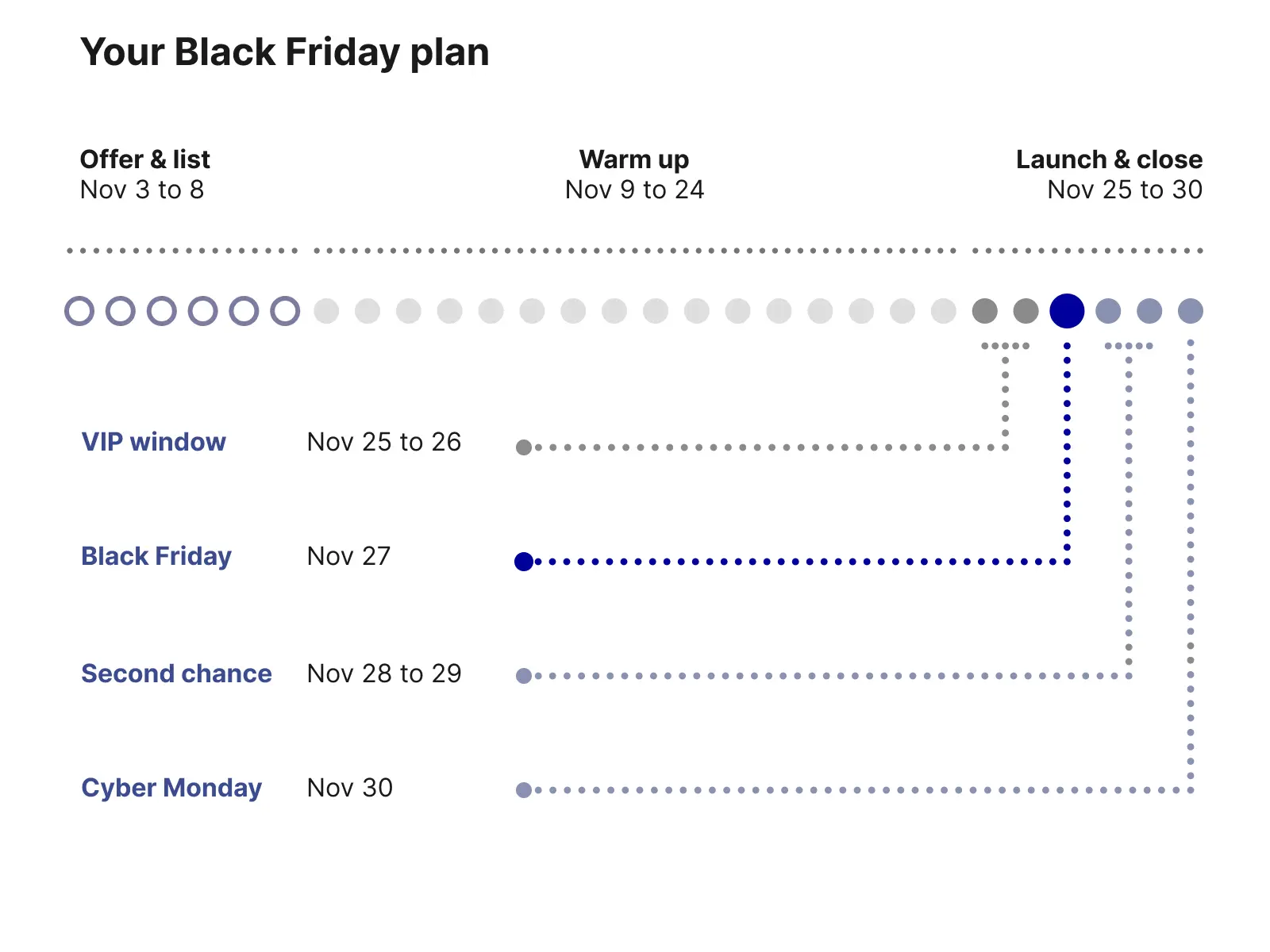
Now to Nov 8: Offer and VIP list
- Pick one hero offer (bundle, gift or shipping threshold)
- Pick a VIP window (a day or two before the public sale)
- Pick your proof (reviews, photos, real delivery dates)
Then build the list. An early-access signup page is the cheapest thing you can set up this week, and the VIP window is the reward for joining. That way, your launch email lands in front of people who asked for it.
As you can see, the offer, the window and the proof are all decided before a single email goes out.
Nov 9 to 24: Warm up the list
Black Friday email marketing works best when your list already knows you before the inbox gets loud. Three sends are plenty.
- Send the teaser (one product, no price)
- Send the story (why this offer exists)
- Send the reminder (VIP window opens tomorrow)
While that runs, put retargeting ads in front of past buyers and cart abandoners. They already know you, which usually makes them the cheapest audience to reach.
Nov 25 to 30: Launch, extend, close
- November 25 to 26: VIP window opens for your list
- November 27: public sale goes live on one Black Friday landing page
- November 28 to 29: second-chance push for cart abandoners
- November 30: Cyber Monday last call
This is where things break. Many stores send the same discount email five times, each with a louder subject line. Give every send one job, which is access, launch, reminder or last call. That way, the sequence reads like a story.
Friday will not catch everyone. Adobe expects Cyber Monday to stay the biggest online day of the season at $15.1 billion, so save one bundle or tier for Monday only and tell people it exists. Some buyers will wait for it, and you want them waiting for you.
One thing before you schedule any of this: every deadline in that calendar has to be one you can defend. The urgency section further down shows how to check yours, so keep reading.
If you are still choosing software for all of this, our post on Black Friday tools covers the options.
Black Friday Marketing Ideas to Protect Margin
Most businesses don’t figure this out until the invoices land. Every discount in a Black Friday marketing strategy is a bet that extra sales will cover the profit you gave away. Adobe expects discounts of up to 30% off listed price during Cyber Week, so a small store will not win a price war.
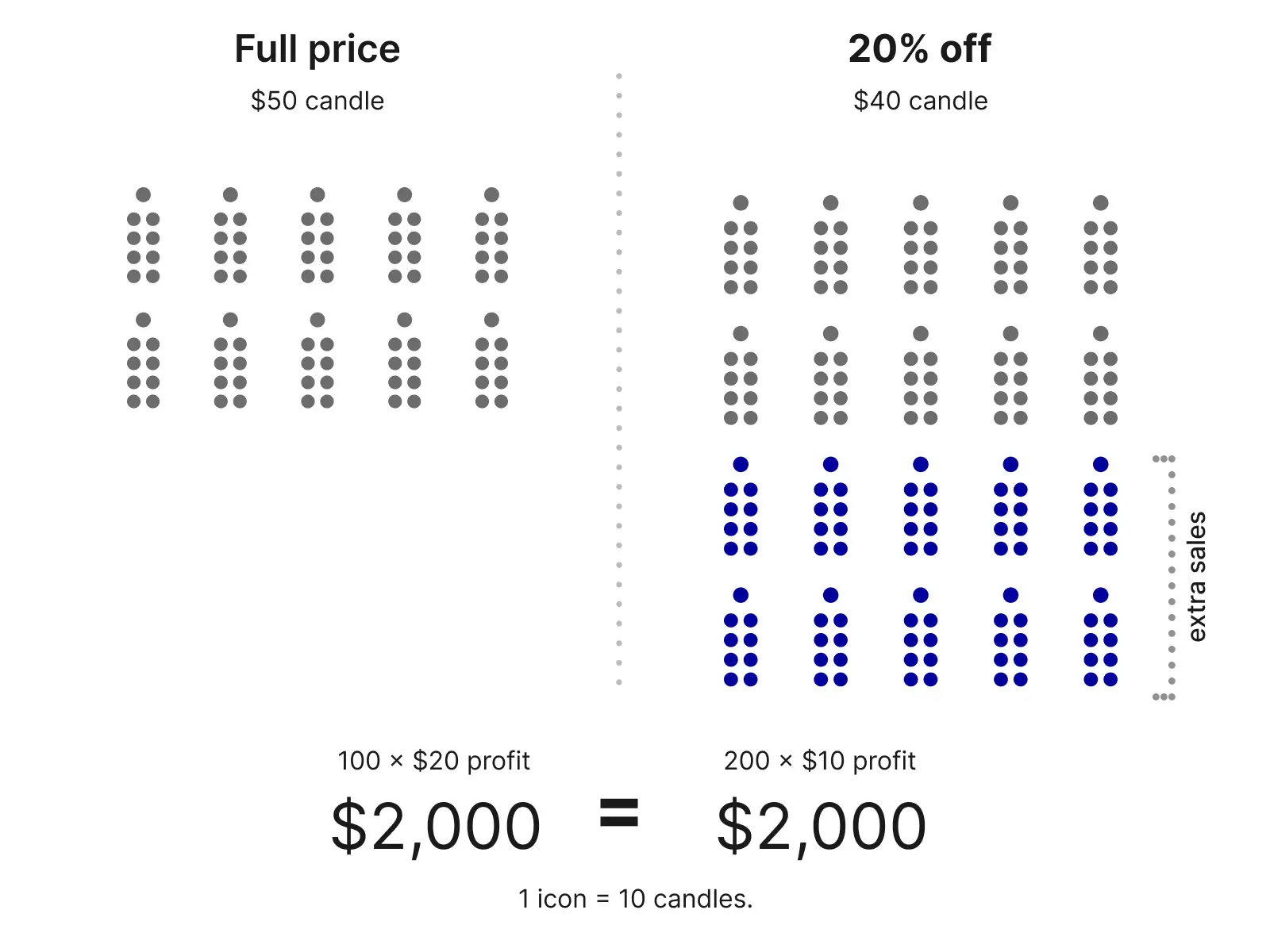
Let’s say you sell a candle for $50. It costs you $30 to make and ship, which leaves $20 and a 40% margin.
Cut the price by 20% and each candle leaves $10. You now need to sell twice as many candles to take home the same profit. This is a fake scenario, but the math holds for any product.
The shortcut we used takes both numbers as a share of the original price: extra units needed = discount ÷ (margin minus discount).
|
Discount |
Extra units needed to earn the same profit (at a 40% margin) |
|---|---|
|
10% |
33% more |
|
20% |
100% more |
|
30% |
300% more |
The 20% row is the one that surprises people. That friendly-looking sale asks your store to sell double the units just to hold the same profit. If margin and markup tend to blur together for you, our post on margin vs markup untangles them.
So what do we do instead? Try offers that raise order size rather than lower price.
- Try a bundle (related products, one price)
- Try a gift (a low-cost add-on above a spend line)
- Try a shipping threshold (just above your average order)
- Try early access (loyal buyers first, no deeper cut)
Bundles tend to do the heavy lifting here. They lift order size without cutting the price on your best sellers, and our piece on bundle marketing goes deeper.
If you’re running on WordPress, something like FluentCart just handles order bumps for you, though that feature needs Pro.
Offers get shoppers to the cart. Checkout decides whether they stay, and two sections down we look at where good offers leak. Read on.
You can start your store now
Download FluentCart for free and setup your online store and start selling from today.
How to Create Urgency Without Faking It
Urgency sells. Fake urgency now costs money.
In October, the UK’s Competition and Markets Authority (CMA) fined Wayfair £4.8 million over 24-hour flash deals and countdown timers that implied a rush, even though many products stayed available at the same price or lower after the deadline. Shoppers could feel pushed to hurry, and the deadlines did not hold.
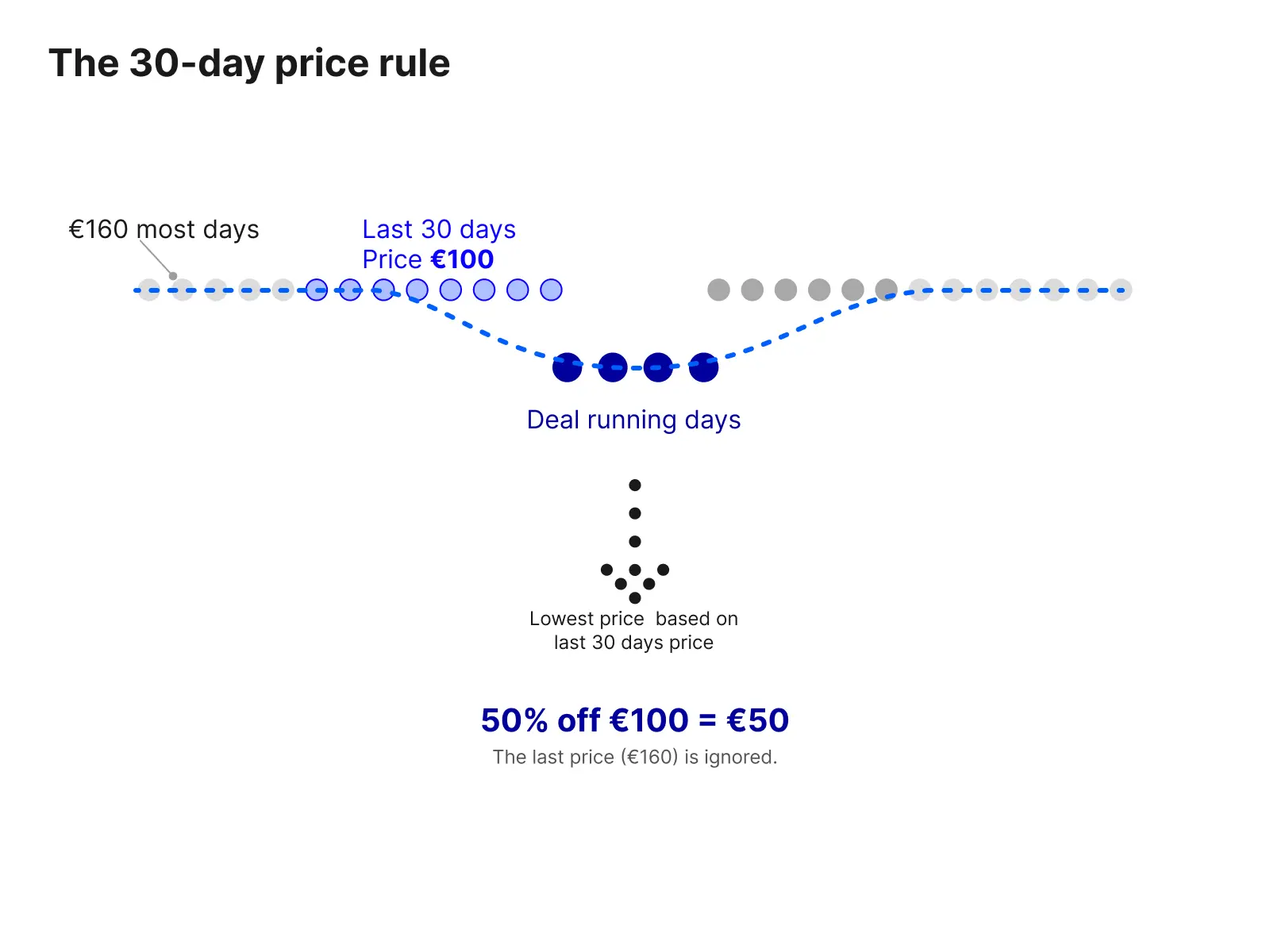
The EU has a rule for “was” prices too. Under Article 6a of the price indication directive, a store that announces a price cut must show the lowest price it charged in at least the previous 30 days. The European Commission’s guidance says that covers announcements like “Black Friday offers.”
Take an example. If the lowest price in the last 30 days was €100, a “50% off” claim has to start from €100, even if the last price was €160.
Now the good news. Honest urgency is easy to build.
- Keep the timer honest (it ends when the sale ends)
- Keep the was-price honest (check your 30-day low first)
- Keep the cap real (actual stock or actual seats)
- Keep the reason clear (season end, small batch, launch week)
Real limits only.
That way, every deadline on your site is one you can defend if a customer, or a regulator, asks.
Fix Checkout Before You Buy More Traffic
Baymard’s average across 49 studies puts cart abandonment at 70.19%, and its research on stated reasons ranks unexpected shipping, tax and fee costs at the top. Think about what that means for a sale weekend. You pay to get a shopper to the cart, and the total price scares them off at the last step. Even the best Black Friday marketing strategies leak there.
Speed matters just as much. A Google-commissioned study by 55 and Deloitte, covering 37 brands and over 30 million sessions, found that a 0.1-second faster mobile site went with an 8.4% higher retail conversion rate. The study shows an observed link with no promise attached, and the direction is hard to ignore.
- Show the full price early (shipping, tax, fees)
- Show guest checkout (no forced account)
- Show the payment methods your buyers expect
- Show a fast page (test on a mid-range phone)
Run one real test order on your phone this weekend. Then switch on your abandoned cart email, with one nudge a few hours later and one on the last day. Our notes on how to reduce cart abandonment and on ecommerce website performance cover the rest.
Ask your host about traffic spikes too. Sites that stall at 10 a.m. on Friday get no second chance.
If you sell downloads, plugins or courses, some of these rules change for you. The next section covers what, so keep reading.
Black Friday Marketing Strategies for Digital Products
Almost every Black Friday guide assumes a warehouse. Socks, coffee, skincare. If you sell plugins, courses, templates or downloads, half that advice does not fit.
Here’s what changes.
- No stock to run out, so scarcity needs another source. Think seats in a cohort, a founding-member tier or a bonus that ends.
- No shipping cost, so free-shipping thresholds do nothing, while bundles and bonus products still work.
- Renewals exist, so a deep first-year price can reset what buyers expect to pay later. Say what the price will be next year before checkout.
One legal detail matters for digital sellers. The same Commission guidance says Article 6a covers goods and does not reach digital content or services. Misleading price claims can still break wider unfair-practices rules, so we would keep was-prices honest either way, and a legal adviser can confirm the rules for your market.
Make Your Store Easy for AI to Read
Adobe expects traffic from AI tools to US retail sites to grow 130% this season, with Black Friday up 95%. Last season’s jump was 693.4% over the year before, though Adobe describes the base of users as modest.
So the channel is small and growing fast. Put prices, what is included, delivery or download terms and your refund policy in plain text on the product page. Plain text gives an assistant something it can quote correctly.
After the Sale: Measure Customers
Revenue spiked on Friday, so the sale worked. Or did it?
Here’s what’s actually happening in many stores. Sales can pull in buyers who only ever buy on sale, and Friday’s number cannot show you that. Sixty days later, it can.
- Track new versus returning buyers
- Track discount depth on every order
- Track refunds and support tickets from sale orders
- Track the 60-day repeat rate of Black Friday buyers
Send every buyer a thank-you email with one reason to come back. The sale then becomes the first order of many.
Make the First Order Count
Black Friday marketing strategies in 2026 come down to a few habits. Start early, do the margin math, keep every deadline true, and make checkout painless.
Do those well and the weekend pays you twice. You get the sales, and you meet new customers who are excited about a good deal and willing to try a store they have never bought from. How that first order feels decides whether they come back as regulars.
As the CMA put it when it opened its crackdown on fake urgency, genuine deals are worth shouting about. So shout about yours, and keep the promise when the order lands.
Earning the second order is a must.

Hi, this is Abir, a Deputy Marketing Lead, passionate product designer, and WordPress core contributor. Creating interesting content and products that ensure a 360-degree customer experience is my daily job.

Subscribe now
Related Articles and Topics
-
Custom Checkout Page: How to Build One That Converts
Build a custom checkout page that cuts drop-offs: icluding chekcout types, checkout steps, best practices and best platforms…
-
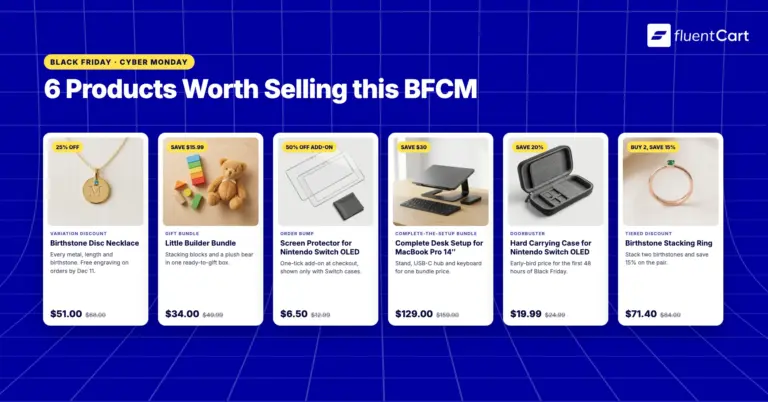
Black Friday Ideas for Small Stores 2026 [6 Niches + Tips]
Black Friday ideas for small stores: six niches and the offers that sell them.
-
What Is a Digital Download? (Plus How to Sell Your Own)
A digital download is a file you buy online and keep on your device, like an ebook or…




Add your first comment to this post