
A Year of Refining the WordPress eCommerce Experience with FluentCart
Launching a product is always exciting. It’s the time afterwards that determines whether it’ll deliver on the promise. FluentCart is the 14th (or, 15th I can’t be completely sure) that I’ve added to the WordPress repository. So, I can at least say launching FluentCart wasn’t my first rodeo.
Looking back to the launch and what FluentCart represents today gives me a sense of fulfilment that’s hard to describe in words.
FluentCart turns 1 year old on October 14th. Exactly one year ago today, me and the team launched the biggest product of our WordPress careers. We faced challenges, cracked open problems and worked on a solution that can bring meaningful change to how eCommerce works on WordPress.
This is the story of how FluentCart came to be, what we did since launch and how we’ve helped thousands of businesses find a new home. A home that’s built on ownership, control and uncompromised performance.
How FluentCart Began
We’ve been selling WordPress plugins for 10 years now, starting with Fluent Forms and NinjaTables. 8 of those years we spent with the go-to plugin for selling digital downloads on WordPress. For our purposes, a bootstrapped startup fighting to get every user we could, that plugin was enough.
Eventually we grew past what that plugin could do. I myself wrote countless patches for it to get the features we needed to keep selling efficiently. But there comes a time in every founder’s life when they have to reevaluate their stack and how they would continue to sell. It wasn’t any different for me.
Having to do manual refunds, manually forwarding order ID’s and generating sales data with Google Sheets are just a couple of things I had to find work arounds for. In the end it all resulted in a vastly customized plugin that had little resemblance with the public product.
Then it finally clicked and we faced the same question our users were asking too!
“Why is selling with WordPress still so frustrating?”
While they were building smart workflows, capturing leads, and growing fast, selling online felt like a jumble of tools that never had the end goal in mind. We didn’t want just another checkout system.
We wanted something that felt native to WordPress. That was also fast, simple, and easy to scale. So, we iterated, over and over, building a solution shaped by real user pain points, not assumptions.
The culmination of our needs, our customers’ pains, and the growing dissatisfaction with eCommerce on WordPress lead to what we finally launched as FluentCart.
The Philosophy Driving Us
Building products for ourselves isn’t something new for us. Fluent Support is actually one of the first products that we built exclusively for our own use. The system we used to clear thousands of tickets for a whole year became the product Fluent Support.
For FluentCart we locked on to that philosophy even harder. If I recall those early meetings, the one idea that remained the north start was simple.
“If we can’t use it ourselves, we don’t ship it.”
That’s the foundation of FluentCart. We doubled down on that so hard, we literally moved thousands of live subscriptions. If things didn’t pan out, we’d lose paying customers and there wouldn’t be anything we could do about it. This is a testament to how committed we were to the product and how confident we were in our own engineering.
A year after that gamble, we’ve processed thousands of orders, without paying a single cent to a platform. The freedom to control your own sales stack is something I personally can never move away from. Not anymore!
The Team and Goal
Building a complex system like eCommerce isn’t a one man job. I mean don’t get me wrong, with the current climate in tech, there are products already run and built by one person teams. We didn’t want FluentCart to be such a product.
To build a resilient tool, you still need the expertise and skillset. To assess the problem, to build with the user in mind and to take ownership beyond just committing features. Luckily, we had that expertise already, in-house.
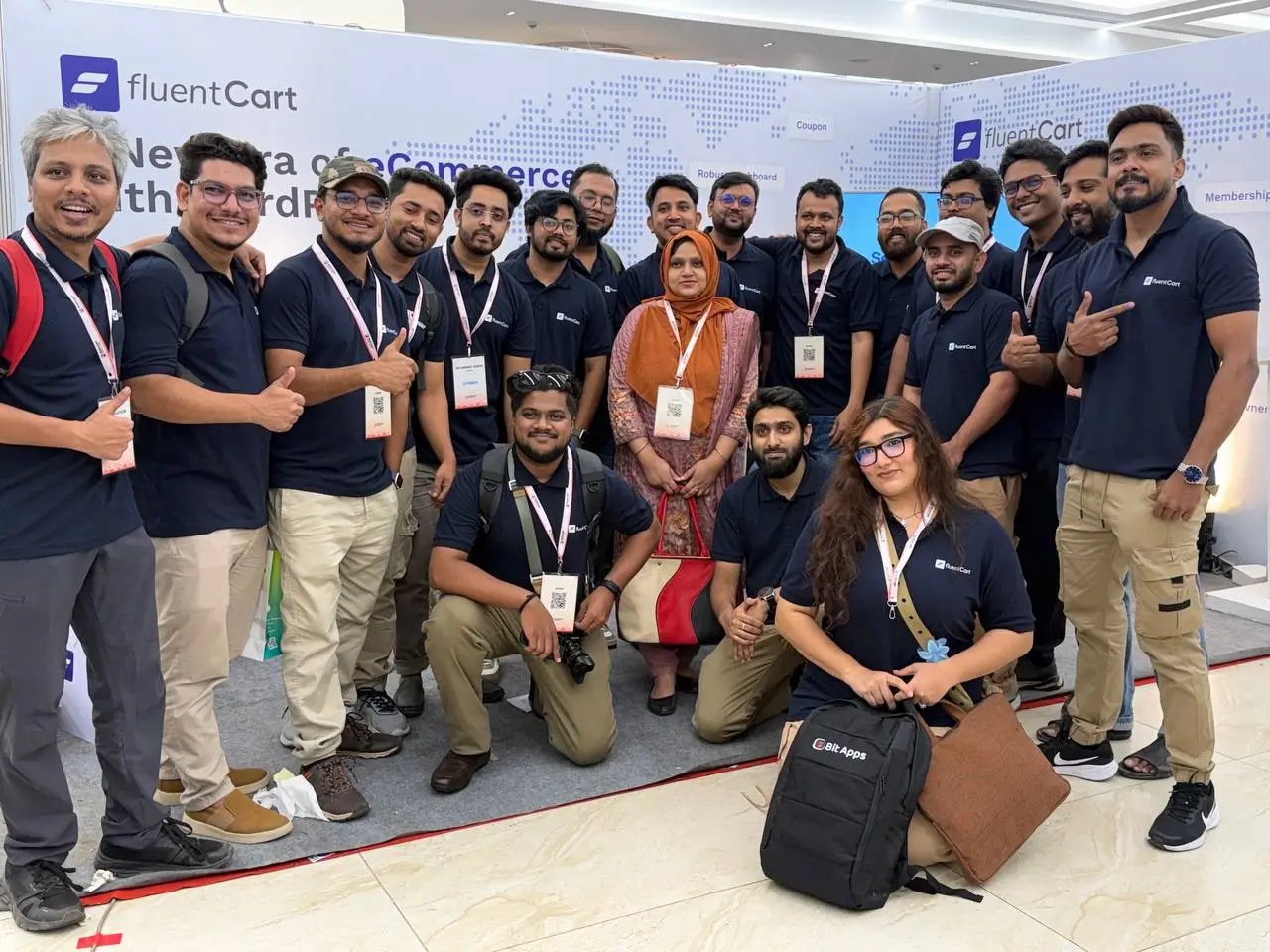
FluentCart was developed by 7 developers including me. 3 of them are WordPress veterans with multiple contributions to WordPress core releases. Our product manager (also our Head of Support) started his career building eCommerce sites for freelance clients. Including the QA specialist and Support engineers, FluentCart is built and maintained with the cumulative experience of 10 people.
I’m grateful to every one of them for their dedication and enthusiasm. I’ve not only trusted them to build a good product, but trusted my whole business on their skills and expertise. Looking back to the past year, I’m convinced that FluentCart couldn’t have gotten a better team.
FluentCart Inc.
FluentCart not only changed how we sell. It helped us expand into a more mature way of doing business. The eCommerce space is vast and a single plugin is just the beginning of what we actually want to do.
Hence, I decided to register FluentCart Inc. an independent entity outside WPManageNinja.
Our vision and overall goals for FluentCart have the potential to outgrow WPManageNinja itself. So we started off with the most solid foundation we could. An incorporated entity that functions outside the established business structure.
All that being said, FluentCart Inc. has a nice ring to it that I’m wholly attached to. No looking back from this, other than of course at what we did in the year since launch.
A Year in Numbers
To put what we’ve done into numbers is probably one of the simpler ways to quantify what we’ve done. But there’s one catch!
Features and releases mean very little if they don’t help the people using the product. So we’re not just counting the releases. We’re counting the people that onboarded as as a result of these releases. But releases still count, not only because they matter to the customers, but because the whole team has put in tremendous effort to make every feature expectation real.
Things We Set Out to Solve
The idea behind FluentCart is not that complicated. The market position we devised is simple. To offer a reliable and fast eCommerce experience that answers the current limitations of selling on WordPress.
3 issues stood out across sellers, store managers and eCommerce developers.
Too Many Add-ons to Sell on WordPress
Selling on WordPress has always depended on add-ons and plugins. That’s the leaner approach to it. It lets users choose the plugins they need and not add something to their site. Plugins have taken this model and turned it on its head.
Now, it’s not about giving customers the choice. It’s about obfuscating features that can be monetized with a paid add-on. Features that could just be part of the core plugin with a toggle on/off are sold as separate plugins. The marketing guys ran a small anonymized survey with business owners, add-on developers and web developers. A whopping 60% reported that a standard store needs an average of 6 additional add-ons on top of the primary eCommerce plugin. Metorik later published a public report confirming our assessment.
That’s not just 6 plugins. That’s 6 separate bills and renewals. 6 tools to configure separately and 6 points your sales operation could break.
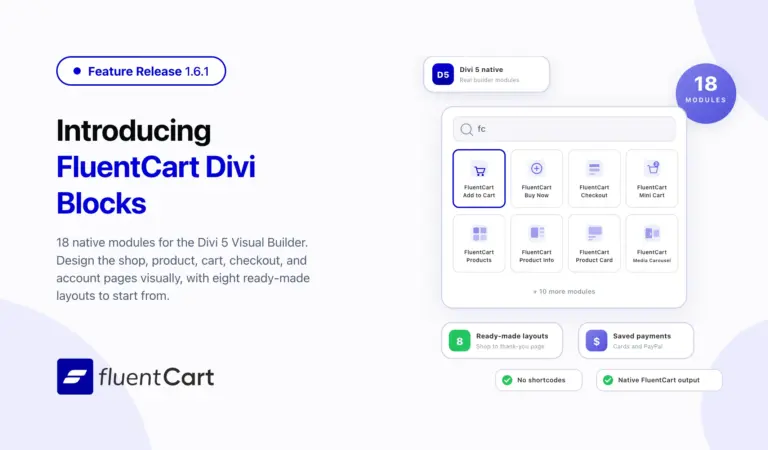
We’re doing something different! While large features are treated as separate add-ons, we’re not charging anyone for them. A major example of this are the Page Builder Components. We shipped Elementor, Divi, and Bricks blocks as separate plugins.
But they’re available for free for anyone to Download and use on their site. The idea was to not bloat every site with builder components they didn’t need. But putting these behind a paywall felt disingenuous. So they’re available for free for anyone to download.
Unclear Fees Structure and Added Platform Fees
The add-on model makes it difficult for any store owner to make a cost-informed decision. How can anyone plan ahead, until they’re sure about where their store is going to be in 2 years. For most stores, this is hard to predict, which makes running the platform cost math harder.
You can’t predict a cost for a feature that you may or may not need in 2 years. So how can you make an informed decision about your store?
The transaction-fee commission model hits even harder. SaaS platforms charge commissions on every sale until you get on one of their paid plans. Every store owner, on this model, has to closely look at their sales data and know exactly where their commissions exceed the cost of a paid plan. For some stores that’s 6 months from launch, for others it could be years.
And until you reach that point, you keep sharing the revenue with platforms that get paid either way. Free never means free with these platforms.
FluentCart core is available on the WordPres repository. It comes with most important eCommerce features built-in. We don’t want to cannibalize the small stores that are starting off today, nor do we want to impede their growth with a “growth-tax” every time they make a successful sale.
I’ve told the marketing team countless times already. Bring users that have a dream to sell. If they make money they’ll pay us happily. With the faith I have on our community of users, who’ve stuck with us for years now, it’s not a far-fetched idea to think,
“If FluentCart truly helps their business, they’ll stay and they’ll pay. Happily”
Optimizing Store Experience On a Bloated System
Every plugin you add to your site adds a hidden cost. This cost doesn’t always translate into dollars. Sometimes it costs you with lost sales, damaged reputation and a call from your site manager that you need to update your hosting to handle your growing traffic.
Plugins increase your site’s php memory consumption. A heavy plugin like eCommerce adds multiple tables and/or entries on your site. Grow fast enough and the day-to-day operations start to take the hit.
This shows up with abandoned carts as customers fail to complete their purchases on a slow checkout and ends with a full shut-down of your online store front on the weekend you were supposed to make the most sales.
We optimized FluentCart keeping this in mind. Your hosting should be the last thing you need to think about when you’re thinking of growing your business. Our own benchmark shows this. FluentCart consumes less memory and computes on identical servers and processes requests with a fraction of the queries on the database.
Modern eCommerce isn’t just about flashy UI. We’ve innovated on making the system more optimized for performance and more resilient to modern eCommerce loads.
Major Releases
Major releases consist entirely of new features and modules that simply weren’t available in previous version. EWach every version release update added something that completely changes how you can use FluentCart. A quick look at what this meant for year 1,
FluentCart 1.3.0: REST API, hooks and improvements (November 2025)
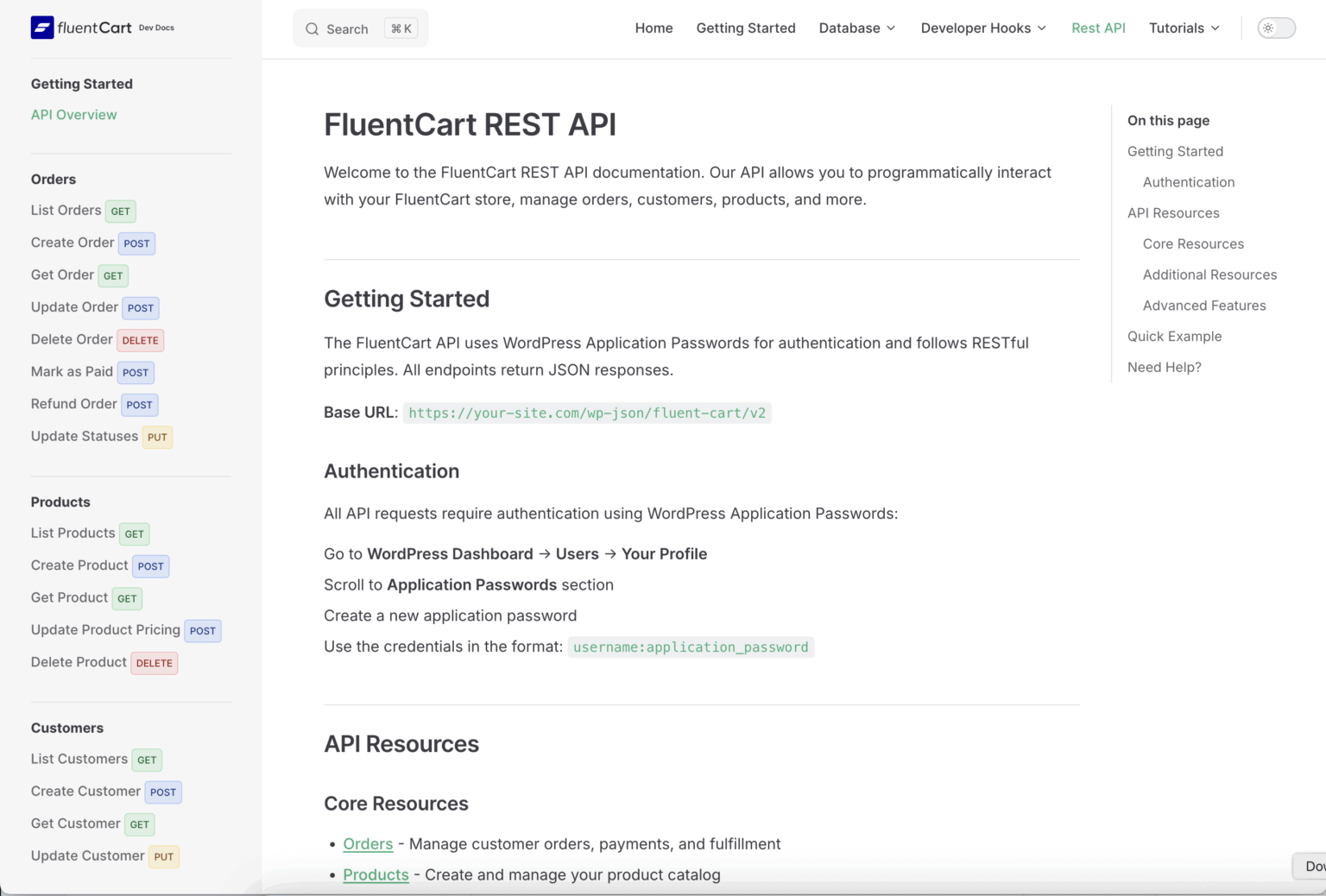
Remember all those patches I wrote for our old store? I never wanted anyone else to go through that. So about a month after launch, 1.3.0 put the doors in place. We published the REST API documentation and added a fresh set of hooks and filters.
With documented endpoints, an agency can pull orders into a client’s accounting tool, run a headless storefront, or feed a mobile app from the same product data. With hooks, you change how the store behaves without forking core and hoping the next update spares your work. We also added Paystack, quarterly and half-yearly billing, and a paid Patchstack security audit. It wasn’t a flashy release. It was the one that told developers we meant it. Your store becomes something you build on, and nobody has to patch their way to the features they need.
FluentCart 1.4.0: EU VAT Tax (June 2026)
I’ll be honest: most of 1.4.0 started as an argument in a chat channel, and two people outside our team shaped how it ended. Juraj Hudák of Plexcore told us the price toggle we were about to build solved the wrong problem.
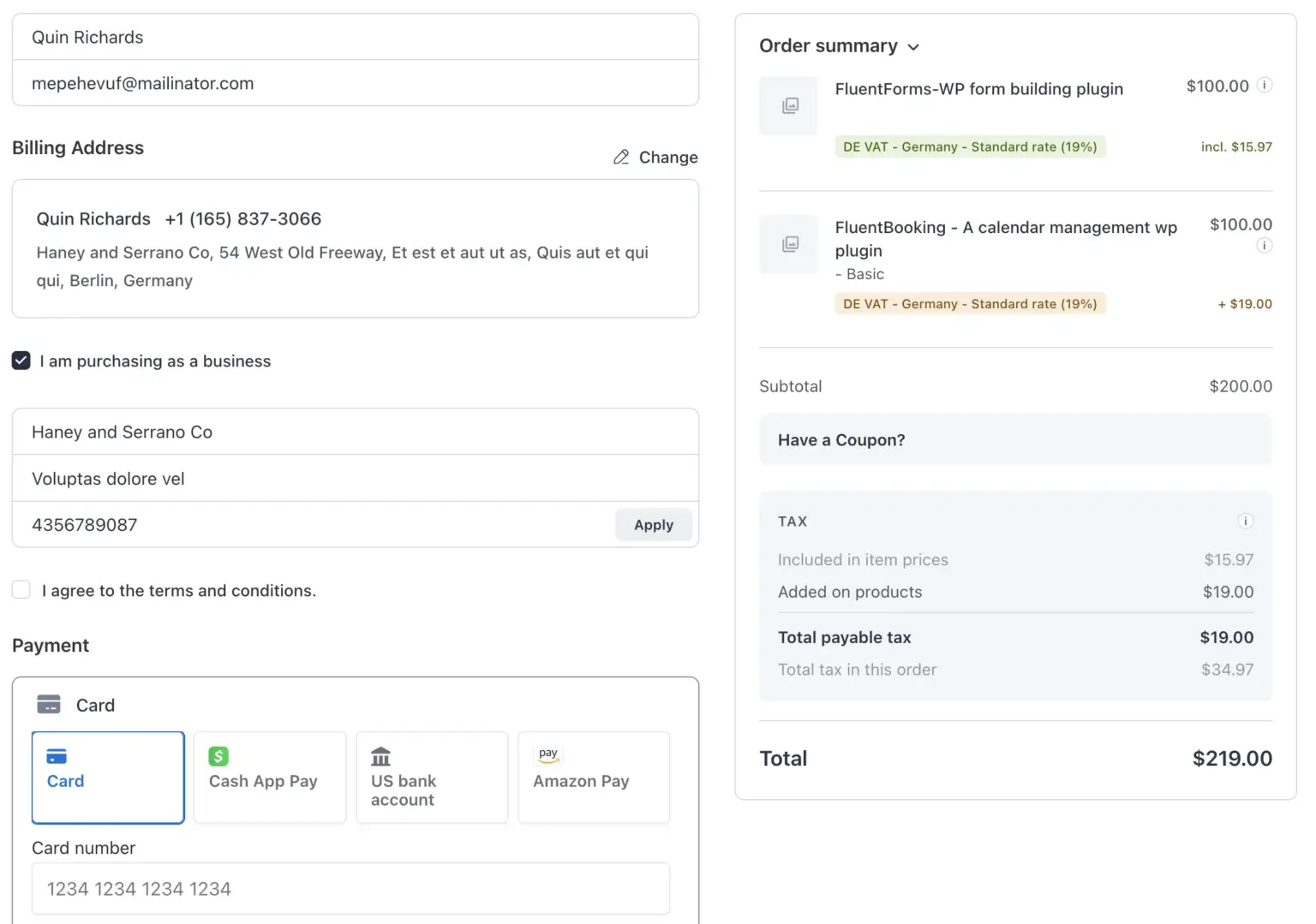
The right price depends on who’s buying and from where. Jorge de los Reyes Martínez turned that into the rule we now build around: one checkout, one display mode. Juraj wrote a specification of more than two hundred fields and checked it against real Slovak invoices. Reworking the EU-TAx module was a challenge we took head on, only because Juraj and Jorge did more than we could expect from any customer
Jorge built a checkout prototype and threw every hard case at it. What shipped was EU B2B reverse charge on every order surface, per-item tax breakdowns, mixed carts that total correctly, and filters for custom VAT validation. Every order now remembers the tax decision and the reason behind it, which is exactly what an accountant asks for.

Juraj Hudák
Plexcore

Jorge de los Reyes M.
En Busca del Fuego
Heart-felt gratitude to these 2 incredible individuals for making FluentCart adept to handle EU tax regulations. Everyone of you that’s using FluentCart’s EU-VAT Tax features are standing on the effort these 2 have put in.
FluentCart 1.5.0: Advanced Variations Control (June 2026)
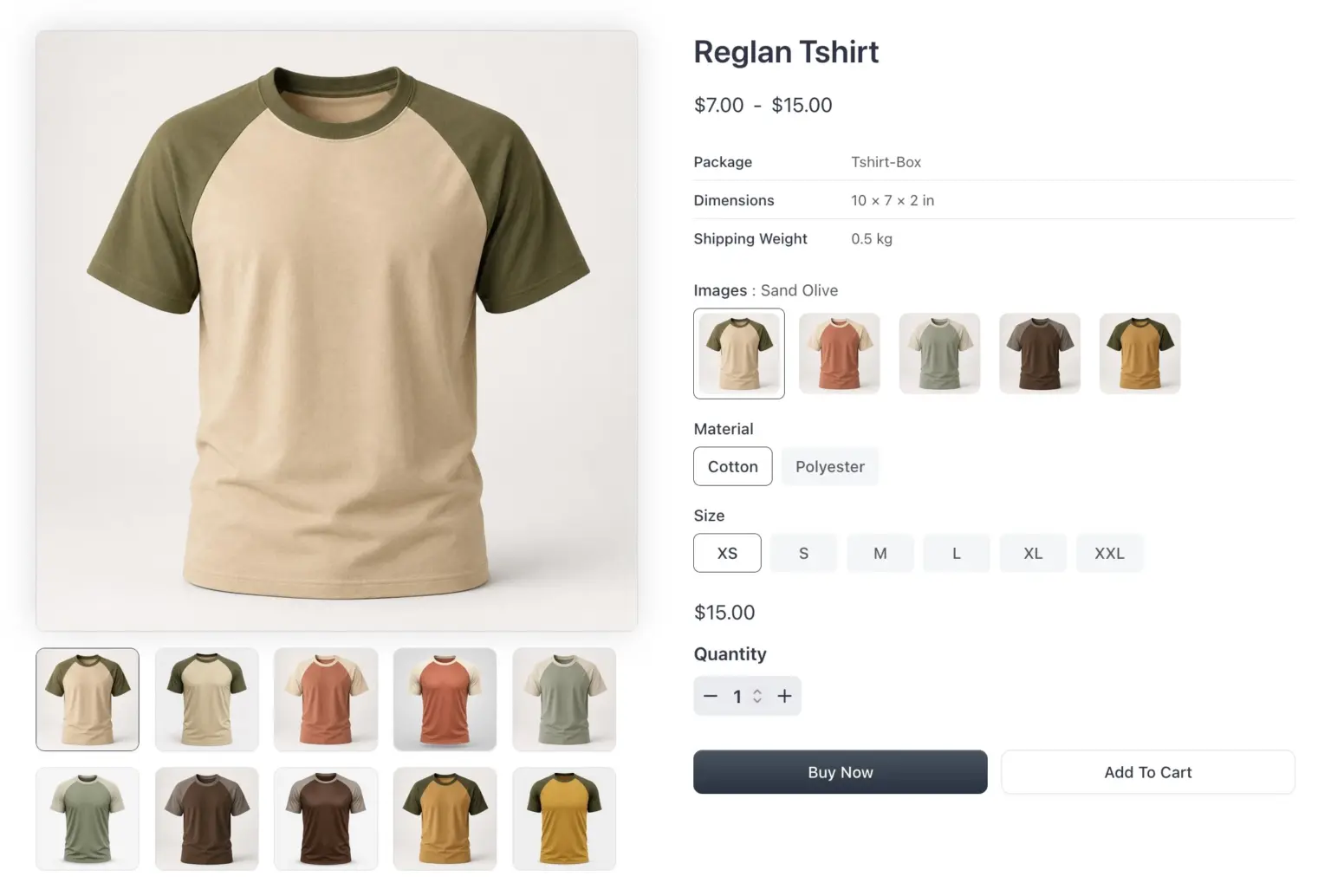
Two weeks later, we turned to the catalog. Anyone who has sold a T-shirt in four sizes and six colors knows the problem. That’s 24 variants, and most carts make you build each one by hand. It’s tedious work, and it’s where mistakes slip in.
In 1.5.0 we rebuilt variations from scratch. FluentCart now generates every combination for you. You save attributes like Color and Size once, reuse them across products, show them as swatches, and bulk-edit price or stock for only the variants you pick.
Eight (8) ready-made attribute sets and a staged-save flow mean a half-finished edit never goes live by accident. For agencies, it closed the gap that kept fashion and hardware clients on heavier platforms. A large catalog is now something you set up once and manage in bulk, not something you rebuild by hand.
FluentCart 1.6.0: Store-managed subscriptions (July 2026)
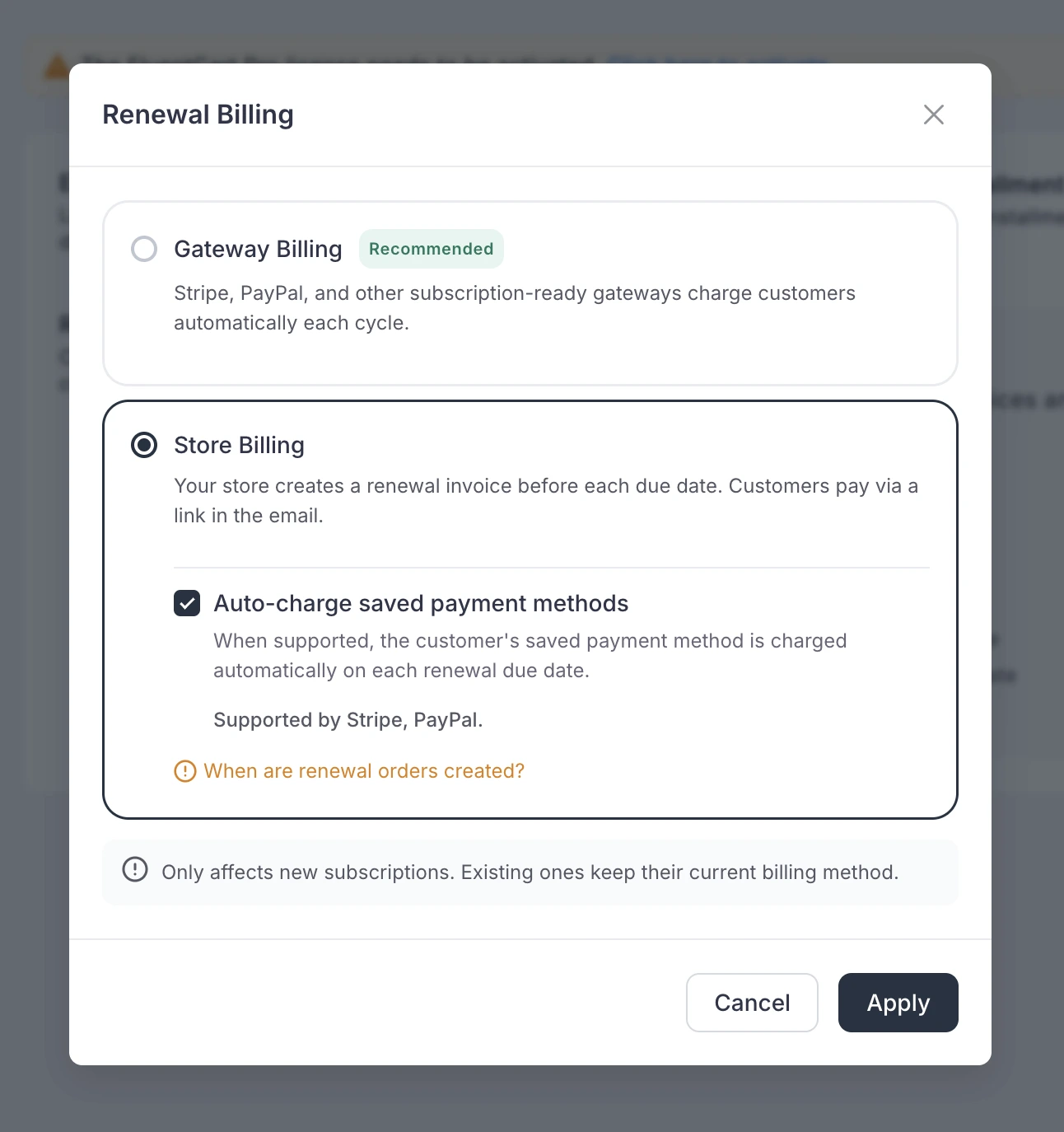
This one was personal. For years I watched the payment gateway decide how a store’s subscriptions worked. If the gateway didn’t support recurring billing, you were stuck. That never sat right with me, because the subscription belongs to the store, not the processor.
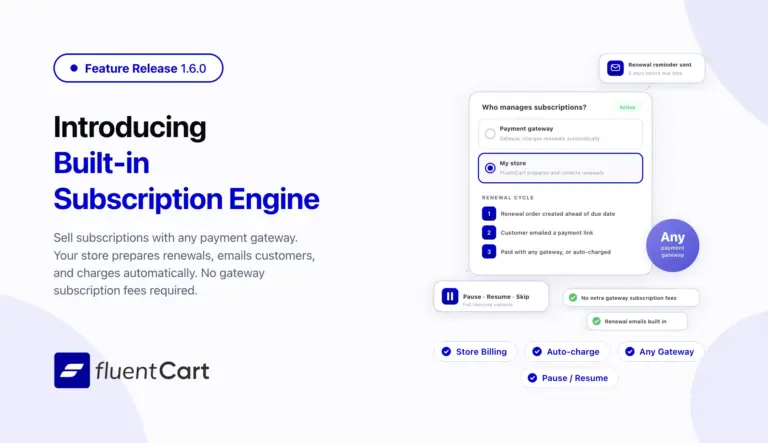
With 1.6.0, FluentCart runs its own renewal engine. It creates renewal orders, emails customers a payment link, and works with any gateway you’ve turned on. Stripe and PayPal stores can still charge saved cards automatically. Store owners can pause, resume, skip, or reactivate a plan, change the amount or billing date, and send a reminder before the charge lands.
For developers, that’s one subscription model to build against, whatever gateway the client picks. A merchant with only local payment options can now run a real subscription business.
FluentCart 1.7.0: Built-in reviews (September 2026)
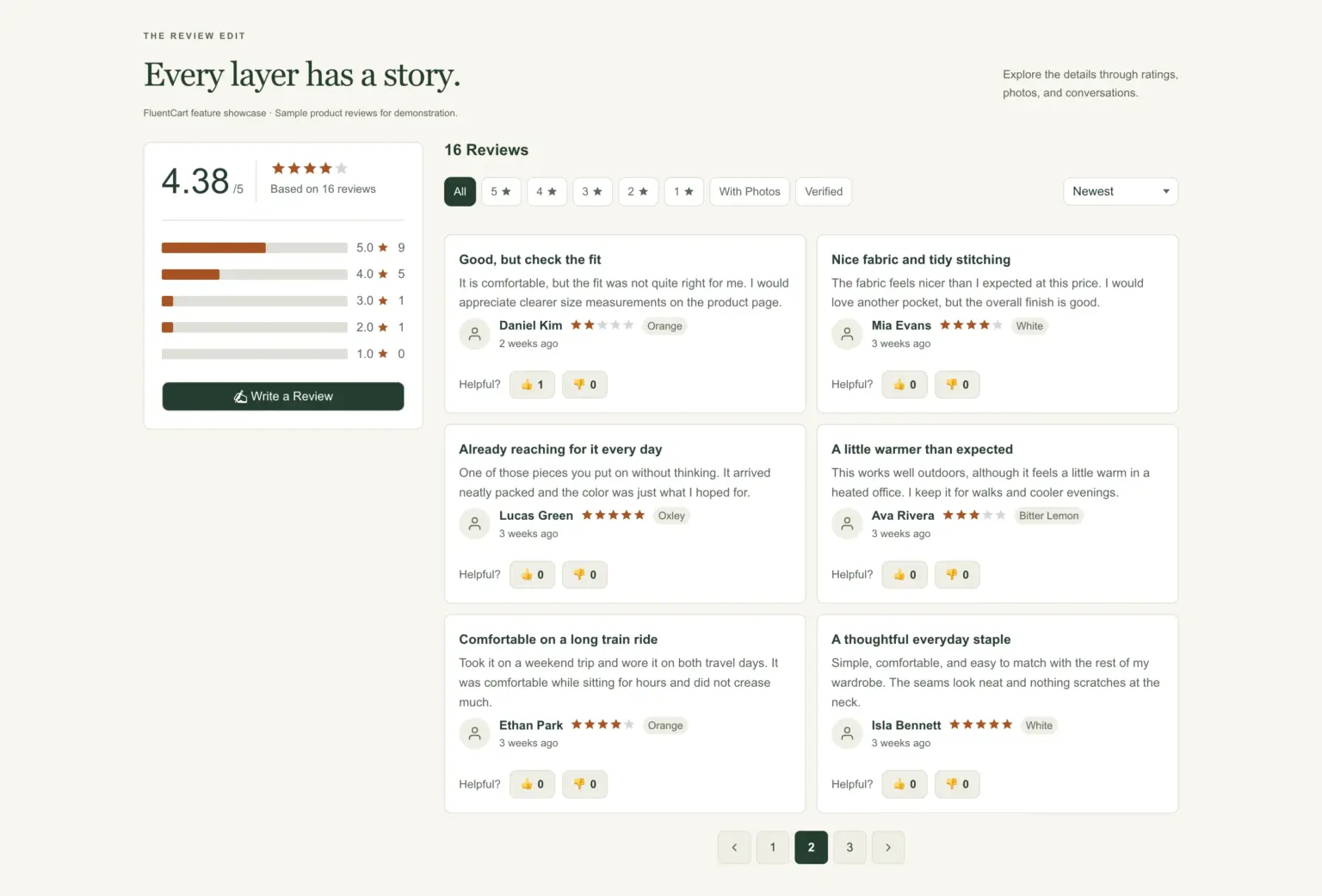
We closed out the first year with something every store needs and too often rents from somewhere else: its reviews. Until 1.7.0, FluentCart stores collected them through a separate plugin. Now Product Reviews live inside FluentCart, next to the product, the customer, and the order. That matters more than it sounds. Because a review knows which order it came from, the verified purchase badge is earned, not guessed.
Store owners can moderate, reply, and let customers manage their own reviews. We also added Product schema in JSON-LD, with offers, aggregate ratings, and reviews, so search engines can show your stars in results. Developers no longer hand-code that for every theme. Your social proof finally lives where your sales do, and it belongs to you.
Giving Back to The Community
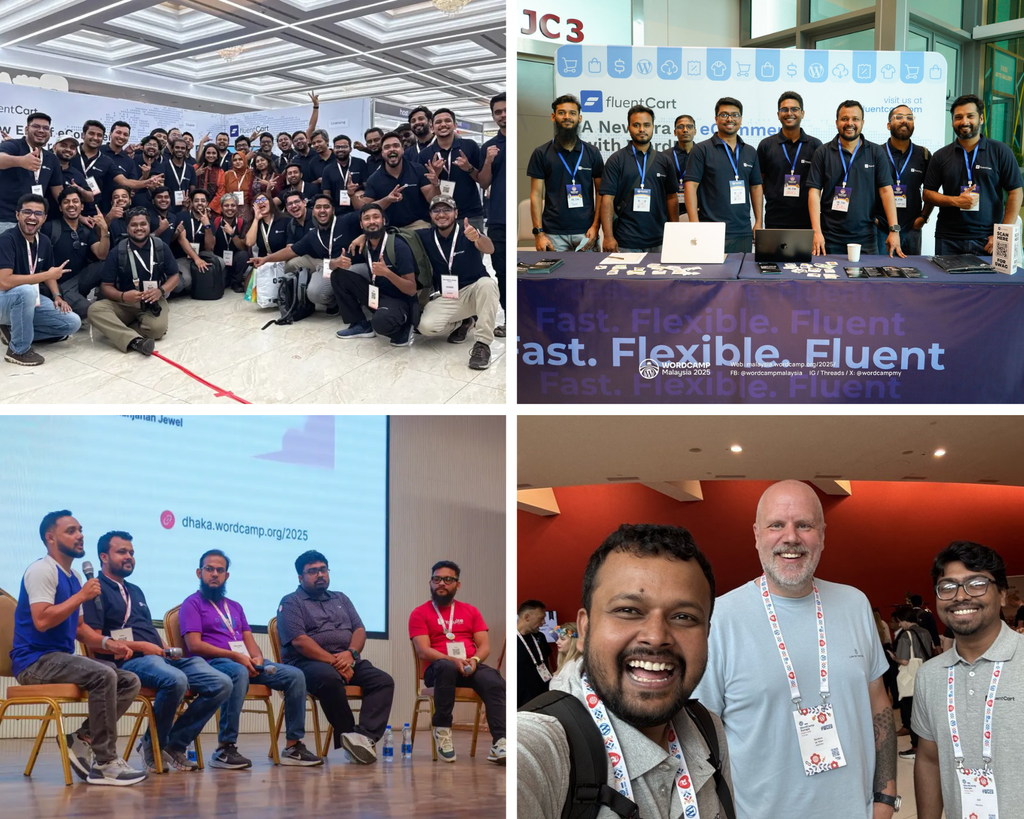
Building features was not the only way we tried to make a difference. A big part of our campaigns involved attending and sponsoring WordCamps and other community events.
We didn’t build FluentCart alone, and I’ve never pretended otherwise. WordPress gave our team a career, a customer base, and a place to build. So a good part of FluentCart’s first year went into paying some of that back.
Over the past year, FluentCart sponsored five WordPress events. We started as a top-tier sponsor at WordCamp Dhaka 2025, then went to WordPress Day for eCommerce in Porto, a one-day event about selling online with WordPress. December took us to WordCamp Malaysia in Kuala Lumpur. In July, we backed the first WordCamp ever held in Rajshahi. And, a few days before our first birthday, we were the Platinum Sponsor at WordCamp Sylhet. For the latest, FluentCart will be a sponsor of PressConf 2026.
Anyone can buy a logo spot. What I’m proudest of is who we send. Around 30% of the FluentCart team are WordPress Core Contributors. In Sylhet, Abir and Nuhel led Contributor Day tables and walked first-timers through their first contribution.
Sponsoring community eventspays us back in ways a dashboard never could. Support tickets tell us what broke. Hallway conversations tell us what people wish existed. Requests for local payment gateways and tax rules come up at almost every event, and SSLCommerz, added in 1.5.2 for merchants in Bangladesh, is one answer to them.
I wrote more about why FluentCart sponsors WordPress community events if you want the full story. The short version: we’ll keep showing up, because that’s where the next good idea usually comes from.
Where We Stand Today
A year in, FluentCart runs on more than 9,000 WordPress sites. On WordPress.org, it holds a 4.5-star rating from 42 reviews. Most of them are kind. A few aren’t, and those are the ones I read twice, because they usually point at something we got wrong.
The product looks nothing like the one we launched. A FluentCart store now runs its own subscriptions, handles EU VAT the way an accountant expects, manages complex catalogs in bulk, and collects its own reviews.
It takes payments through Stripe, PayPal, Paddle, Mollie, Square, Paystack, Razorpay, SSLCommerz, and, since 1.7.1 last week, Airwallex. It works with Gutenberg and Bricks out of the box, and with Elementor and Divi through dedicated add-ons. You can even ask an AI agent how this month’s revenue compares to last month’s, and get an answer from your own store data.
What hasn’t changed are the three things we promised at launch. You own your store. You control your data. And it stays fast. There are still zero transaction fees, on Free or Pro, and there won’t be. Ever.
There’s plenty left to do. The EU VAT work moves next into e-invoicing and OSS automation, and the requests keep coming in from stores, agencies, and developers who push FluentCart in directions we never planned for. That feedback has been the best roadmap we’ve had yet.
Looking Forward: FluentCart 2.0
We didn’t want to mark the birthday with a discount code and a party hat. So we’re doing something a little crazy: five new features in five days, October 12 to 16.
It started on Monday with Dynamic Pricing, so a price can follow the rules you set instead of staying frozen where you typed it. Yesterday brought the on-page checkout form, what most people call inline checkout. Your customer can buy right where they decided to buy, without a trip to a separate checkout page.
Today, on FluentCart’s first birthday, we’re shipping FluentCart 2.0 with multi-currency support. It’s the feature you’ve asked for more than any other, and I’m thrilled it’s the one that carries the 2.0 number. A shopper in Berlin, Lagos, or Sao Paolo can now see your prices and pay in their own currency.
The last two days are quieter, on purpose. Tomorrow we ship a rebuilt Reports module, and Friday closes the week with a rebuilt Refunds system. Neither will get the loudest applause. Both matter to me personally. I started this story with sales data stitched together in Google Sheets and refunds done by hand. A year later, those are the two parts of the store we rebuilt with the most care.
Five releases, one idea, and it’s the same one we started with: a store you own, data you control, and performance you never have to trade away. Every feature this week moves FluentCart a little closer to that.
Thank you to everyone who believed in us from day one. Building this with you is the best part. Here’s to year two.

I’m Jewel, founder of FluentCart and CEO at WPManageNinja, the team behind Fluent Forms, Fluent CRM, Fluent Support, FluentLogs and a handful of other WordPress plugins. I have been writing WordPress code since 2009 and still think of myself as a developer first and an entrepreneur second. Most of what I write on this blog comes from arguments we have had inside the team about how to build software people can actually depend on.

Subscribe now
Related Articles and Topics
-
Why FluentCart Sponsors WordPress Community Events
FluentCart is a Platinum Sponsor of WordCamp Sylhet 2026. Here’s why we show up.
-
FluentCart 1.6.1 – Built Into the Divi Builder
FluentCart 1.6.1 ships FluentCart Divi Blocks, a new add-on with eighteen native Divi 5 Visual Builder modules, eight…
-
FluentCart 1.6.0 – Subscriptions on Your Terms
FluentCart 1.6.0 introduces a built-in subscription engine: sell subscriptions with any payment gateway, let your store manage renewals,…



Add your first comment to this post