
What Is Consignment? Guide for eCommerce Sellers
Consignment is one of those business models that sounds simple on the surface but carries a lot of nuance once you actually try to run it. Whether you’re a product creator looking to sell without building a store from scratch, or a retailer thinking about stocking inventory you don’t have to pay for upfront, consignment sits at an interesting middle ground.
In this blog, we will cover what consignment means, how the arrangement works across different selling channels, who it benefits, what challenges to expect, and how to approach it properly if you’re running an eCommerce operation.
TL;DR
- Consignment is a selling arrangement where the owner of goods (consignor) places items with a seller (consignee), who only pays after the item sells
- Ownership stays with the original owner until a sale actually happens
- Common formats include dropshipping, in-store retail, and online auctions
- It benefits both parties but comes with real trade-offs around control, commission rates, and payment timing
- Managing inventory, agreements, and payouts properly is what makes or breaks it
What Is Consignment?
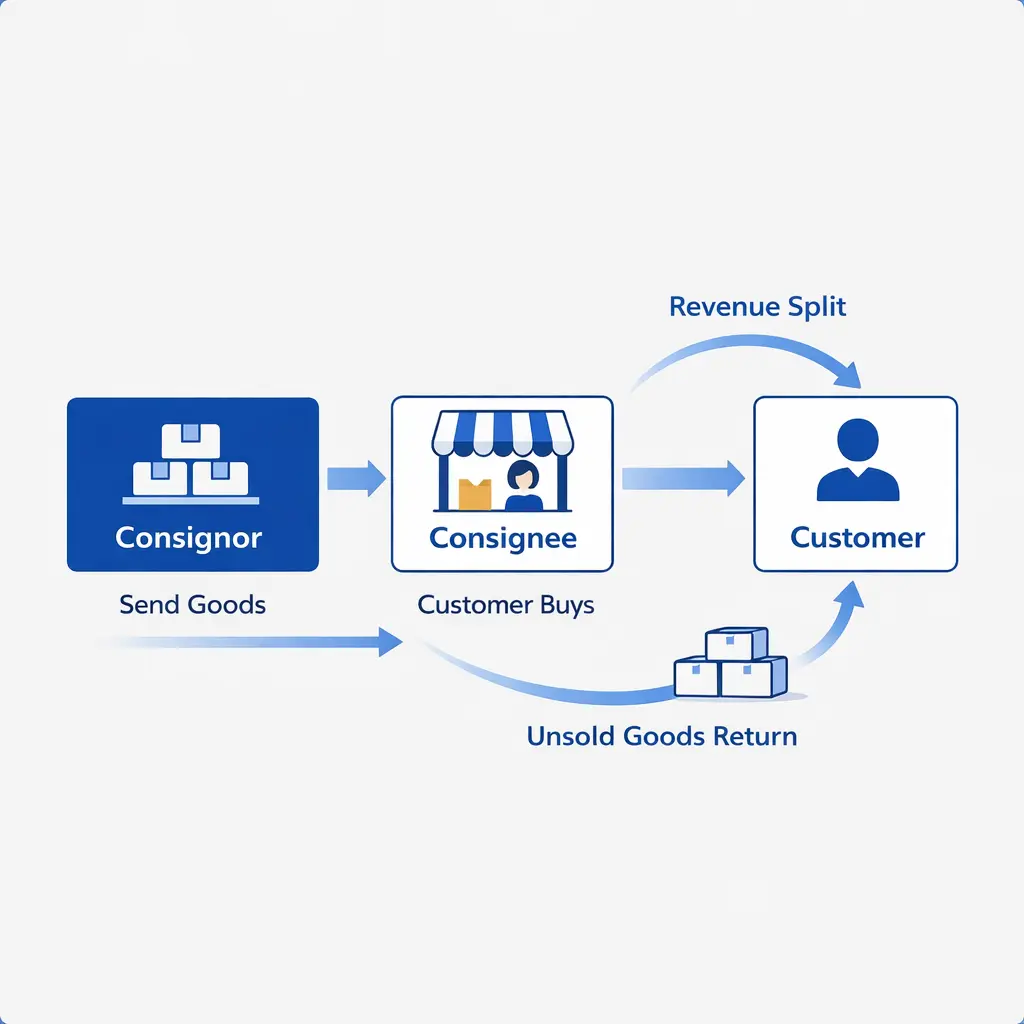
Consignment is a business arrangement where one party, the consignor, places goods with another party, the consignee, to sell on their behalf. The consignee does not purchase the inventory upfront. They agree to sell it, and payment to the consignor only happens after the item finds a buyer.
Ownership of the goods stays with the consignor throughout. If items don’t sell within the agreed period, they get returned. The consignee earns a commission on each sale, typically between 30% and 60% depending on the product category and terms negotiated.
This is fundamentally different from wholesale, where a retailer buys inventory outright and profits from the markup. In consignment, no money moves from consignee to consignor until a customer transaction actually occurs.
How Consignment Works in eCommerce
The same core arrangement adapts across several eCommerce models. Understanding each one helps you decide where consignment fits your operation.
1. Dropshipping as Consignment
In dropshipping, the consignee lists products online and the consignor ships directly to the buyer when an order comes in. The seller never physically handles inventory. This keeps overheads low but reduces control over the fulfillment experience. If you’re building this into a WordPress-based store, having clean order management built into your platform matters more than most people realize at the start.
2. In-Store and Online Consignment
Some consignees receive the physical goods and sell them either through a brick-and-mortar location or their own online store. The advantage is more control over product presentation and buyer interaction. The downside is that the consignee now carries the operational weight of storing, displaying, and moving inventory they don’t own.
Online consignment stores work similarly. eBay, for instance, has a formalized consignment service for specific product categories where the platform handles authentication, listing, and shipping on the seller’s behalf.
3. Online Auctions
Auction-based consignment is common for art, antiques, collectibles, and luxury goods. It reaches a wide audience and works well for items with variable market value. The trade-off is price uncertainty, since final bids determine the outcome rather than a fixed retail price.
Consignment Models Compared
| Dropshipping | In-Store Consignment | Auction Consignment | |
| Shipping | Supplier ships | Store ships | After the auction completion |
| Pricing | Set by seller | Platform/seller ships | Determined by bids |
| Inventory | Held by the store | Shared/negotiated | Held by platform/seller |
| Payment Timing | After each sale | After each sale | After auction completion |
Who Actually Benefits from Consignment?
Consignment isn’t a universal fit, but it creates genuine value for specific situations on both sides of the arrangement.
For the Consignor
The clearest benefit is selling without needing your own store. A jewelry designer, independent artist, or small-batch product maker can reach customers through an established seller without building eCommerce infrastructure, managing payments, or growing an audience from zero.
There’s also a product testing angle that gets underappreciated. Placing a batch of items with a consignee and watching what sells gives you real market signal before committing to larger production runs or your own storefront. If you’re still figuring out what to sell, consignment is a low-risk way to validate demand without inventory risk.
For the Consignee
The cash flow advantage is the headline. You stock inventory without paying for it upfront. Items that don’t sell go back. This makes it possible to offer a wider, more diverse catalog without tying up capital. Consignment retailers in niche markets like vintage fashion, specialist art, or secondhand equipment build strong reputations precisely because their selection is curated and constantly refreshing.
According to ThredUp’s Resale Report, “the global secondhand apparel market is projected to reach around $350 billion by 2027–2028, growing significantly faster than traditional retail.” That’s real market momentum, and consignment is how many of those sellers operate.
Once In a Lifetime Offer
The Trade-offs You Should Actually Prepare For
Most takes on consignment focus on the upside. The challenges deserve equal space because they determine whether this model works for your situation at all.
What Consignors Give Up
Commission rates cut deep into margins. Art galleries routinely charge 50% commission. That’s not an outlier. You have to price high enough to walk away with a meaningful return after the split, which limits your flexibility. Beyond that, you give up control over how your product is presented, priced, and promoted. A solid consignment agreement can address some of this, but you’re still operating at a distance from the buyer.
Payment timing adds another layer. Most consignment arrangements pay out monthly, so you could wait weeks after a sale before receiving anything. If cash flow matters to your business, that delay needs to be accounted for.
What Consignees Take On
Your inventory pipeline depends entirely on consignors. If key suppliers slow down or stop sending product, your catalog thins and sales follow. You’re also responsible for managing goods you don’t own, which means accurate inventory tracking is not optional. Damaged items, missing stock, or incorrect records create disputes that cost money and damage supplier relationships.
Understanding your eCommerce fulfillment process clearly before you take on consignment inventory is worth doing early. The operational complexity scales with the number of consignors you work with.
How to Set Up a Consignment Operation Properly
Getting into consignment without the right operational foundation is where most problems begin.
Start with a Written Agreement
Before any goods change hands, document the arrangement. The agreement should cover the commission split, the listing or display period, what happens to unsold inventory, how damage is handled, and when payments go out. Verbal arrangements fall apart as soon as volumes grow or a dispute arises.
Track Inventory Like It Matters
Consignment inventory is not your property, which means you’re accountable to someone else for it. A basic spreadsheet might work at the start, but it doesn’t scale once you’re managing multiple consignors, varied commission rates, and different payment schedules.
You need a system that tracks what came in, what sold, what’s pending payout, and what needs to go back. If you’re running a WordPress-based store, a purpose-built eCommerce plugin that handles physical products with proper inventory tracking saves you from bolting together mismatched tools later.
Price to Protect Both Parties
Pricing consignment goods is a shared decision. The consignee usually has stronger market visibility, but the consignor often has firm expectations around minimum returns. Set prices that reflect actual demand, cover both parties’ margins, and leave room for occasional discounting without going below break-even. A clear understanding of margin vs markup helps here when setting the initial price point.
Pay Consignors on a Consistent Schedule
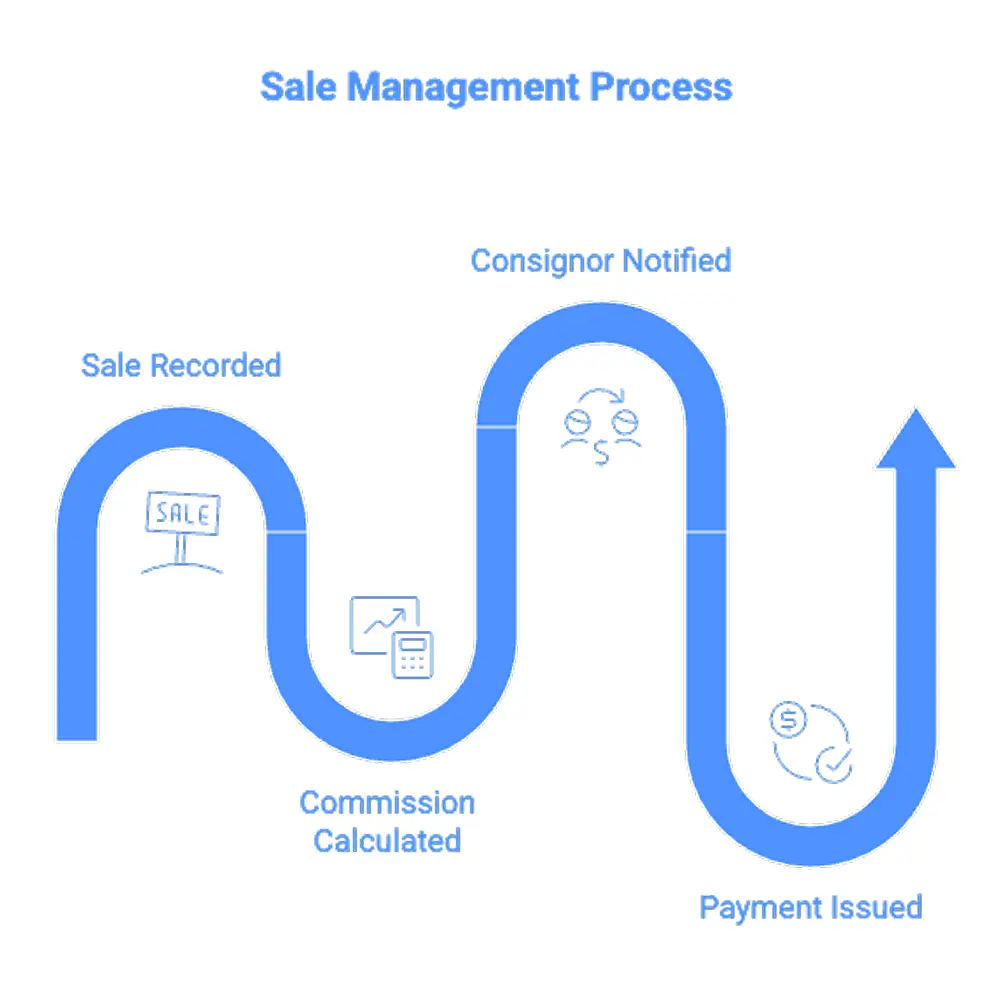
Most consignors prefer monthly payouts. Running a reliable payment cycle goes a long way toward maintaining good supplier relationships. Track sales accurately so there’s no disagreement when payment time comes. Inconsistent or delayed payments are one of the fastest ways to lose consignors to other sellers.
Consignment vs. Dropshipping vs. Wholesale
These three models often get conflated. They are structurally different in ways that matter for risk and cash flow.
| Model | Ownership of Inventory | When Supplier Gets Paid | Who Holds Inventory | Risk of Unsold Stock | Fulfillment Method | Profit Mechanism |
| Wholesale | Retailer owns inventory | Upfront (at purchase) | Retailer | Retailer | Retailer stores & ships | Markup on purchased goods |
| Consignment | Supplier retains ownership | After sale happens | Retailer (on behalf of supplier) | Supplier | Retailer stores & sells | Commission or revenue share |
| Dropshipping | Supplier owns inventory | After customer places order | Supplier | Supplier | Supplier ships directly to customer | Margin between retail & supplier price |
If you want a deeper look at how dropshipping compares as a standalone model, the mechanics are worth understanding separately before combining them.
Consignment and Your eCommerce Store
Running a consignment operation online requires more than just listing products. A few things need to be in place before you take on your first consignor.
Your store should communicate the consignment model transparently to buyers, especially if you’re selling artisan, secondhand, or curated goods. Buyers respond well to authenticity, and knowing who made or previously owned something adds to the appeal rather than detracting from it. That storytelling also improves how your product descriptions convert, since you’re giving the buyer real context rather than generic copy.
You also need payment infrastructure that separates consignor payouts from your own operating revenue. This gets complicated fast when you’re managing multiple suppliers, different commission rates, and varied payment schedules running in parallel. A platform with clean payments and receipts handling built in makes that separation manageable without custom development.
Wrapping Up
Consignment works when both parties understand what they’re agreeing to and have the systems to manage it. It’s not passive. The consignee takes on real responsibility for someone else’s inventory, and the consignor accepts reduced control and delayed payment in exchange for wider reach.
If you’re considering it as a way to grow your ecommerce catalog without heavy upfront investment, or as a supplier looking to move product without running your own store, start with a clear agreement, proper inventory tracking, and a consistent payment cycle. That’s where most consignment arrangements succeed or fail in practice.
Once In a Lifetime Offer
FAQ
Is consignment the same as selling on commission?
They’re closely related. Consignment is the arrangement where goods are placed with a seller. Commission is the percentage that seller earns per sale. Commission is the payment structure inside a consignment deal.
What happens if consignment goods are damaged while with the consignee?
Most consignment agreements address this directly. The consignee is typically responsible for goods in their care, and some arrangements require insurance or replacement value coverage for high-ticket items.
How long does a consignment agreement usually run?
Most arrangements last between 30 and 90 days. After that, unsold items are either returned to the consignor or the agreement is renewed by mutual consent.

Deputy Marketing Lead, published literary author, and musician. I thrive on marketing for tech companies while composing music, collecting books of lasting depth, exploring cinema with a discerning eye, and studying the arts and history.

Subscribe now
Related Articles and Topics
-

Custom eCommerce Development: A Beginner’s Guide
Custom eCommerce Development is building the eCommerce website from stretch that’s specifically designed for your business niche. Now…
-

What Is a Vertical Market? Definition, Examples & How It Works in 2026
What is a vertical market? Learn how it works, real examples, pricing strategy, and how to enter the…
-
How to Start a T-Shirt Business (The Smart Way)
How to start a t-shirt business the smart way: costs, margins, printing methods, and why owning your store…




Leave a Reply