
Best Free eCommerce Business Course Options
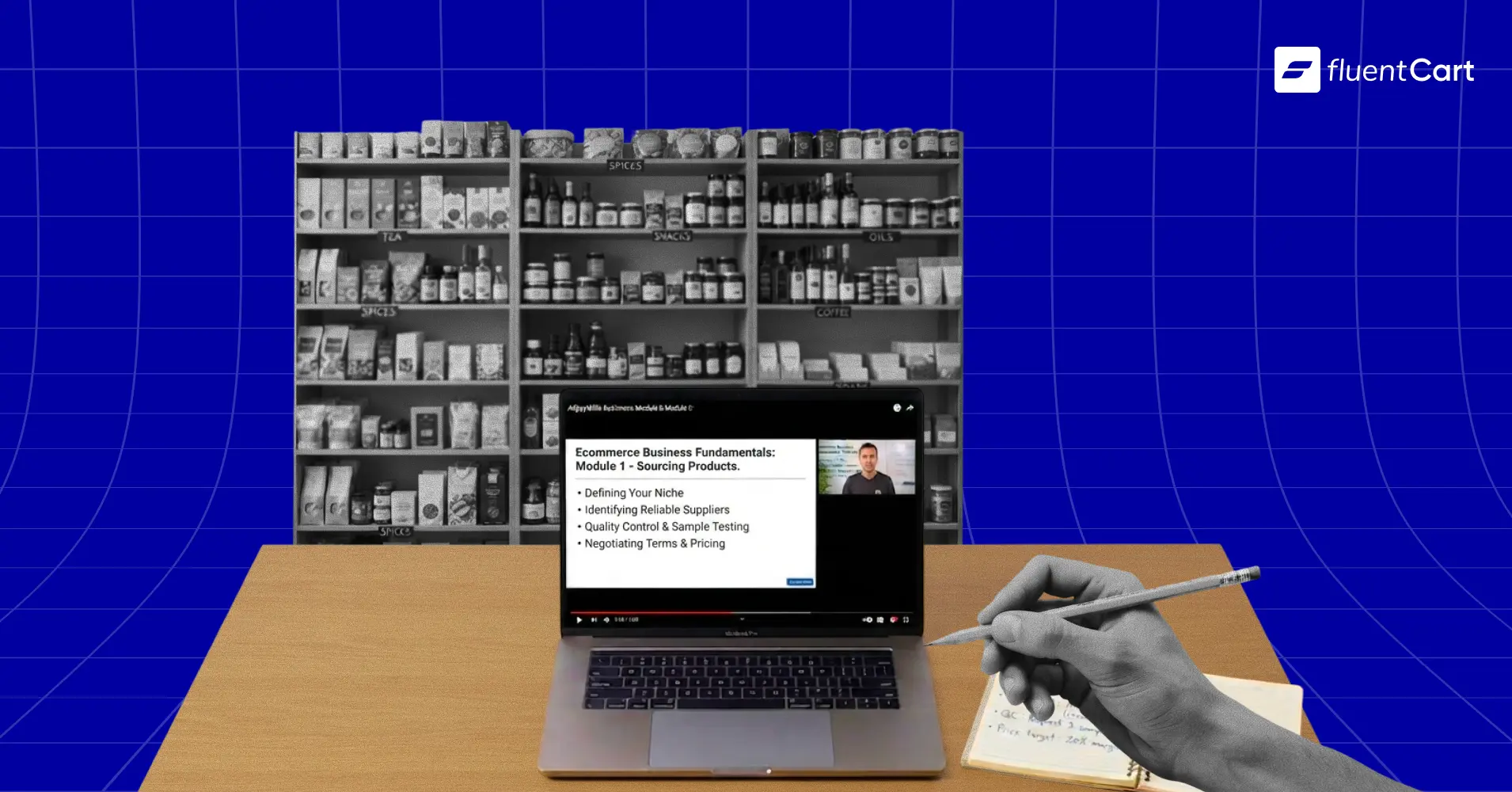
Maybe you’re looking for an eCommerce business course for your own business. Or it’s for a job. Maybe you’re just curious. Doesn’t matter why.
Here’s the problem you’ll run into fast. There’s no single place that teaches you all of eCommerce. Not one course, not one platform, nothing that covers everything in one sitting. And there’s a good reason for that. eCommerce is too big a subject for one course to hold. You need the technical side. You need visibility, meaning marketing and SEO. Also you need management, meaning pricing, operations, customer strategy. No single course teaches all three well.
So we went through the free ones that actually exist, tested what’s real versus what unlocks after a trial, and put together a set that covers what you actually need. Let’s get into it.
TL;DR
- Five hand-picked eCommerce learning resources, genuinely free: MIT, HubSpot, Semrush, Alison, and Amazon Seller University
- Not every good resource is a formal course, some are info hubs and case studies, and that’s fine
- One paid option worth the money if you want a guided, in-depth certificate path
- A real Reddit thread on how experienced sellers actually approach learning eCommerce
- A simple, followable setup guide to launch a real WordPress store using FluentCart
- No course is required to start. But a good one shortens the learning curve
Best Free eCommerce Business Courses Worth Your Time
Here’s the list, picked for depth, credibility, and being genuinely free from start to finish.
1. MIT OpenCourseWare: Economics and E-Commerce
MIT’s eConomics and E-Commerce course is free, permanent, and requires no signup at all. It covers the economic mechanics behind online businesses: pricing strategy, market entry, competition, and how online marketplaces actually behave. It’s more theory than hands-on build, which makes it a strong foundation if you want to understand the “why” behind the decisions you’ll make later.
Best for: Understanding the economics behind online selling before you’re deep in the weeds of running a store.
2. HubSpot Academy: Ecommerce Marketing Course
HubSpot’s eCommerce Marketing course is free to take and free to certify. It teaches an inbound marketing approach built specifically for eCommerce: attracting the right customers, engaging them, and keeping them coming back. The course is practical and built around a real methodology HubSpot uses with actual businesses.
Best for: Anyone who needs a customer acquisition plan that goes beyond “run some ads.”
3. Semrush Academy: E-Commerce SEO Course
Semrush Academy’s eCommerce SEO course is free with a free certificate, taught by working eCommerce SEO consultants. It focuses on internal linking, product page structure, and search visibility for stores specifically, not generic blog SEO repackaged for a store.
Best for: Store owners who want organic traffic that doesn’t disappear the moment ad spend stops.
4. Alison: Introduction to E-Commerce Management
Alison’s Introduction to eCommerce Management course covers the operational backbone of running a store: customer strategy, payment systems, social media, and analytics. The course content and a digital learner record are free. A polished certificate is available as an optional paid add-on, but it’s not required to complete or benefit from the course.
Best for: A full, structured overview of what running an eCommerce business actually involves day to day.
5. Amazon Seller University
Not every good education comes packaged as a structured course. Sometimes what actually helps is a solid information hub, real case studies, and insights pulled straight from people who’ve done the specific thing you’re trying to do. That’s what Amazon Seller University is. It’s free, requires no seller account to browse, and covers listing, pricing, fulfillment, and advertising through videos and guides written by Amazon’s own team. If you’re selling specifically through Amazon, this is more useful than a generic course trying to cover every platform at once.
Best for: Anyone selling through Amazon who wants specific, current, platform-native guidance instead of general theory.
Speaking of resource hubs, we’re not a bad one either. The FluentCart blog covers the operational side of eCommerce in the same practical way, pricing, inventory, fulfillment, SEO, real case studies, all free, no trial, no paywall. If that kind of steady, practical coverage is useful to you, it’s worth subscribing to.
And if you want more depth and a recognized credential to go with it, Google’s Digital Marketing & E-commerce Certificate is genuinely well put together, hands-on with tools like Google Ads, Analytics, and Shopify, across roughly 190 hours of material. It runs about $49 a month on Coursera after a free trial, worth it if you want a long, guided path with a certificate at the end.
What Experienced Sellers Actually Say About Learning eCommerce
A well-known thread on r/ecommerce asked a simple question: what’s the best complete eCommerce course out there, covering branding, customer persona, funnels, and marketing all in one place?
The most upvoted answers agreed on something interesting. No single course will ever match your specific product or market perfectly. The sellers who replied described picking up skills through a mix of resources, staying skeptical of anything promising guaranteed riches, and building pattern recognition over time by doing the work and watching what actually happens with real customers. There’s a name for the trap they were warning against, tutorial hell, where you keep collecting courses and never launch anything.
One reply summed it up simply: you end up writing your own course, through the process of building.
That doesn’t make the courses above less valuable. It just means there’s a second path worth knowing about, one where you learn the exact same fundamentals while your store is already live and taking orders.
How to Start Selling While You Learn: A WordPress Setup Guide
Here’s the faster path, if you want to try it alongside any course above. WordPress gives you full ownership of your store instead of renting space on a platform, and a plugin like FluentCart handles the eCommerce layer without needing a developer.
Step 1: Choose hosting and install WordPress. Pick any reputable host with one-click WordPress install, such as SiteGround, Hostinger, or Bluehost. This takes about 15 to 20 minutes from signup to a live WordPress dashboard.
Step 2: Install FluentCart. From your WordPress dashboard, go to Plugins, click Add New, search for FluentCart, and install and activate it. This adds a full eCommerce layer, products, payments, subscriptions, directly into WordPress. For a detailed walkthrough of this exact process, the full guide to building a website to sell products covers every screen step by step.
Step 3: Set up your payment gateway. Inside FluentCart’s settings, connect Stripe or PayPal. Both take about five minutes each and just require an existing account with either provider.
Step 4: Add your first product. Go to Products, click Add New, and fill in the title, price, description, and image. Publish it. This is the step most people delay for weeks. Start with one product, not your whole catalog. Once that first one is live and selling, you can bring in the rest through CSV import or the migrator.
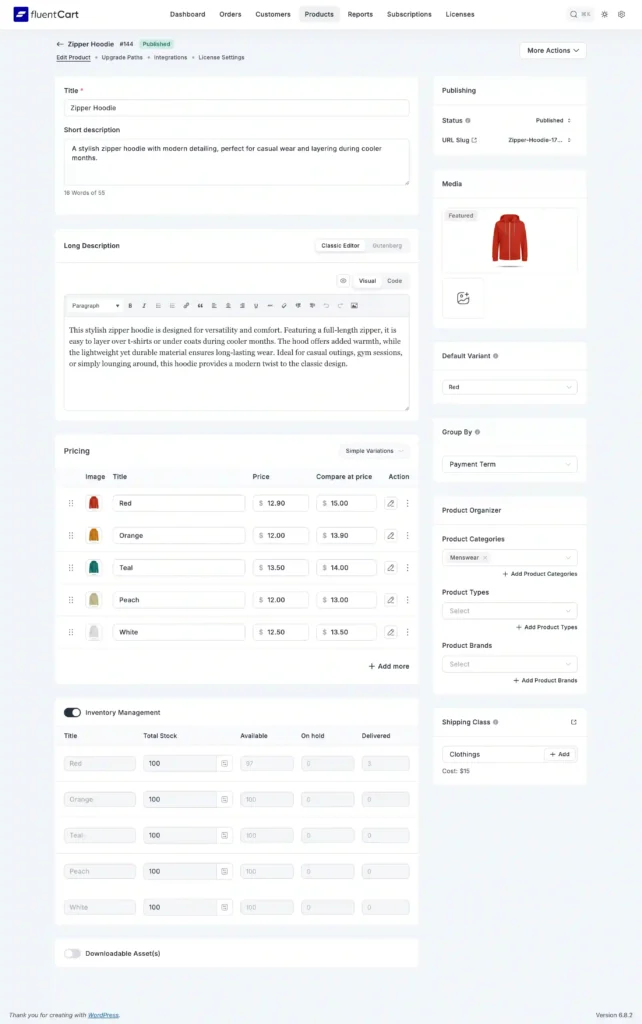
Step 5: Set your store pages. FluentCart automatically generates a shop page, cart, and checkout. Add them to your site’s main menu so customers can find them.
Step 6: Publish and watch what happens. Once your store is live, eCommerce management becomes an ongoing process rather than a one-time setup. You’ll adjust pricing, rewrite descriptions, and keep doing product research based on what customers actually respond to, not just what you assumed they’d want.
Build Your Own Learning Way
Here’s the honest takeaway. The courses on this list are genuinely good. MIT will make you sharper on pricing and market behavior. HubSpot will give you a real customer acquisition plan. Semrush will make your store findable. Alison ties the operational pieces together. And Amazon Seller University or the FluentCart blog keeps you current if that’s where you’re selling.
None of that gets undone by starting a store early. The two aren’t in competition. A live product gives you real feedback a course never can, and a course gives you context a live product never explains on its own. Run them side by side, and each one makes the other click faster.
That’s really the whole point of looking for the right eCommerce Business Course. Not to find one perfect answer, but to build a working mix of what you learn and what you do. Pick a course from the list above. Pick a day to launch your first product. Then let both teach you at the same time.

Hi, this is Abir, a Deputy Marketing Lead, passionate product designer, and WordPress core contributor. Creating interesting content and products that ensure a 360-degree customer experience is my daily job.

Subscribe now
Related Articles and Topics
-

Bundle Marketing: An eCommerce Guide for Store Owners
Bundle marketing guide: types, pricing math, examples, and a FluentCart setup.
-
Membership Affiliate Programs: The Cost-effective, Integrated Setup
Run membership affiliate programs on WordPress with one integrated stack.
-
How to Build an Online Community With FluentCart
Learn how to build an online community with FluentCart and FluentCommunity, from planning access levels to testing the…




Add your first comment to this post