
One year of FluentCart: what’s next, and the end of lifetime plans
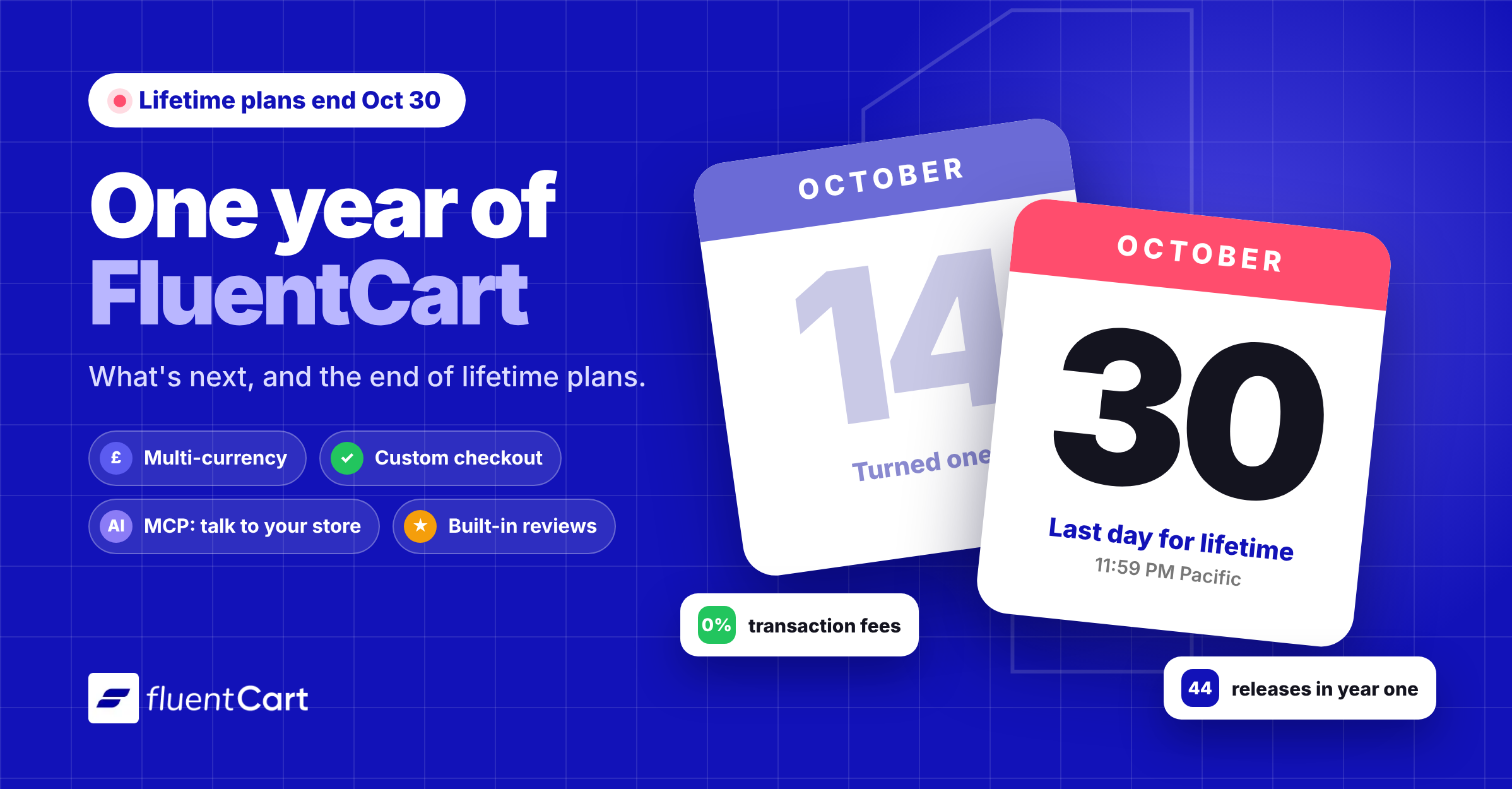
A year ago, on October 14, we launched FluentCart.
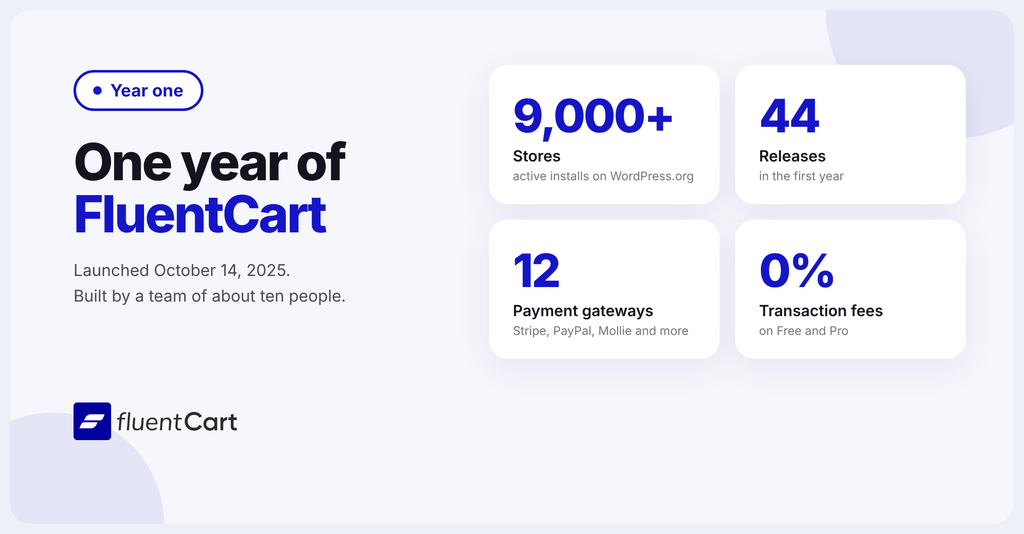
Since then, over 9,000 stores have installed it, and we’ve shipped 44 releases. A lot of you trusted us early, before most people even knew what FluentCart was, by picking up a lifetime license.
That lifetime deal ends on Friday, October 30, at 11:59 PM Pacific time. After that, FluentCart Pro is annual only.
I want to explain why, what we built this year, and what happens next.
Why we built FluentCart
FluentCart is my dream project. I thought about it for about five years before we wrote the first line, and then the team built it non-stop for more than two years before launch.
Selling on WordPress felt harder than it should be. Too many tools take a cut of every sale, and a normal store ends up with a pile of add-ons before it sells anything. We wanted one simple store for physical products, digital products, subscriptions and licenses.
We also use it ourselves. We run our own business on FluentCart, so we find a lot of bugs on our own store before anyone else does.
A few things we believe:
- You own your store. Your customers, your data, your site.
- No transaction fees. Zero on Free, zero on Pro. We have no plans to change that.
- No add-on tax. A normal store shouldn’t need a bunch of paid add-ons to work. Reviews, subscriptions, licensing, tax and bundles are part of FluentCart.
- It stays fast. We check speed before every release, not after complaints.
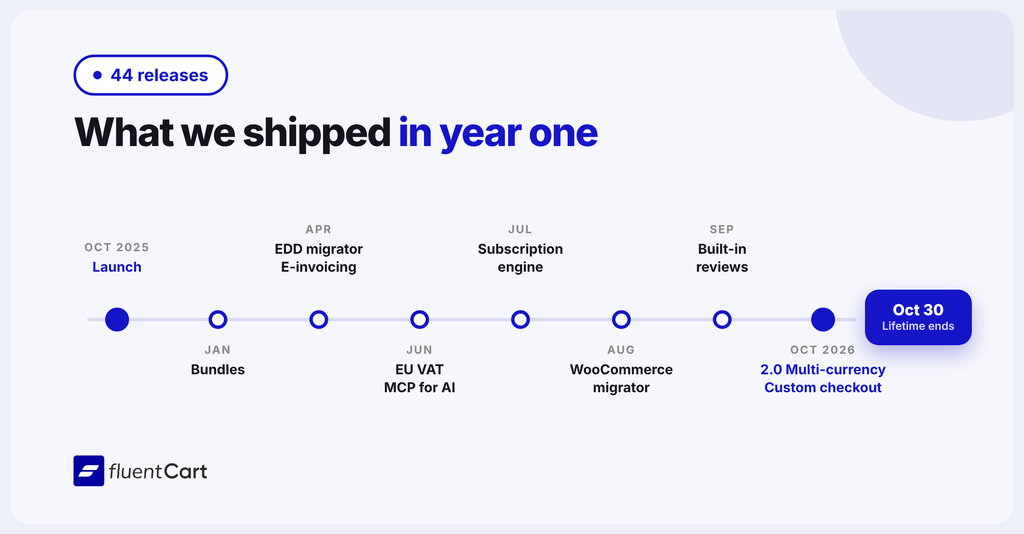
What we shipped in year one
44 releases. Three of them I’m most proud of.
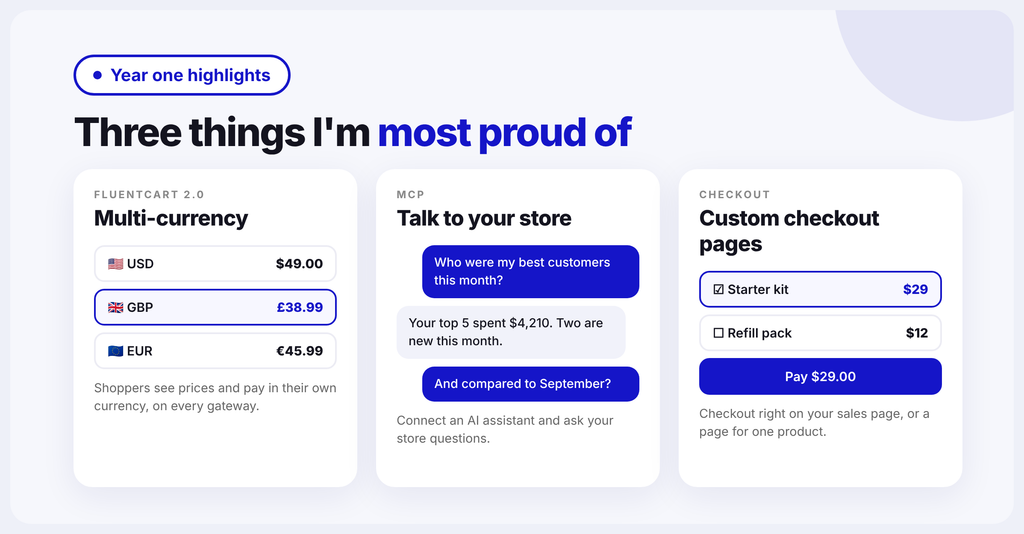
Multi-currency. FluentCart 2.0 shipped on our birthday. Your customers see prices, check out and get their emails in their own currency, across all payment gateways. You control exchange rates, rounding and charm pricing, and your reports add it all up correctly. If you sell outside the US, this is probably the one you were waiting for.
MCP, so AI can work with your store. You can connect your store to an AI assistant and just ask it things. Which products are growing, who your best customers are, how this month compares to last month. You don’t need to export anything.
Custom checkout pages. Put checkout right on your sales page, or build a dedicated checkout for one product. Pick which products show, show live totals, set limits. You decide what the checkout looks like.
And a lot more underneath:
- Subscriptions: flexible billing periods, setup fees, early installments, and a renewal engine that works with any gateway.
- Taxes: rebuilt EU VAT with B2B reverse charge, per-item tax breakdowns and e-invoicing.
- Products: bundles, advanced variations with swatches, bulk import, stock management, licensing and product videos.
- Reviews: verified buyers, photos, store replies, and stars on Google.
- Dynamic pricing: automatic discounts and free shipping based on your own rules.
- Migration: one click from WooCommerce or Easy Digital Downloads.
- Twelve payment gateways now, and support for Gutenberg, Bricks, Divi and Elementor.
All of this from a small team. I’m very proud of them.
Why I’m ending lifetime
Lifetime was the right call at launch. We were asking you to trust a brand new commerce platform with your business. That’s a big ask, and lifetime was our way of saying thank you for going first.
But a store platform is not a small plugin. You run your business on it, and you need to know it will be here and getting better in five or ten years. Payment gateways change, tax rules change, WordPress changes. To keep a dedicated team working on all of that, we need recurring revenue.
We’ve done this before. FluentCRM lifetime ran for a few weeks in 2020 and never came back. Fluent Support lifetime ended too, and today it’s annual only. FluentCart will be the same. We don’t plan to run lifetime again.
What happens on October 30
If you already have a lifetime license: nothing changes for you. Your license keeps working, with every update, and support as promised. Thank you for going first. If you need more sites after October 30, you’ll add them with an annual license.
If you’re on 1, 5 or 15 sites and want more: you can move to a bigger lifetime plan before the deadline and only pay the difference. You can upgrade from the account page.
If you’re thinking about it: lifetime is open until Friday, October 30, 11:59 PM Pacific.
| Plan | Lifetime, until Oct 30 | Annual, from Oct 31 |
|---|---|---|
| 1 site | $249 once | $199 / year |
| 5 sites | $499 once | $499 / year |
| 15 sites | $799 once | $699 / year |
| 50 sites | $1,099 once, or $99/month for 12 months | $899 / year |
Right now, lifetime costs about the same as one year of annual. After October 30, annual is the only option.
If you buy annual later: you get the same plugin, the same updates and the same support. Your subscription is what pays for year three, year five, and beyond.
A personal note
I carried the idea of FluentCart for about five years before we started building it. For a long time it was just notes, sketches and long talks with the team about how a store on WordPress should feel. So seeing more than 9,000 stores use it in the first year still feels a bit unreal to me.
But I’ll be honest, commerce feels heavier than anything else we’ve built. When a form plugin has a bug, someone misses an entry. When a store has a bug, someone loses a sale, or a customer gets charged the wrong amount. People trust us with their money and their customers’ money, and I feel that every time we ship.
That’s also why we moved our own business onto FluentCart. All our plugins, our licenses, and thousands of live subscriptions now run on it. I won’t pretend that move wasn’t scary. If something broke, it broke for us first. But it was the only way I could ask you to trust it with your store.
This year taught me to be more careful and more patient. Some things took longer than I wanted, and a few releases needed a quick fix the next day. But every week the store got better, and a lot of that came from you telling us what was broken or missing.
I’m more excited about year two than I was on launch day.
What’s next
More for physical stores. A lot of you sell real products that need to be packed and shipped. We’re working on shipping integrations right now, and year two will bring more features made for physical stores.
Features that help you sell more. Marketing tools built right into your store, so you can run offers, bring customers back and grow sales without stacking extra plugins.
More design options. Your store should look like your brand from day one. We’ll keep adding design options, and we’re working with more theme developers so FluentCart looks great with the themes you already use.
Filling the gaps. We already have EU VAT, and we’ll keep filling the missing pieces there. Same for anything you tell us is missing.
The Fluent family, working as one. FluentCart works best with the rest of our products. FluentCRM for email and automation, FluentAffiliate for affiliates, Fluent Support for helping your customers. We’ll keep making them fit together better.
Giving back
WordPress gave us everything, so we try to give back. In year one, FluentCart sponsored WordCamp Dhaka, WordPress Day for Ecommerce in Porto, WordCamp Malaysia, WordCamp Rajshahi and WordCamp Sylhet. Through Five for the Future, our parent company AuthLab sponsors 32 contributors across 16 WordPress teams.
We’ve also applied to sponsor WordCamp Asia 2027. If we get in, please come say hi. I’d love to meet the people running stores on FluentCart.
And you don’t have to wait for a WordCamp. If there’s something you want us to build next, or something that annoys you in FluentCart today, just tell me. Leave a comment here, or post in the FluentCart community. I read them.
Thank you
If you have a store on FluentCart, thank you for using it, for the bug reports, and for the feature requests that turned into releases. A lot of this year’s roadmap came straight from you.
Cheers, Jewel

I’m Jewel, founder of FluentCart and CEO at WPManageNinja, the team behind Fluent Forms, Fluent CRM, Fluent Support, FluentLogs and a handful of other WordPress plugins. I have been writing WordPress code since 2009 and still think of myself as a developer first and an entrepreneur second. Most of what I write on this blog comes from arguments we have had inside the team about how to build software people can actually depend on.

Subscribe now
Related Articles and Topics
-
A Year of Refining the WordPress eCommerce Experience with FluentCart
Looking back at the year after launching FluentCart and looking to the future of eCommerce
-
Why FluentCart Sponsors WordPress Community Events
FluentCart is a Platinum Sponsor of WordCamp Sylhet 2026. Here’s why we show up.
-
FluentCart 1.6.1 – Built Into the Divi Builder
FluentCart 1.6.1 ships FluentCart Divi Blocks, a new add-on with eighteen native Divi 5 Visual Builder modules, eight…



Add your first comment to this post