
What Is a UPC and How to Get a Universal Product Code
Selling products online or in retail stores? You’ll need a Universal Product Code barcode. Amazon requires them. Target requires them. Most distributors won’t work with you without them. But getting your first UPC can feel confusing when you’re sorting through conflicting advice about GS1, resellers, and pricing.
This guide explains what Universal Product Codes are, when you need them, and how to get them without wasting money.
TL;DR
- A UPC (Universal Product Code) is a 12-digit barcode used to identify products in retail and ecommerce systems
- You need one unique UPC for every product variation (size, color, pack, etc.)
- Get UPCs from GS1 for full legitimacy and retailer acceptance
- Authorized resellers are cheaper but come with marketplace risks
- Amazon, Walmart, and most retailers require valid UPCs
- GS1 UPCs cost $30–$250+ per code, plus annual renewal fees
- Reseller UPCs are one-time purchases, starting around $5–$10 per code
- Always generate proper barcode images and test scan them before printing on packaging
What Is a UPC (Universal Product Code)?
A Universal Product Code (UPC) is a standardized 12-digit number that represents a specific product. When scanned at checkout or in a warehouse, this code tells computer systems exactly which item is being processed.
UPCs serve three critical functions:
- Product identification at point-of-sale systems
- Inventory tracking across supply chains
- Pricing automation in retail databases
A UPC is classified as a GTIN-12 (Global Trade Item Number with 12 digits). The term “UPC” refers to both the numeric code and the black-and-white barcode symbol that represents it. GS1, the organization that manages the global barcode system, created this universal language that connects manufacturers, retailers, and logistics providers worldwide.
How a UPC Works (In Simple Terms)
Here’s what happens in the two seconds it takes to scan a product:
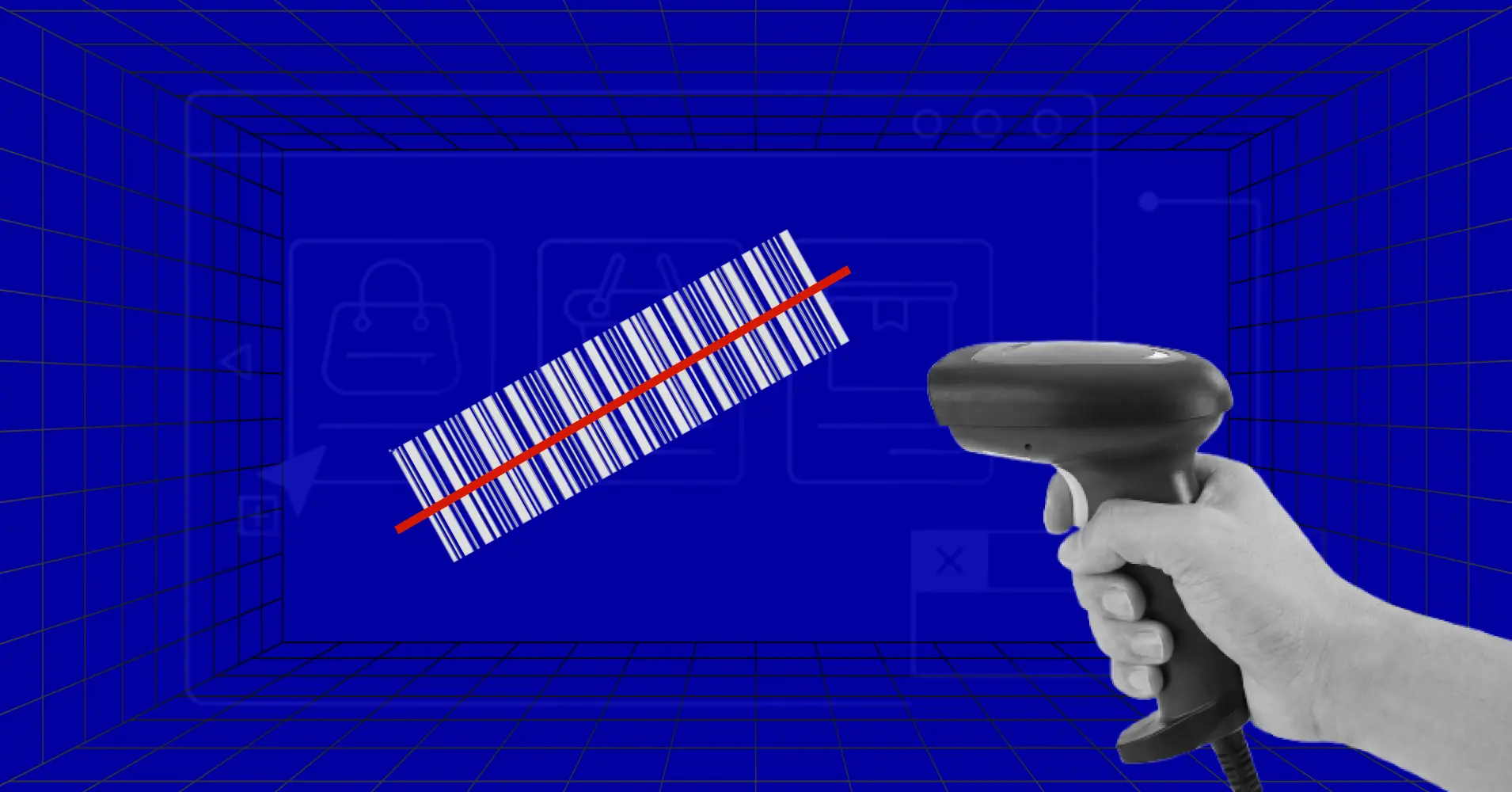
The barcode scanner reads the black-and-white bars. Those bars translate into the 12-digit number. The system looks up that number in a product database. The database returns the product name, price, and inventory count.
This process is why checkout lines move quickly and why retailers can track thousands of products at once. Without UPCs, stores would need to manually enter prices and product details for every transaction. That creates errors and slows everything down.
Ecommerce marketplaces like Amazon use UPCs differently but just as critically. The platform compares UPCs against the GS1 database to verify product authenticity and prevent duplicate listings. Invalid codes trigger listing suppressions and account flags that can shut down your entire selling operation.
UPC Code Structure Explained
Every 12-digit UPC contains three distinct components that work together to create a unique identifier.
1. Company Prefix
The first 6-10 digits identify the brand owner or manufacturer. GS1 assigns this prefix when you register for a company account. This prefix remains consistent across all products you create. That makes it easier to identify items from your brand in retail systems.
Think of it as your brand’s fingerprint in the global commerce system. Major retailers use company prefixes to track vendor performance, process purchase orders, and manage supplier relationships.
2. Item Reference Number
The next section (2-6 digits, depending on your prefix length) represents the specific product. This is where variations matter most.
A blue t-shirt in size medium needs a different item number than the same t-shirt in size large. Same product, different variation, different UPC. One of the most common mistakes new sellers make is using a single UPC across multiple color or size variations. This causes inventory chaos and listing errors.
3. Check Digit
The final digit validates the entire code using a mathematical algorithm. When a scanner reads a UPC, it performs this calculation to confirm the number is legitimate. The math doesn’t work out? The scanner rejects the code. This prevents misreads and data entry errors.
This single digit is why you can’t just make up UPC numbers. The check digit formula makes each code mathematically sound.
Do You Need a UPC?
If you sell physical products through third parties, the answer is yes. Do you sell outside your own website? Then UPCs usually come into play.
| You need UPCs when | You usually don’t need UPCs when |
|---|---|
| Selling on Amazon, Walmart, or other large marketplaces | Selling digital products or services |
| Distributing products to brick-and-mortar retail stores | Running a small direct-to-consumer store on your own website only |
| Working with third-party logistics providers or external fulfillment teams | Creating one-of-a-kind or made-to-order handmade items |
| Building wholesale relationships with distributors or resellers | Selling on platforms like Etsy, where many categories do not require UPCs |
| Expanding beyond a private direct-to-consumer store |
Think long term
You may not need UPCs today. Growth changes the rules. Marketplace listings, retail buyers, and fulfillment partners expect standardized codes. Getting UPCs early saves time and avoids relabeling inventory later. For businesses with expansion plans, UPCs function as basic infrastructure, not extra cost.
UPC vs Other Product Codes
Products move through many systems before they reach a customer. Each system uses its own type of product code. These codes often appear together, but each one serves a specific role and cannot replace the others.
| Code Type | Digits / Format | Primary Use | Who Needs It |
|---|---|---|---|
| UPC | 12 | Retail and ecommerce in North America | Manufacturers and U.S. sellers |
| EAN | 13 | Retail sales outside the U.S. | International sellers |
| GTIN-8 | 8 | Very small consumer packages | FMCG and compact products |
| GTIN-12 | 12 | Same structure as UPC | North American retail |
| GTIN-13 | 13 | Same structure as EAN | Global retail |
| GTIN-14 | 14 | Cartons and cases | Warehouses and logistics teams |
| SKU | Varies | Internal stock tracking | Individual businesses |
| ASIN | 10 alphanumeric | Amazon catalog identification | Amazon sellers |
| FNSKU | 10 alphanumeric | Amazon fulfillment tracking | Amazon FBA sellers |
| MPN | Varies | Manufacturer part reference | Manufacturers and B2B sellers |
| Model Number | Varies | Product version or variation | Brands |
| ISBN | 10 or 13 | Book identification | Publishers and bookstores |
| ISSN | 8 | Journal and magazine identification | Publishers |
The key distinction: UPCs, EANs, and all GTIN formats are global standards managed by GS1. Retailers and marketplaces use them to identify products across countries and supply chains. SKUs, MPNs, and model numbers come from individual businesses or brands. These codes work inside limited systems and do not carry global meaning.
Platform-specific codes: Marketplaces assign their own identifiers. Amazon uses ASINs for catalog entries and FNSKUs for fulfillment tracking. These codes often link back to a UPC or EAN, but they exist for internal platform operations.
Scanner and marketplace behavior: Since 2005, most barcode scanners in North America read both UPC and EAN formats. Even with this compatibility, marketplaces still favor UPCs for products aimed at the U.S. market. Sellers listing products for multiple regions rely more often on EANs.
Important clarification: Some codes look similar to product identifiers but serve different jobs. HS codes classify goods for customs. Barcodes display data in machine-readable form. QR codes store links or text. None of these replace UPCs, EANs, or GTINs for retail product identification.
How to Get a Universal Product Code
You have two legitimate paths to acquiring UPCs. Each has distinct tradeoffs.
Step 1: Determine How Many UPCs You Need
Count every unique product in your catalog, then multiply by variations.
Example calculation:
- 3 shirt designs × 3 sizes × 4 colors = 36 UPCs
- 5 candle scents × 2 sizes = 10 UPCs
- 1 single-variation product = 1 UPC
Bundles and multipacks need their own codes separate from individual items. Plan for future product launches, too. Buying in bulk typically reduces per-unit costs.
Step 2: Choose Where to Get Your UPC
Get UPCs from GS1 (Official Source)
GS1 US is the only authorized source for new company prefixes and UPC codes in the United States. This is the gold standard option.
Pricing structure (2025):
- Single UPC: $30 (initial) + $50 annual renewal
- Company prefix with 10 codes: $250 (initial) + $50 annual renewal
- Company prefix with 100 codes: $750 (initial) + $150 annual renewal
Major retailers like Walmart and Target often require GS1-registered company prefixes for direct vendor relationships. The annual renewal fee funds GS1’s database maintenance and standards development.
Who should use GS1:
- Brands planning retail distribution deals
- Companies with 10+ product variations
- Businesses prioritizing long-term legitimacy
- Anyone who can afford the upfront investment
Buy UPCs from Resellers (Cheaper, With Risks)
A 2002 legal settlement allowed secondary marketplaces to sell UPCs that were originally issued by GS1 before the prefix system changed. These codes work technically but come with caveats.
Reseller pricing:
- $5-$25 per UPC (one-time payment)
- No annual renewals
- Instant delivery
The catch: You don’t own the company prefix. The code is valid and will scan, but a retailer looking up the prefix in GS1’s database won’t see your company name. Some Amazon sellers have used reseller codes for years without issues. Others faced listing problems during authentication checks.
When reseller codes might work:
- Small Amazon sellers with under 20 products
- Testing product-market fit before major investment
- Budget-constrained startups
When they might cause problems:
- Target, Walmart, and major retailers often reject them
- Brand Registry applications may require GS1 verification
- Selling the business creates complications (ownership transfer unclear)
How Many UPC Codes Do You Need?
The governing rule is absolute: one UPC per variation.
Variation means any attribute that differentiates the product in inventory or pricing:
- Size (small, medium, large)
- Color (red, blue, green)
- Material (cotton, polyester blend)
- Quantity (single pack, 3-pack, bulk)
- Scent, flavor, or formula differences
Real scenario: You make organic body lotion in lavender and eucalyptus scents. Each comes in 4oz and 8oz bottles. That’s 2 scents × 2 sizes = 4 UPCs needed.
Retailers track each variation separately. Using the same UPC for your 4oz and 8oz bottles means inventory systems can’t differentiate them. This leads to pricing errors, fulfillment mistakes, and chargebacks.
Creating and Using Your UPC Barcode
You have UPC numbers. Now you need to convert them into scannable images.
Generating barcode images:
- Use free tools like Barcode.tec-it.com for UPC-A format
- Download as PNG (for labels) or SVG (for print-ready files)
- Verify the image displays your 12-digit number clearly below bars
Printing specifications:
- Minimum recommended size: 1.5″ wide × 1″ tall
- Maximum size: 3″ wide × 2″ tall (maintains scan accuracy)
- High contrast required: black bars on white background
- Avoid printing on textured or curved surfaces when possible
Placement best practices:
- Position on packaging where scanners can easily access it
- Keep barcode away from folds, seams, and edges
- Don’t place over graphics or colored backgrounds
- Test scanning at multiple angles before mass production
Always scan your printed barcodes with an actual barcode scanner before shipping inventory. Mobile apps work for testing, but retail scanners are more sensitive.
Your phone scans it, but a store scanner doesn’t? You’ll have problems.
Common UPC Mistakes to Avoid
New sellers frequently make these errors that cost time and money:
- Reusing UPCs across different products – Each item needs its own code, even if similar
- Using one UPC for all variations – Size medium and size large must have separate codes
- Buying “free UPCs” from suspicious websites – These are duplicates that will fail authentication
- Not verifying codes before printing thousands of labels – Test scan before bulk printing
- Assuming your SKU is a UPC – Internal tracking codes aren’t valid for external systems
Proper UPC management prevents many of these common mistakes. Building your catalog correctly from the start saves you from expensive relabeling projects down the road.
Wrapping Up
Getting UPCs right from the start saves you from costly mistakes later. You need one unique code for every product variation you sell. Different sizes, colors, and styles each require their own UPC.
GS1 provides the most legitimate option at $30+ per code with annual fees. Resellers offer cheaper alternatives at $5-$25 per code without renewals, but major retailers may reject them. Generate proper barcode images, print them at correct dimensions with high contrast, and always test scan before mass production.
The cost of fixing barcode problems after printing thousands of labels far exceeds the investment in doing it correctly now.

Deputy Marketing Lead, published literary author, and musician. I thrive on marketing for tech companies while composing music, collecting books of lasting depth, exploring cinema with a discerning eye, and studying the arts and history.

Subscribe now
Related Articles and Topics
-
What Is Petty Cash? Examples, Uses, and Smarter Alternatives
Learn what petty cash is, how the imprest system works, how to record and reconcile it, and whether…
-
What Is Order Management? (And Why It Gets Messy Fast) [Guide]
Order management is the process of order capturing, tracking, and fulfilling customer orders. The order management process begins…
-
SKU: Definition, Examples, and How to Use It for Your Store
Learn what SKU means, how stock keeping units work, and how to create SKU codes for your ecommerce…




Leave a Reply