
Digital Product Ideas for Passive Income: The Complete Roundup
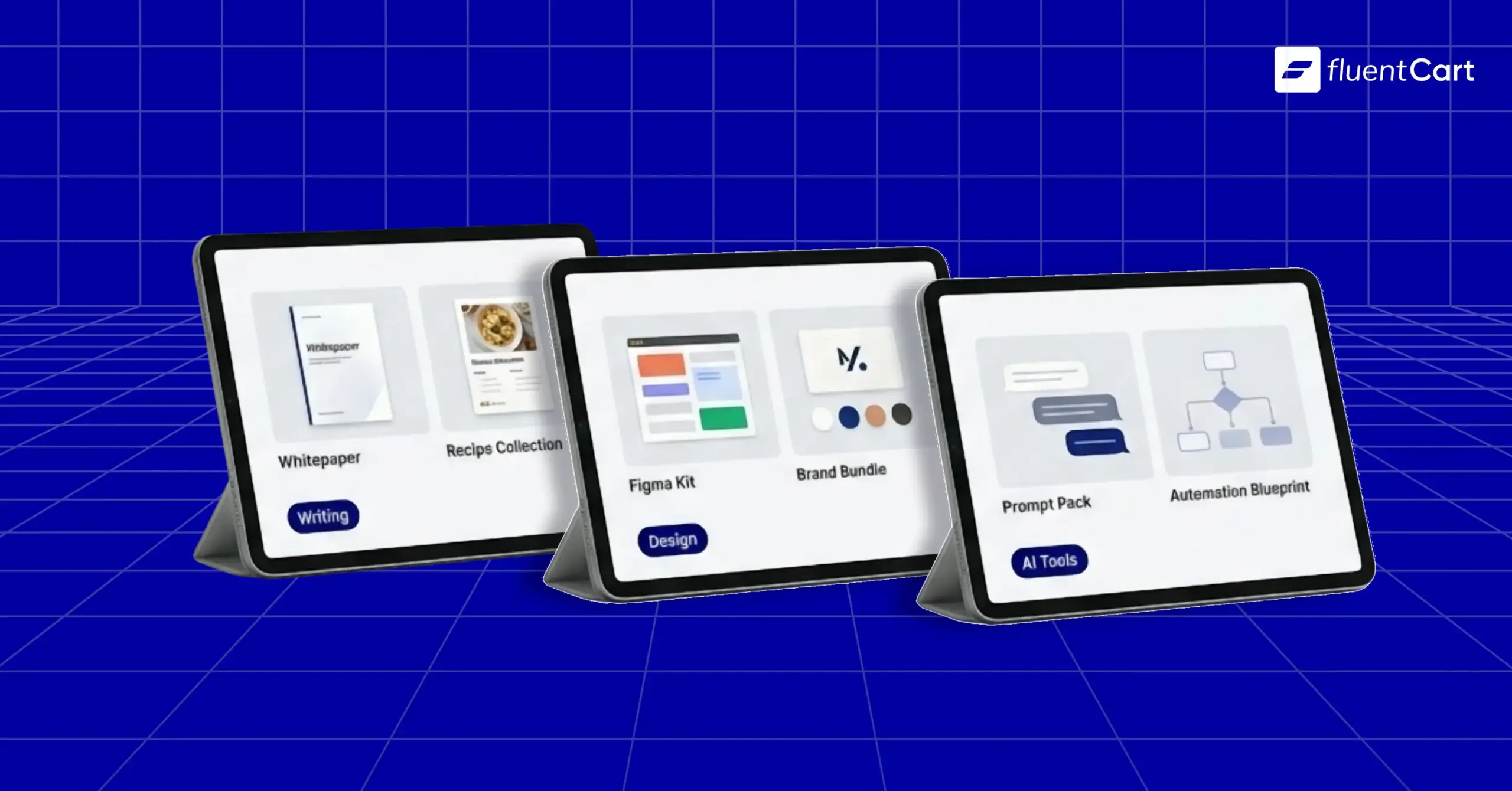
Everyone says digital products are the easiest way to build passive income. No inventory. No shipping. Build it once, sell it a thousand times.
But why do so many people upload ten products and still make nothing?
On r/passive_income, a seller going by Nice-Factor-8894 said something most guides won’t tell you. People make more money selling courses on how to sell digital products than they ever make from an actual product. That comment has 61 upvotes. It’s the top reply in the whole thread.
So before we hand you a list of digital product ideas for passive income, we want to give you the honest picture first. That way, you pick something you’ll actually finish.
TL;DR
- Digital products remove inventory and shipping, but passive income still starts with real work
- The best digital product ideas to sell online match a skill you already have, not a trending template
- We cover more than 80 specific digital product ideas to sell below, sorted by skill, not by what’s trending this month
- Real sellers report earnings from a few hundred dollars to occasionally over a million, and the gap is almost always distribution, not the idea itself
- Marketplaces like Etsy and Notion Marketplace take 10% to 20% of every sale once every fee stacks up
- Too much competition, copying, and no marketing plan are the three biggest reasons digital products fail
- Your own WordPress store gives you pricing control and customer data that a marketplace never will
- Pick one idea from the list below, test it fast, and build it instead of waiting
What Actually Counts as a Digital Product
A digital product is anything you build once and deliver as a file or an access link, with nothing to ship physically. Ebooks, templates, courses, software, presets, all of it fits.
Here’s the thing. That definition makes it sound simple. And the delivery part really is. But nothing to ship doesn’t mean nothing to do, and that’s exactly where most new sellers trip.
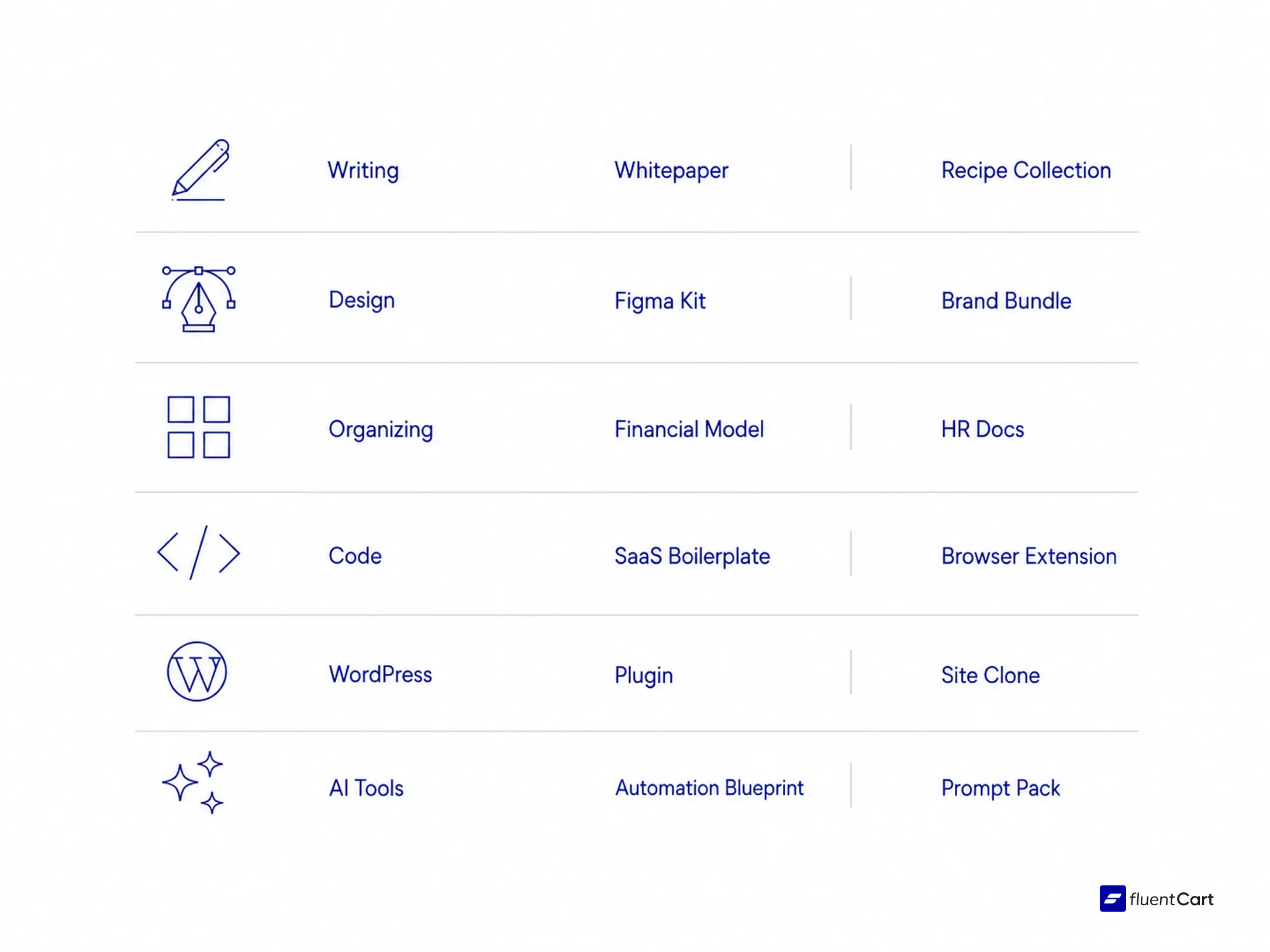
80+ Digital Product Ideas for Passive Income, Sorted by What You’re Actually Good At
Most lists of digital product ideas give you the same ten things. Ebooks. Planners. Notion templates. You already know those exist, and you’ve probably dismissed a few of them already.
So we went looking for what’s underneath those, the ideas that make you pause and think “wait, people actually pay for that?” Yes. They do. Sort yourself into whatever you’re already good at, then scan for the one that makes you go “huh, I could actually do that.”
If You Can Write
Let’s say you’ve answered the same client question fifty times over the last two years. That question is already a product. You just haven’t packaged it yet.
Whitepapers and industry reports. Skip the blog post format entirely. Businesses buy real reports with real data for a pitch deck or a board meeting, and a single hard number lands harder than a paragraph of opinion.
Short-form playbook packs. A tight, 15-page SOP for one specific task, priced like a tool, not a cheap ebook. Nobody wants your 300-page memoir. They want the 15 pages that fix today’s problem.
Research datasets with commentary. Raw data is free everywhere. Your explanation of what it actually means isn’t.
Translated or localized versions of existing books. If you speak two languages and a good book only exists in one of them, you already have a business. Almost nobody thinks to check this, which is exactly why it works.
Recipe collections for a very specific diet or region. “Healthy recipes” ebooks are everywhere. “30-minute dinners for a Bangladeshi kitchen with a slow cooker” barely has any competition at all.
If You Teach or Explain Things on Video
Cohort-based live courses. Give it a start date and a small group rather than letting it sit there forever. People finish live cohorts far more often than they finish self-paced ones, and that alone gets you better reviews.
Flashcard decks for Anki or Quizlet. Small. Boring. Genuinely profitable. Students studying for a specific exam happily pay to skip the ten hours it takes to build a deck from scratch.
Study notes and exam prep packs. Same idea, one level up. If you passed a hard exam recently, your notes from that exact experience carry real value to someone about to sit it.
Lesson plans for teachers. Nobody wants inspiration at 11pm the night before class. They want something ready to print. Lindsay Bowden earned over $320,000 in revenue selling exactly this on Teachers Pay Teachers, and she started it during her baby’s naptime.
If you can explain something clearly to a friend this is a great digital product ideas. You can turn it into any of these.
If You Design
Figma UI kits. Nobody building an app wants to design every button from zero, and a clean, well-organized kit saves days. Developers know that, so they pay accordingly.
Pitch deck templates. Founders raising money pay real money for a deck that doesn’t look thrown together in twenty minutes, because the next investor meeting depends on it.
Instagram Reels and TikTok templates. Motion templates, not static photo layouts, ones people can drop their own footage straight into. Someone posting three videos a day needs this more than another graphic.
Brand identity kits. A logo alone stopped being enough a while back. Bundle it with a color palette and basic brand rules and you’ve just saved the buyer a second purchase and a second decision.
Design has one real advantage over everything else on this list. It’s the fastest thing to make, and the fastest to test.
If You Like Building Systems and Organizing Things
Financial models in Excel or Sheets. Skip the budget tracker. Build a real model for one business type, a coffee shop, a SaaS startup, and you’re competing with eFinancialModels, which turned exactly this into a whole business for founders who’d rather buy a working model than stare at a blank sheet.
Airtable, ClickUp, or Asana templates. No agency wants to design its own project system from scratch. Copy yours, and they’re running by lunch.
HR document packs. Offer letters, basic policies, onboarding checklists. Every small business needs these once and never wants to write them again, and that alone makes this one of the quietest, steadiest earners on the whole list.
Pitch and proposal templates for freelancers. Freelancers lose more clients to bad proposals than to bad work. A proposal that actually wins jobs pays for itself many times over.
You’re not selling creativity here. You’re selling order.
If You Can Code
This is the smallest group on this list but a good digital product ideas. Fewer people can build, which also means fewer people are competing here.
SaaS boilerplates and starter kits. This deserves a real number, not a guess. One indie developer documented earning about $3,000 a month from a single boilerplate, priced between $49 and $300, since it saves another developer two to six weeks of setup work on authentication, billing, and email. Time is the actual product here, not the code.
Browser extensions. Small, focused, solves one annoying problem. People pay a few dollars just to stop seeing a certain button.
API wrappers and SDKs. A popular but painful API creates its own opportunity. Wrap it cleanly once, and every developer who has to touch it more than once will pay for that.
Regex, query, and prompt cheat packs. Tiny files, real time savings. Developers hoard these the way other people hoard bookmarks they’ll never open again.
If You Build for WordPress
WordPress plugins. The most direct route to recurring revenue on this whole list, especially when it solves one annoying problem rather than trying to do everything at once.
Elementor or Bricks template kits. Web designers building client sites over and over want a starting point, not a blank canvas every single time.
Website audit tools and scripts. Run a script, hand the owner a report, and that beats a generic checklist by miles when the buyer is an agency.
Hosting-ready site clones. Pre-built, ready to install and customize in an afternoon rather than a month. This sits right next to the “website flipping” world, minus the waiting around.
If You Work With Audio, Video, or Photos
Sound effect libraries and sample packs. Small files, sold in bulk, bought by people who need one specific sound right now and have no time to record it themselves.
Motion graphics templates for After Effects or Premiere. Editors reuse the same lower thirds and transitions on every project. A good pack saves hours, every time.
Lightroom presets. Still one of the most reliable digital products a photographer can make. A good preset genuinely changes how fast someone can edit an 800-photo wedding gallery.
Niche stock photo libraries. Skip another “business people shaking hands” pack. Food, medical, or industrial photography still struggle to find decent stock images at all.
If You Draw, Design Fonts, or Make Icons
SVG cut files for Cricut. Small, specific, and bought in bundles. Crafters need exact files for their machines, not one at a time.
Procreate brushes. Illustrators buy these the way a painter buys new brushes, except nobody has to clean a Procreate brush afterward.
Character design assets. Game developers need a base to start from, and a good pack removes weeks of early concept work in one purchase.
If You Like Printables
Wedding invitation templates. High emotional stakes, high willingness to pay, and a buyer planning exactly one event who wants it to look expensive without hiring an expensive designer.
Habit trackers for a specific goal. Skip the generic grid. Build it around one very specific goal, a 75-day fitness challenge, say, and it outsells a blank template every time.
Party and event printables. Themed, specific, and bought by someone who needs it finished by Saturday, not someone browsing on a lazy afternoon.
If You Think in Marketing and Sales
Swipe files. Proven ad headlines, email subject lines, landing page copy that actually worked somewhere. Marketers buy these constantly, since staring at a blank page is the worst part of the job.
Cold email and outreach sequences. A small agency trying to book clients without hiring a sales team will pay real money for a tested sequence that actually gets replies.
SEO keyword databases for a specific niche. Broad keyword tools already exist everywhere. Curate a list for one specific niche, WordPress plugins, local bakeries, whatever, and the buyer skips the research entirely.
If You’re Already Deep Into AI Tools
Prompt packs, done right. Here’s the honest version of this category, since it gets oversold constantly. One creator documented selling a 57-prompt toolkit for $9, with 620 total sales generating $492.73. Not a joke number. The real ceiling for a generic pack.
The ones that actually earn solve one specific workflow for one specific buyer, listing descriptions for real estate agents, not “1,000 prompts for everything.”
AI agent workflows for n8n, Make, or Zapier. Someone imports it, adjusts it, and skips building one from a blank canvas over a weekend they don’t have.
Automation blueprints. A documented, tested process that turns three hours of manual work into ten minutes of clicking a button. The buyer’s time savings keep compounding every single week they use it, which is why this one earns its keep quietly, without much competition.
We just pointed you toward paid prompt marketplaces above, so it’s only fair to mention you don’t have to pay to see what a properly built one looks like first. FluentCart put together a free library of business prompts, organized around real business tasks rather than a random dump of 500 prompts nobody asked for. This will help you build your digital product ideas.
If You Want Recurring Revenue Instead of One-Time Sales
Membership sites. Ongoing access beats a single download. One sale can pay you ten times over across a year if the content stays useful.
Private Discord or Slack communities. People pay for access to other people almost as often as they pay for content. Easy to forget when you’re only thinking about files and downloads.
White-label licensing rights, also called PLR or MRR. You sell someone the right to resell your product as their own. Sounds strange the first time you hear it. It’s a real, working model in several niches, mostly because building an entire product from nothing is harder than most beginners want to admit.
Notion template creator Thomas Frank reported earning over $1,000,508 from two templates in a single year, with one product, Ultimate Brain, responsible for $760,000 of that on its own. Say it plainly: that’s the ceiling of this entire list, not the median.
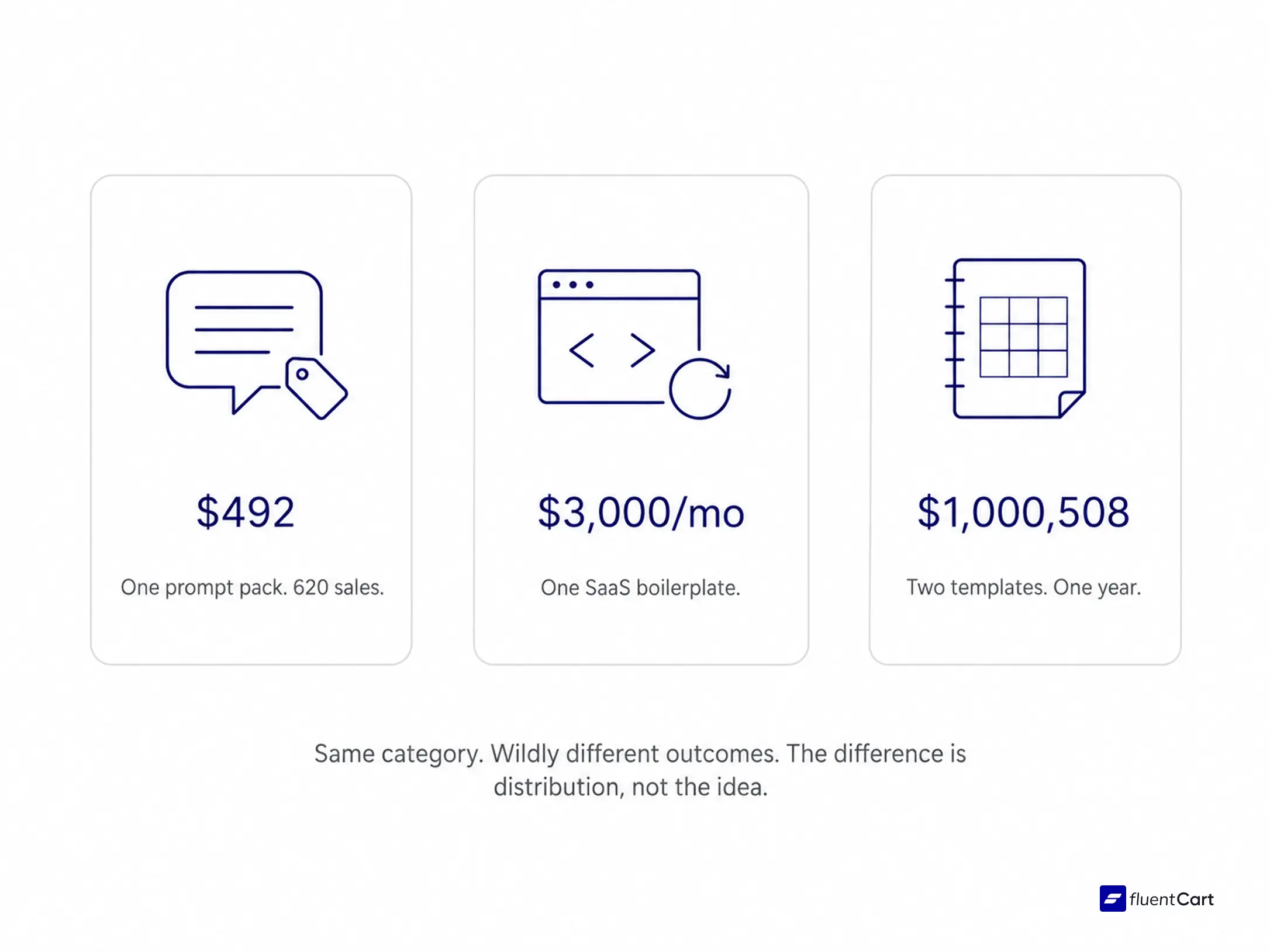
Most sellers land somewhere between the $492 prompt pack and the million-dollar template. Where you land depends far more on distribution than on which category you pick.
Is This Actually Passive? What Real Sellers Say
Here’s what’s actually happening once you scroll past the “I made $50,000 this month” posts.
On Quora, one seller broke down realistic earning tiers instead of hype. Beginners often land between $100 and $500 a month. A solid side income runs $1,000 to $5,000. The $10,000-plus crowd almost always has an existing audience and a real marketing engine behind them, not just a good product sitting there.
That range roughly matches what shows up on the same Reddit thread from earlier, where sellers openly post about earning $75 a month, a few hundred dollars, or the occasional $800 in three months.
Not one of them says they did nothing for it.
Just be honest with yourself here. Passive income means the work happens first, and the income shows up after. It doesn’t mean no work at all. that is not how any digital product ideas works.
That same Reddit thread is also where the real failure points show up, so let’s pull those out before you pick anything.
Where Digital Product Sellers Actually Lose Money
Three things show up again and again in that thread, and almost none of the polished guides mention them clearly.
Too much competition. Calendar templates. Generic planners. Basic productivity ebooks. Reddit sellers name these products directly as the ones where price is the only thing left to compete on, sometimes as low as $3 a sale.
Copying and theft. One thread on that same subreddit asked a simple question nobody could fully answer. If your PDF gets bought once and reposted to a million followers, how do you protect it? You can’t fully stop it. Build a market big enough that a few leaks don’t sink you, and move on.
No plan to reach buyers. This one causes more failures than the other two combined. A good product with zero marketing behind it doesn’t sell itself just because it’s good. SEO, email, and social content aren’t optional extras here, they’re the actual business.
The product itself is maybe 30% of the work. The other 70% is making sure the right person actually sees it.
Marketplace or Your Own Store? Calculate the Real Cost First
Etsy is the default first answer for a lot of new sellers. But run the numbers before you commit a single listing, and run them against every option, not just the one everyone defaults to. A proper platform versus marketplace comparison lays out the real tradeoffs before fees even enter the conversation. If Shopify is also on your shortlist, this breakdown of Shopify’s pros and cons fills in the rest, since it’s built for physical and digital sellers alike, and not every feature there applies to a digital-only shop.
Let’s say you sell a $20 digital template. Etsy charges a $0.20 listing fee, a 6.5% transaction fee on the total sale, and a payment processing fee of roughly 3% plus $0.25. Stack those together and most sellers hand over 12% to 20% of every sale before spending a single dollar on ads. That “free to list” pitch marketplaces lead with hides most of the real cost.
Notion’s own Marketplace isn’t much softer either, taking 10% plus 40 cents per sale and holding funds for 14 days before payout.
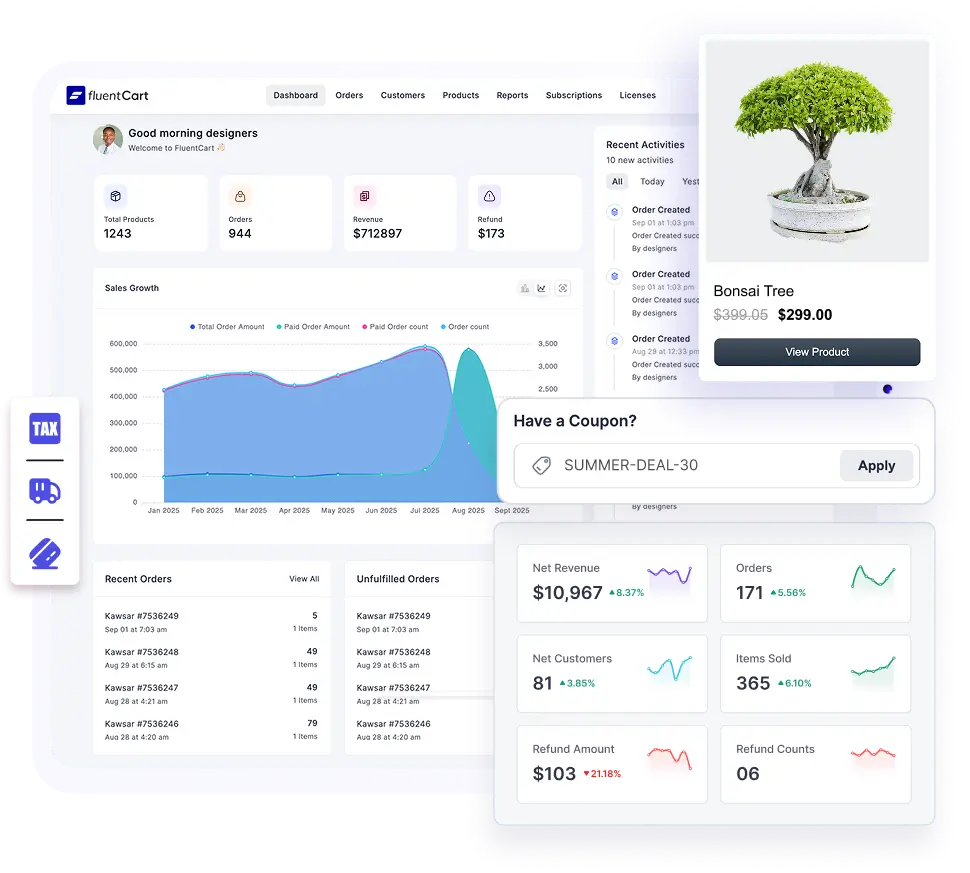
FluentCart’s own breakdown of why Etsy can work against small sellers goes deeper into the control and customer data tradeoffs, not just the fee math.
If you’re already running WordPress, something like FluentCart just handles this for you. No commission taken, no fighting a marketplace’s search algorithm for visibility, and you own the customer relationship from the very first sale onward. That matters more than it sounds. A marketplace customer belongs to the platform first and to you second.
This is true whether you’re selling a WordPress plugin, an online course, or any other digital download. If you’re currently on Easy Digital Downloads and thinking about switching, FluentCart also has a clear EDD migration guide to help you decide either way.
How to Actually Choose Your Digital Product Idea
Don’t try to build five digital products at once, no matter how tempting that list above just made it look. Be honest with yourself and pick one.
Run it through a quick filter. What do you already know that saves someone else real time, and could you actually finish it in two weekends rather than two months? Better still, what have people in your niche already asked you for, not what you assume they want?
Still stuck? That’s normal, and it’s exactly why we built a free guide for people who want to start something but can’t land on an idea. Run through the prompts inside it and come back with three real options instead of zero. Before you commit to any of them, a quick product research check confirms real demand instead of leaving you to guess.
We also have a community of WordPress store owners who can help you with the exact this kind of information or feedback before start building. Useful if you want a second opinion before you spend a weekend on the wrong product.
Real store owners. Real problems. Real answers. Join the FluentCart Community.
What This Means for You
The digital goods market is expected to grow past $150 billion in 2026, at a growth rate above 26% a year. That growth is real.
So is the work required to earn a share of it.
Digital product ideas for passive income only work when you stop chasing whatever’s selling for someone else and start with what you can actually finish. Pick a skill you already have. Validate it fast. Build it, price it fairly, and own the platform you sell it on rather than renting space on somebody else’s. That part is a must, not a maybe.

Hi, this is Abir, a Deputy Marketing Lead, passionate product designer, and WordPress core contributor. Creating interesting content and products that ensure a 360-degree customer experience is my daily job.

Subscribe now
Related Articles and Topics
-

Best Dropshipping Niche: What’s Your Best Bet
We’ve listed 5 best dropshipping niche picks. But understanding a niche matters more than picking one. Here’s the…
-
The Best Business in the World You Need To Know
A list of the best business in the world. Five of the 14 giants below started exactly like…
-
Best Products to Sell on World Cup 2026 + Build Your Store Fast
Discover the best products to sell on World Cup 2026, from fan apparel to drinkware, and how to…




Leave a Reply